
 E-Paper



Faces restored, masks lifted: How police is training AI to be the algorithmic cop
From digitally aging photos to nab murderers to unmasking faces, AI is entering the beat as the trusted investigative ally of the police, writes Medha Shri

 Prefer HTon Google


By 2026, Delhi Police plans to install 10,000 artificial intelligence–enabled cameras in the Capital, under the Safe City Project. Equipped with facial recognition and distress-detection technologies, the system is reportedly designed to alert police control rooms to incidents even before an emergency PCR call is made.

But this is not the force’s first brush with (Artificial Intelligence) AI. Before the cameras arrive, Delhi Police and their counterparts in other parts of India have already been quietly using algorithms to crack cases that human effort alone could not.
Artificial intelligence is no longer confined to predictive policing dashboards or traffic challans. In recent months, the Indian Police has begun deploying AI in far more human ways to solve cases and nab the culprits. From restoring faces, lifting masks, and solving stalled investigations for decades, AI is proving to be a reliable investigative partner in the adept hands of trained Indian police officers.
Here are three interesting cases that demonstrate how the police have leveraged AI as a valuable investigative ally.
When AI unmasked a criminal
A few months ago, a masked person snatched a woman’s mobile phone in Delhi’s Dwarka. The crime was captured on CCTV, but he was masked. “At this juncture, the technically sound team of investigators used the technique of Artificial Intelligence to virtually remove the mask from the screengrab of the CCTV footage. His mask was removed with the help of AI techniques,” informed Deputy Commissioner of Police (north) Raja Banthia.
Once that was done, the police were quick to nab the suspect, 23-year-old Afnan Ali from Sadar Bazar. In subsequent raids, the suspect was arrested, the stolen phone was recovered, and the clothes worn during the crime were recovered. During questioning, it emerged that Ali had been released from Tihar Jail just a week prior.
Solving a murder mystery
In another case, a murder investigation stalled at the most basic threshold, the lack of identity. Cops found the body of a young man under the Geeta Colony flyover. According to the post-mortem report, the cause of death was strangulation. This was a murder. However, the face was unrecognizable. So, the police used AI to reconstruct his face. They then printed hundreds of posters and circulated them on social media channels, also.
The breakthrough came when the brother of the victim visited a police station to file a missing person’s complaint for the victim and recognized the poster at the police station.
The victim was identified as 35-year-old Hitendra Singh. Four people were later arrested for his murder. AI did not solve the murder, but it restored identity, transforming an anonymous body into a person, and a dead end into an active investigation.
Chasing murderers after two decades
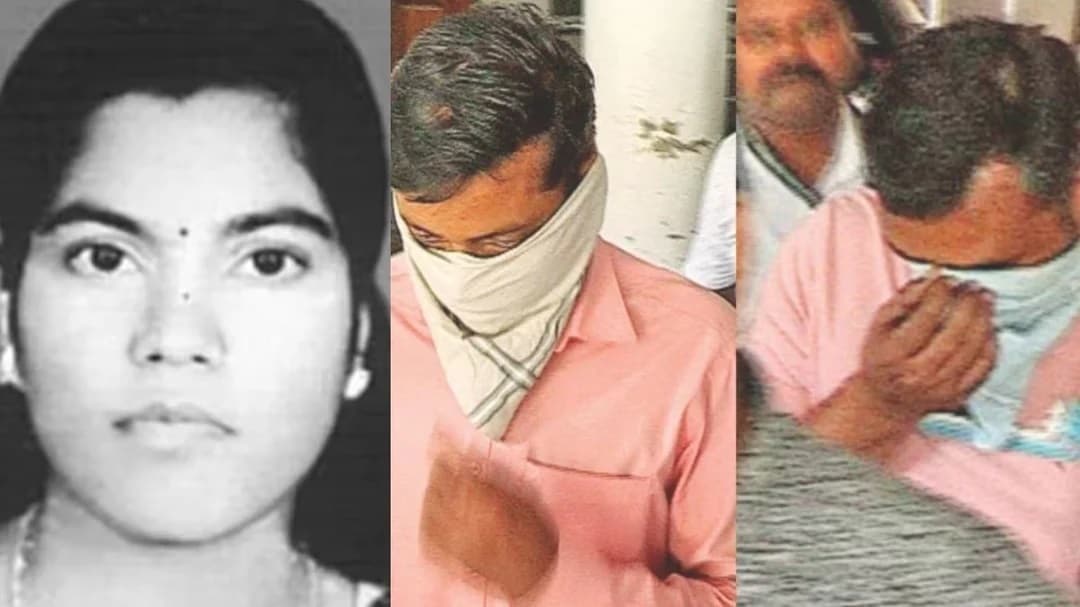
If Delhi’s cases show AI operating in real time, Kerala’s story demonstrates its power to condense time itself.
In February 2006, a brutal triple murder of Ranjini and her twin daughters, who were barely 20 days old, left the country shaken. The trio was found with their throats slits in their home in Anchal, Kollam district, Kerala.
Police named two suspects, Army personnel Divil Kumar and Rajesh.
But the cops couldn’t trace them.
In 2010, the Kerala HC handed the case to the CBI, which filed a chargesheet in 2013, yet the suspects remained elusive.
Then, in early 2025, nearly two decades after the crime, investigators did something that was unprecedented!
The Kerala Police’s Technical Intelligence Wing used AI to digitally age the suspects’ 2006 photos and generated several possible current looks, incorporating changes in hairstyle and facial features over time.
These AI-generated images were run against thousands of photos on social media. The breakthrough came when an AI-aged image recorded a 90% match with a wedding photo on Facebook, which led police to track down Rajesh living under the alias Praveen Kumar in Puducherry.
Through him, they located Divil Kumar, also living under the false identity of Vishnu; both men were working as interior designers and had settled with their families there. On January 4, 2025, the CBI arrested them, bringing long-awaited closure to a nearly two-decade-old case.
The New Grammar of Solving Crime
The police force in the country is amping up its game and using technology and training AI to become its trusted assistant.
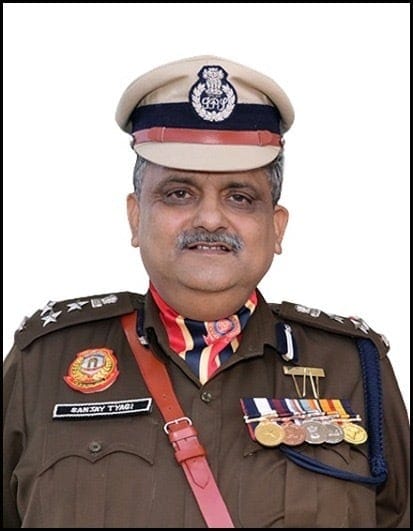
“Across these cases and several others, it is amply clear that Artificial intelligence is not replacing investigators or informers, it is proving to be a force multiplier quietly reshaping how crimes are identified, pursued, and closed. As Delhi Police prepares to install the smart cameras, it is clear that AI has already earned its place on the beat as an investigative assistant to the police force,” says Sanjay Tyagi, Joint Commissioner and PRO, Delhi Police.
So, before you commit a crime, remember, no matter how tech savvy you are, the algorithm is watching. And, it is the Indian police that is training it to crack murders and track fugitives


