
 E-Paper



Air pollution hits health and GDP, yet missing from poll promises
A study published in The Lancet Planetary Health highlights that states such as Uttar Pradesh, Bihar, and Rajasthan, with lower per-capita GDPs, face the largest economic losses due to poor air quality

 Prefer HTon Google


Delhi is enjoying a long spell of good air. But for large chunks of the year, the air pollution gets so bad that construction has to be stopped, schools have to be closed, and the city experiences pandemic levels of pollution sickness causing people to seek medical assistance and miss work.
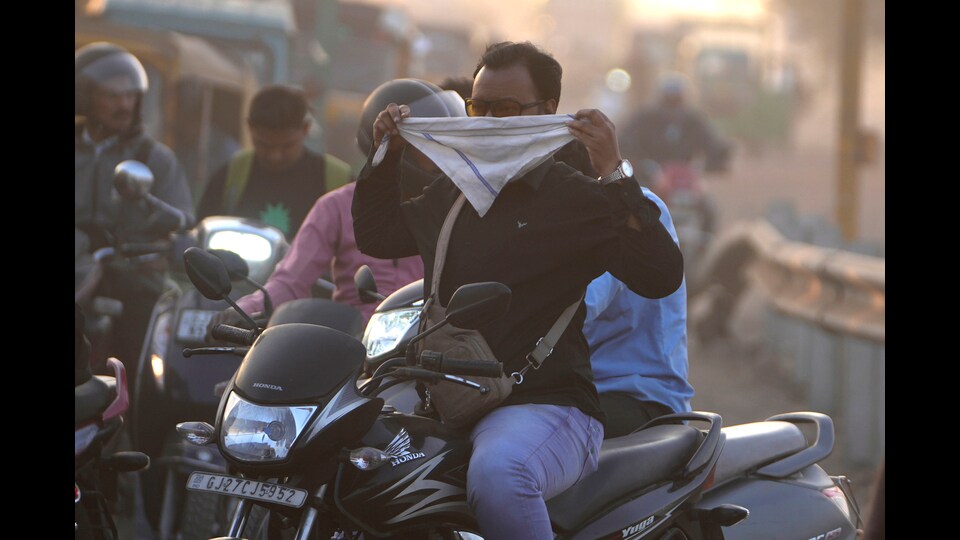
A study published in The Lancet Planetary Health highlights that states such as Uttar Pradesh, Bihar, and Rajasthan, with lower per-capita GDPs, face the largest economic losses due to poor air quality. Further, according to the Reserve Bank of India, by 2030, as much as 4.5% of India’s GDP could be at risk due to lost labour hours resulting from climate crisis-related issues, including extreme heat and air pollution. Another study in the Lancet showed that nearly 12% of all deaths in Delhi can be attributed to short term PM2.5 exposure (the fine particulate matter most associated with air pollution).
Yet air pollution didn’t register as a big political issue in the recently concluded Delhi elections. According to the Data Action Lab for Emerging Societies (DALES) post-poll survey in Delhi, only 24% of respondents believe that “parties are serious about solving air pollution”. Why isn’t it more of a political issue?
A Genuine Crisis
One hypothesis is that the immediacy of air pollution’s health and economic effects don’t compare to other pressing issues such as subsidies and identity politics, particularly for the poor. Is it true?
To get some sense of the prevalence of negative impacts of air pollution, not just in Delhi, the Artha Centre for Rapid Insights (ACRI) conducted a survey of 8,698 households across the states/Union Territories of Bihar, Delhi, Haryana, Madhya Pradesh, Punjab Rajasthan, Uttar Pradesh, and Uttarakhand on November 11-13, 2024 — just as the air pollution crisis had begun to hit.
Across the sample, more than 55% households (and 65% in Delhi) reported that someone in the household “developed a cough or difficulty breathing” due to air pollution in the previous two weeks. Among those households reporting some air pollution sickness in the previous two weeks, two-thirds report missing at least some work, with more than a quarter reporting more than 3 days of missed work. This means that 32% of households in our sample experienced at least some days of work missed due to air pollution. Consistent with other surveys of air pollution in North India, even the short term and immediate impacts of air pollution are quite severe.
Yet despite these effects, citizens don’t really have the capacity to cope with the enormity of the challenge. When asked about their “primary method of coping with air pollution,” approximately 24% of respondents admitted to no coping strategy at all. Another 28% of respondents mainly used passive strategies such as not stepping outside of the house or keeping doors and windows closed (very few homes have sufficient sealing to prevent fine particulate matter). This means that less than half of respondents use an active strategy such as an air purifier or wearing a mask as the primary strategy to combat air pollution.
The sheer severity and incidence of air pollution induced illness and its economic impacts — not to mention an inability to cope with its negative effects — certainly qualify it to be a genuine political issue across all socioeconomic groups. If anything, the difficulty of coping with air pollution’s effects makes the poorest socioeconomic groups the most vulnerable to its economic impacts.
Beyond Politics
One approach might be to increase the electoral salience of the issue, but this is difficult. Political scientists Shikhar Singh and Tariq Thachil found significant partisan biases in who to “blame” for air pollution — that is, each party’s supporters simply blame the other side. Furthermore, electoral salience grows when the costs of air pollution are personalised, but people are also loath to pay any other economic costs to mitigate air pollution.
Another approach is to take seriously that it is a “crisis.” As it stands, the levels of air pollution are retarding economic growth and may prevent a stable growth path, not to mention that differences in coping strategies are sure to engender severe inequalities. Montek Singh Ahluwalia wrote of the 1991 balance of payments crisis and subsequent economic reform that bureaucrats, experts, and even political parties reached a “working consensus” that “extended beyond the Congress party and made it possible for the reforms to be carried forward by subsequent governments.”
Solutions are possible, but it will require consensus over decades, and not squabbling and blaming, to solve the air pollution crisis in India.
(This is the latest instalment in a new series that uses insights from rapid polling across the country on topical issues. The polls are run by the Artha Centre for Rapid Insights (ACRI). Neelanjan Sircar is its director. Ishana Deshpande is an Analyst at Artha Global)


