E-Paper



AI Summit 2026: Democratization of technology is a big focus, says India's UN envoy | HT Interview
With Guterres expected to visit India for the summit, Ambassador Harish stated that the summit will highlight that governance gaps the the development of AI.

 Prefer HTon Google


India’s Permanent Representative to the UN, Ambassador P Harish, has argued that the United Nations must anchor efforts to ensure technology transfer and sector specific safeguards so that frontier technologies serve development, inclusion and work for the Global South, rather than concentrating power and benefits in a few hands.
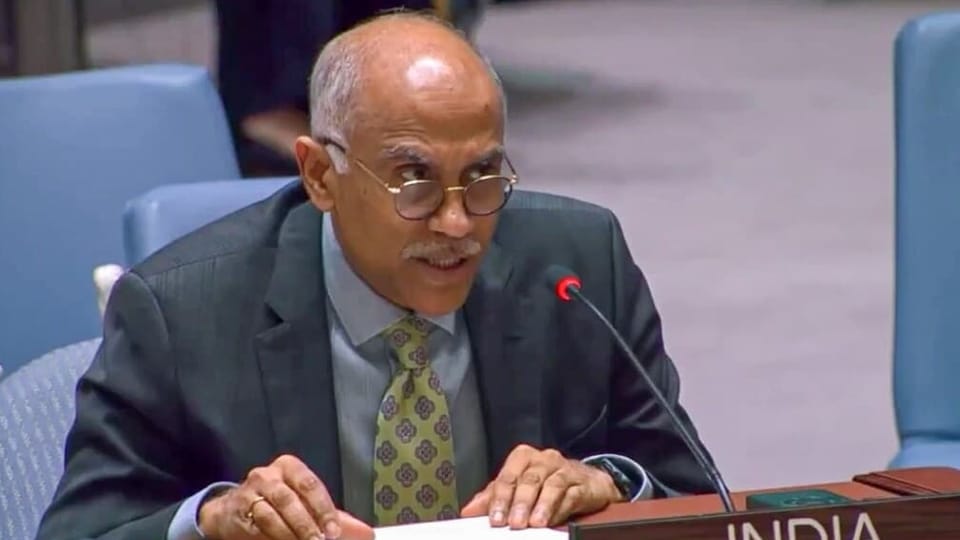
With UN Secretary General Antonio Guterres in India for the summit, Ambassador Harish stated that the summit will highlight that governance gaps the the development of AI related tech exist that require collective multilateral action.
Follow latest updates on India AI Summit
He said that the visit of the UN Secretary General is of particular significance, as it reaffirms that the rapid growth of AI brings great opportunities and serious challenges and addressing them requires strong cooperation and collective action.
Edited excerpts:
UN Secretary-General Antonio Guterres is expected to visit India for the Global AI Impact Summit in New Delhi. What do you see as the significance of his visit?
UN Secretary General is among the several world leaders who are going to be in Delhi for the Global AI Impact Summit in New Delhi. His visit is of particular significance as it is yet another reaffirmation that the opportunities and challenges that the transformational developments of Artificial Intelligence brings needs multilateralism and cooperation.
Prime Minister Narendra Modi has said that AI should be human-centric, trustworthy, and inclusive, with technology serving humanity and enhancing human well-being. These principles resonate strongly with the work of the United Nations and the Global Digital Compact of the Pact for the Future, which leaders of UN Member States agreed upon in September 2024.
The outcomes of the Summit will help inform discussions, including the first UN Global Dialogue on AI Governance that will take place on the margins of the AI for Good Global Summit in July in Geneva. Hence, the participation of Secretary General Guterres as well as that of many of UN’s senior leadership reflects the strong alignment between the Summit’s objectives and the UN’s ongoing work on inclusive and responsible AI. Moreover, this engagement also highlights the growing relevance of AI across the UN ecosystem for development, inclusion and human well-being.
What proposals is India advancing at the UN in New York on sovereign AI and global AI governance standards?
We have not only closely followed developments at the UN on development of global AI governance standards but actually helped shape them as they exist today. Our agenda at the UN is not very different from the sutras of the AI Impact Summit – a focus on people, planet and progress- which together provide human centric and sustainable AI to formulate a development-oriented framework for inclusive growth. For India, democratization of technology is a huge focus and our aim is to align this with our national vision of Welfare for all and happiness of all, following the principle of AI for humanity. It is our belief that the seven Chakras – themes for global cooperation- that are proposed in the AI Impact Summit take forward global conversation towards these goals.
How can UN mechanisms be strengthened to enable India and other Global South nations to jointly pursue collective AI capacity-building?
A lot of work in this regard has actually happened at the UN. The Global Digital Compact of the Pact for the Future that was agreed upon by all world leaders in September 2024 set out a vision for an open, safe and inclusive digital future. One of the commitments in this regard was the creation of an independent International Scientific Panel on AI to advance scientific understanding and ensure that international deliberations get the best possible rigorous, independent and scientific insight. The forty members of this panel include members from many Global South countries, including India.
The Permanent Mission of India is also striving to move the needle by hosting many events to raise awareness on the concerns of the Global South. On the margins of the World Summit on information Society (WSIS+20), we hosted a curtain raiser event for the Global AI Summit, together with previous hosts, France. Together with the UAE, we hosted an event on the use of AI in counter terrorism. Additionally, we also organized a briefing on AI for capacity development. India has nominated IIT Madras as a UN Centre for Excellence under the initiative of UN Office for Digital and Emerging Technologies. All these efforts are aimed at moving the conversation towards a developing an AI framework that serves as many people as possible in the future, with a focus on countries of the Global South.
Also Read: 'Yes, this is AI': Macron shares 'photo' with PM Modi with a note on friendship
Following UNGA resolutions on responsible AI and digital cooperation, what specific technology governance gaps does India believe require urgent multilateral action to ensure that the benefits of frontier technologies are widely distributed?
I believe that what the UN has done so far, is a good start. However, governance gaps exist that require collective multilateral action. That is a message that the AI Impact Summit will also be giving. They include structural inequalities in access and infrastructure, digital divide, missing global norms on DPI and data governance, capacity deficits, and absence of truly inclusive multilateral governance mechanisms. Addressing these is extremely essential and the UN can certainly anchor efforts on technology transfer, capacity building and sector specific safeguards so that frontier technologies serve development, inclusion and work for the Global South rather than concentrating power and benefits in a few hands.
Can the UN act as a forum to mediate growing technological rivalries among great powers?
A UN that is fit for the 21st century will be one that is able to bring as many perspectives together and reflects contemporary realities. This is a work in progress