E-Paper



Birders spot 74 Indian Skimmers near Ganga in Bijnor
The Indian Skimmer is now almost completely restricted to India as a breeding bird, with only occasional breeding in western Bangladesh

 Prefer HTon Google


New Delhi: A team of birders in Bijnor have spotted at least 74 Indian Skimmers, an endangered bird which is found along rivers and coastal estuaries and nests on sandbars.
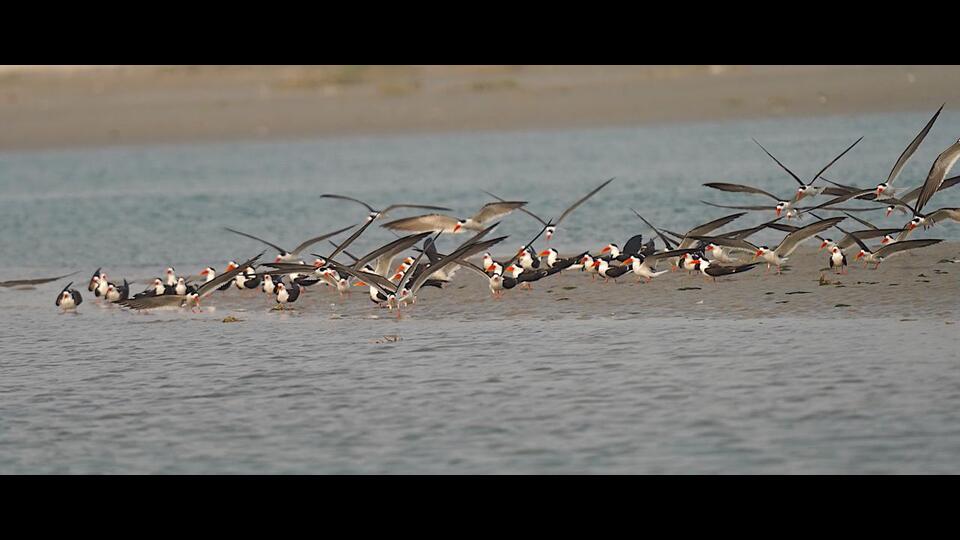
Last year around 15 birds were seen at the same site near Hastinapur Sanctuary. But the team of birders that has been tracking these birds every year said because of severe human disturbance in the area, the birds are not able to nest on the sandbars along Ganga.
“Besides Indian Skimmers, other species whose numbers are in steep decline such as e Black-bellied tern, Great Thick Knee and River Lapwing also nest on these sandbars. They also need protection,” said Ashish Loya, a birder and head of the Wildlife Trust of India’s Nest Guardian Programme in Bijnor. Indian Skimmers start mating in March and nest in April.
“This year it seems like Indian Skimmers from downstream areas such as Narora where there is more disturbance, are also trying to nest on the sandbars here. But we can see that they are not able to nest properly because of human disturbance, movement of farmers, impact of farming on the sandbars. We are hoping that this area is left disturbance free by authorities,” said Ashish Gujjar, also a birder who has been tracking the movement of Indian Skimmers in the region.
The shallow waters and riverbed in this region is also used by farmers to grow vegetables. Globally there are only 2450 to 2900 of the species left in the wild according to Birdlife.
The Indian Skimmer is now almost completely restricted to India as a breeding bird, with only occasional breeding in western Bangladesh. The recent population decline has been accompanied by a range contraction and there are no recent confirmed breeding records from Pakistan or Myanmar, it added.
According to Wildlife Institute of India, the Indian Skimmer is found in the coastal estuaries of western and eastern India. It occurs primarily on larger, sandy, lowland rivers, around lakes and adjacent marshes and, in the non-breeding season, in estuaries and coasts. The damming of the Chambal River, in upstream Rajasthan, has adversely affected its population at National Chambal Sanctuary, Uttar Pradesh, due to the dropping water levels allowing predators and livestock access to breeding islands.
“The main threats to the Indian Skimmer are sand mining and farming over sandbars. Sandbars along Ganga are disappearing very fast because of these activities,” added Loya.
Bijnor district forest officer Gyan Singh said, “In view of the Indian Skimmer nesting, surveillance has been increased in the area near the Hastinapur Sanctury. Public movement of sand bars has been restricted. Besides, boating has been suspended. In collaboration with the world wildlife fund, a detailed plan is being worked out. We are also considering barricading the sensitive area”.