E-Paper



'No backdoor entry': Supreme Court gets UPSC undertaking on Odisha DGP selection
The UPSC told the Supreme Court it will not finalise recommendations for Odisha’s next DGP until the court hears a plea challenging the selection process.

 Prefer HTon Google


The Union Public Service Commission (UPSC) on Thursday assured the Supreme Court that it would not convene a meeting to finalise its recommendations for the appointment of Odisha’s next director general of police (DGP) until the court hears a challenge to the state government’s move to expand the pool of officers being considered for the post.
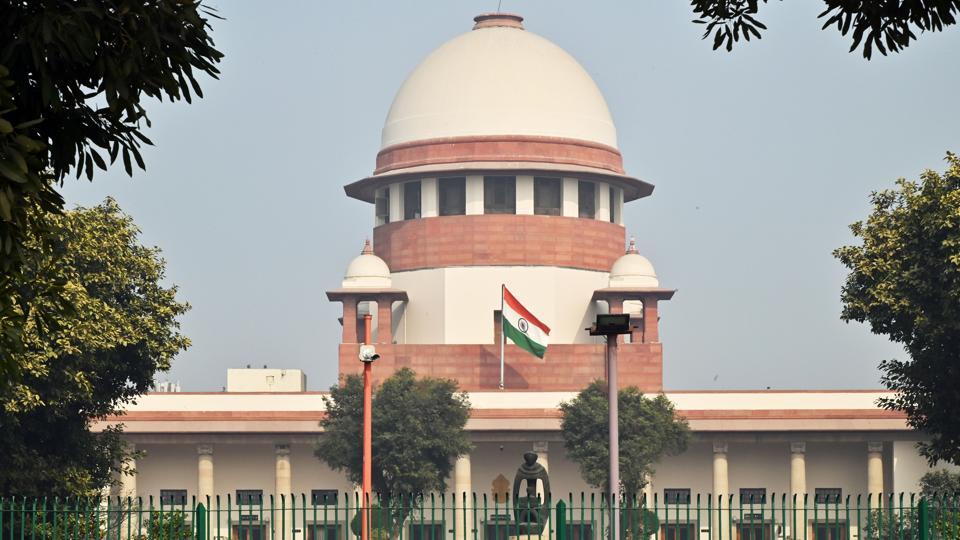
The undertaking came after a bench headed by Chief Justice of India (CJI) Surya Kant indicated that it was inclined to restrain the UPSC from making any fresh selection until the matter is heard on August 18.
“Any backdoor entry is not acceptable…UPSC must not finalise till the next date of hearing,” the bench, also comprising justices Joymalya Bagchi and V Mohana, said.
The court’s intervention followed an application alleging that the Odisha government was attempting to circumvent the Supreme Court’s prescribed procedure for the appointment of DGPs by introducing officers who were not part of the original list of three senior-most eligible officers sent to the UPSC.
Senior advocate P Chidambaram appeared for the petitioner.
Also Read: Odisha DGP selection delayed amid procedural, integrity concerns
The controversy comes days before incumbent DGP YB Khurania, a 1990-batch IPS officer appointed as Odisha’s police chief on August 16, 2024, is due to demit office on August 16.
Under the procedure laid down by the Supreme Court in its 2006 judgment in the Prakash Singh case, states are required to send proposals of eligible officers to the UPSC, which prepares a panel of three officers from among those meeting the prescribed criteria. The state government is then required to appoint the DGP from that panel.
The plea alleges that the Odisha government initially forwarded the names of three senior officers -- Sudhanshu Sarangi, a 1990-batch IPS officer, and Susanta Kumar Nath and R P Koche, both from the 1993 batch, for consideration by the UPSC.
However, before the UPSC could take a call on the three names, the state is alleged to have expanded the list to 11 officers by adding eight IPS officers from the 1994 to 1996 batches.
The issue gained significance after the Odisha government on August 10 promoted two 1994-batch IPS officers, Sanjeeb Kumar Panda and Yeshwant Kumar Jethwa, to the rank of DGP. The petition alleges that their elevation could bring them into consideration if the original list of three officers is replaced or expanded.
The UPSC’s empanelment committee was expected to meet in New Delhi on Thursday to shortlist three officers for the post, a day after the PIL was mentioned before the Supreme Court.
On August 11, Chidambaram had told the CJI-led bench that the state was attempting to breach the procedure prescribed in Prakash Singh.
“The State of Odisha is breaching the Prakash Singh judgment. On August 7, the UPSC was scheduled to meet to select from among the three DGPs. Odisha withdrew the list. They are now making another list to send,” he had submitted.
The senior counsel had alleged that the state was attempting to promote an ADGP and include the officer in the fresh list of candidates for consideration.
The CJI had then pointed out that under an earlier Supreme Court order, the UPSC was duty-bound to approach the court in case of non-compliance with the prescribed directions.
The Supreme Court reiterated in February 2026 that states must adhere to the procedure laid down for the appointment of DGPs. Under the framework, the UPSC is required to prepare a panel of eligible officers, following which the state government must appoint the police chief from among those empanelled. The court has also made clear that prescribed eligibility criteria cannot be bypassed merely because the number of eligible officers is limited. The DGP post at Level 17 is to be filled through selection from among officers holding DGP-level posts at Level 16.
The Prakash Singh judgment, delivered in 2006, had laid down a series of measures aimed at insulating the police from political interference and improving professionalism and accountability in policing. The procedure for selection of state police chiefs was among the key safeguards prescribed by the court.