E-Paper



Budget 2024: Outlay hiked for nuclear, thermal and solar power
India has an installed nuclear energy capacity of 7.48 GW (gigawatts ) which is slated to increase to 13.08 GW by 2029, with the addition of 7 more reactors

 Prefer HTon Google


Union finance minister Nirmala Sitharaman , in her budget speech on Tuesday, announced a diversified energy plan for India focussed on small, modular nuclear reactors, rooftop solar plants, and the development of indigenous technology for Advanced Ultra Super Critical (AUSC) thermal power plants with much higher energy efficiency.
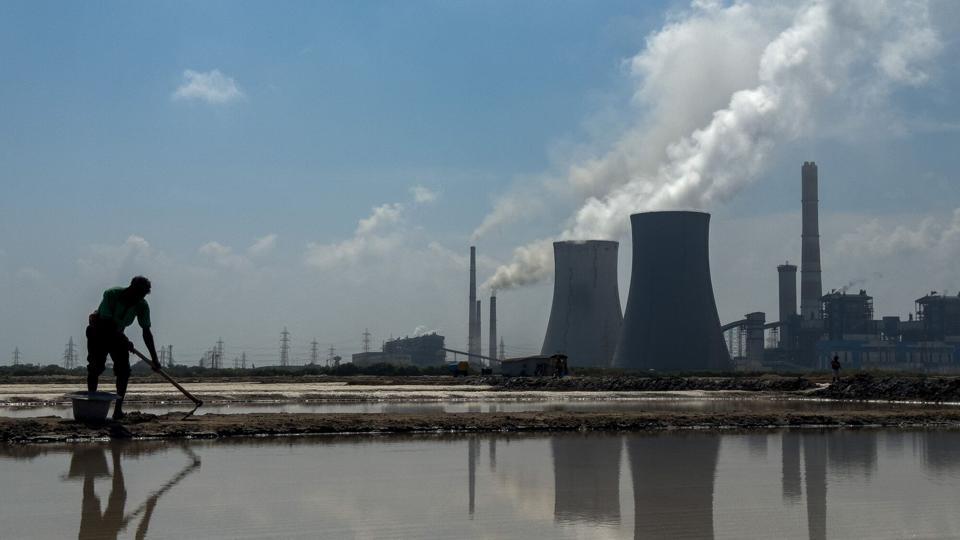
Sitharaman said nuclear energy is expected to form a significant part of the energy mix for Viksit Bharat or developed India, adding that the government will partner with the private sector to set up Bharat Small Reactors, research and development (R&D) of Bharat Small Modular Reactor, and R&D for newer technologies for nuclear energy. “The R&D funding announced in the interim Budget [in February] will be made available for this sector.”
India has an installed nuclear energy capacity of 7.48 GW (gigawatts ) which is slated to increase to 13.08 GW by 2029, with the addition of 7 more reactors.
Sitharaman said PM Surya Ghar Muft Bijli Yojana has been launched to install rooftop solar plants to enable 10 million households to get free electricity up to 300 units monthly. She added the scheme has generated a remarkable response with over 12.8 million registrations and 1.4 million applications. “...we will further encourage it.”
Sitharaman said the development of indigenous technology for AUSC thermal power plants with much higher efficiency has been completed. “A joint venture between NTPC [National Thermal Power Corporation] and BHEL [Bharat Heavy Electricals Ltd] will set up a full-scale 800 MW commercial plant using AUSC technology,” she said. “The government will provide the required fiscal support.”
She said a roadmap for moving the “hard to abate” industries from “energy efficiency” targets to “emission targets” will be formulated.
Sitharaman also announced the development of a taxonomy for climate finance to enhance the availability of capital for climate adaptation and mitigation. “This will support [the] achievement of the country’s climate commitments and green transition.”
“The 2024 Budget has several promising provisions to build a sustainable economy. It addresses not only India’s clean energy ambitions (with a focus on rooftop solar and pumped hydro storage) but also outlines actions on water treatment, air quality, and recovery from riverine floods. In parallel, it targets the broader implications of India’s green industrialisation, how MSMEs—the backbone of India’s industry—will transition, and the importance of a Critical Mineral Mission. These elements are peppered through, but looked at together they form a significant push for a greener economy,” said Arunabha Ghosh, CEO, Council on Energy, Environment and Water (CEEW) in a statement.
“Each of these provisions—from clean energy markets, to green industry, to quality of life—can benefit from a focus on loss prevention from climate events, promoting new business models for households and small industry, a circular economy of resources, and innovative financing beyond budgetary support. In that regard, the Budget’s proposal to define climate finance is a positive step towards mobilising capital for sustainability. These measures can lay strong foundations for a sustainable and prosperous India, with the energy transition as the fulcrum on which public policy can be leveraged for a wider economic transformation,” he added.
International development consulting IPE Global’s sector head (climate change and sustainability) Abinash Mohanty said the Budget outlays a clear intent to bring climate finance from margins to the mainstream through a financial taxonomy. “The Budget stands true to India’s climate commitments and recognises the dire need to step up climate actions.”
Mohanty called promises to mitigate flood risks through climate-resilient infrastructure development across flood hotspots such as Bihar, Assam, and other Himalayan states in the Budget speech laudable.
Mohanty said the Budget, however, lacks focus on improving the climate data and information infrastructure and making it more people-centric, especially when India is losing millions in loss and damage due to climate extremes.
The 2023-24 Economic Survey Union tabled in Parliament on Monday said India will target a diversified set of sources for energy security with a significant place for thermal power, including coal to provide base load, to minimise risks associated with systems while pursuing low-emission pathways in line with national commitments.
It added the integration of renewables, alongside exploring nuclear energy and biofuels, presents a path towards achieving these objectives. “This will also include a significant role for thermal power, especially coal-based power plants, in providing base-load to support large-scale deployment of renewables,” said the survey, which is an overall review of the economy.
“Geopolitically, the thrust on renewable energy and electric vehicles has set off a race to secure critical minerals and rare earths. China has positioned itself as an indispensable source of several of these materials,” the survey said.
Funding of the National Clean Air Plan (NCAP)
The notes on Demand for Grants, 2024-25 for the new budget mentions that pollution control has been conceptualised to provide financial assistance to pollution control boards/committees to fund the National Clean Air Programme (NCAP), the Centre for Science and Environment said. About ₹850 crore has been earmarked this year for NCAP, which is about ₹100 crore higher than the previous year.
“It is important to underline that the experience with the NCAP so far has shown that the scope of the programme and its spending strategy requires reforms to make the programme scalable and effective across all key sectors of pollution, including industry, transport and all other combustion sources that emit highly toxic emissions. It should not remain largely a dust control programme. The funding in the sector requires a longer term policy roadmap along with an up-scaled funding strategy,” said Anumita Roy Chowdhury, executive director, Centre for Science and Environment