E-Paper



Can BJP win back Karnataka by turning to Yediyurappa, Deve Gowda?
Six months after it lost the Karnataka election, the BJP state unit has got a new president in B Y Vijayendra, the son of veteran BJP leader B S Yediyurappa.

 Prefer HTon Google


Six months after it lost the Karnataka election, the Bharatiya Janata Party’s (BJP) state unit has got a new president in B Y Vijayendra, the son of veteran BJP leader B S Yediyurappa.
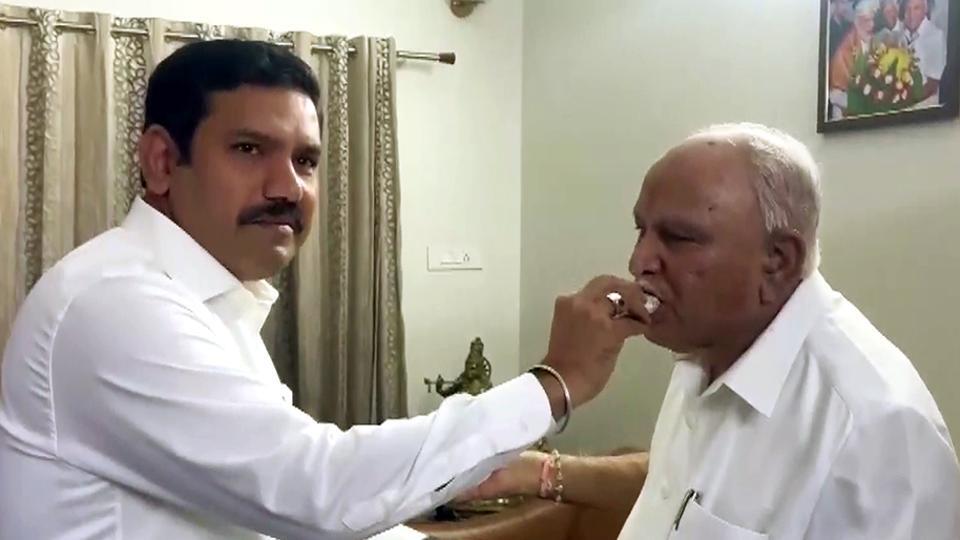
Vijayendra’s appointment is widely being seen as an olive branch by the party high command to Yediyurappa, who was removed from the chief minister’s post by the party in 2021. Buying peace with Yediyurappa is the second major strategic retreat by the BJP in the state, the first being forging an alliance with the Janata Dal (Secular) or JD(S), the regional party of HD Deve Gowda. Can pivoting towards these two patriarchs of Karnataka politics win back Karnataka for the BJP? Here are three charts which try to answer this question.
BJP has suffered when it has sidelined BSY
The numbers speak for themselves. The BJP’s worst performance in Karnataka, after it captured power for the first time in 2008, came in the 2013 elections when it was reduced to a seat share and vote share of just 17.9% and 19.9%, respectively. The BJP fought the 2013 elections in the aftermath of Yediyurappa walking out of the party and forming a new party, the Karnataka Janata Paksha (KJP). An HT analysis of the 2008 and 2013 election results suggests that the KJP was instrumental in the BJP’s rout in the state (see chart 1).

The BJP leadership was prudent enough to realize what had happened and re-inducted Yediyurappa in the party before the 2014 Lok Sabha elections. The decision worked well for the party in both 2014 and 2019 Lok Sabha elections, although the BJP fell short of the majority mark in the 2018 assembly elections in the state despite finishing as the single largest party.
While Yediyurappa became the chief minister after the 2019 Lok Sabha elections, there was continuous friction between him and the party high command which led to him being replaced by BS Bommai as the state’s chief minister.
The party’s poor showing in the assembly elections held this year shows that the strategy clearly did not work.
By appointing Yediyurappa’s son as the state president, the party is clearly hoping to mollify its senior most leader in the state.
JD(S) is fighting an existential battle
JD(S)’s vote share and seat share of 13.3% and 8.5% in the 2023 assembly elections in Karnataka is its worst ever performance since 1999. The fact that the Congress managed to get a comfortable majority of its own in the state, also means that the JD(S)’s ambitions of playing “kingmaker” were completely destroyed.
The 2023 drubbing for the JD(S) came in the backdrop of a disastrous pre-poll alliance it had with the Congress in the 2019 Lok Sabha elections which led to it ceding a lot of political space to the BJP in its strongholds in southern Karnataka.
The 2023 election results seem to suggest that the JD(S) continues to lose support to both the Congress and the BJP in the state. By allying with the BJP, the JD(S) seems to have played a last card in its battle for political survival (see chart 2).
To be sure, a coming together of Lingayat and Vokkaliga patriarchs could also trigger an AHINDA polarization in favour of the Congress
The political optics of BJP’s newly appointed state president Vijayendra visiting HD Deve Gowda signify the coming together of two most influential social groups in Karnataka’s politics, namely the Lingayats and Vokkaligas. The former comprises of the core support base of the BJP, with Yediyurapa being seen as the community’s political patriarch, while the latter is the bedrock of JD(S)’s peasant politics in the state and has had the glory of even having a prime minister in Deve Gowda.
While accurate numbers on the share of these two groups in the electorate are not available, anecdotal accounts put this at as high as 30%.
Can a new synergy between the two political patriarchs and their communities help the BJP regain Karnataka? A parliamentary constituency-wise extrapolation of the BJP’s 2023 assembly tally shows that it would win only 18 out of the 28 constituencies in the state, down from its 2019 tally of 25. History suggests that there is a clear pitfall to this kind of political analysis.
Karnataka has had a history of counter-polarization against dominant caste-led politics in the form of AHINDA (Acronym used for Scheduled Caste, Backwards, and Muslims), which was perfected by Congress leader Devraj Urs. In fact, AXIS-My India exit poll numbers – they got the results right – show that the Congress already had a strong AHINDA mobilization in the 2023 elections. Will this polarisation become even stronger in 2024 or will the BJP bounce back with the help of two patriarchs of Karnataka politics? We will know the answer to this question in 2024 when the Lok Sabha results are declared (see chart 3).