E-Paper



Celebrated poet and former intelligence officer Keki N Daruwalla dies at 87
Renowned poet and former IPS officer Keki N Daruwalla, an inspiration to many young writers and poets, died at a Delhi hospital on Thursday night.

 Prefer HTon Google


Renowned poet and former IPS officer Keki N Daruwalla, an inspiration to countless young writers and poets who looked at him as a mentor, died at a Delhi hospital on Thursday night after a prolonged illness. He was 87.
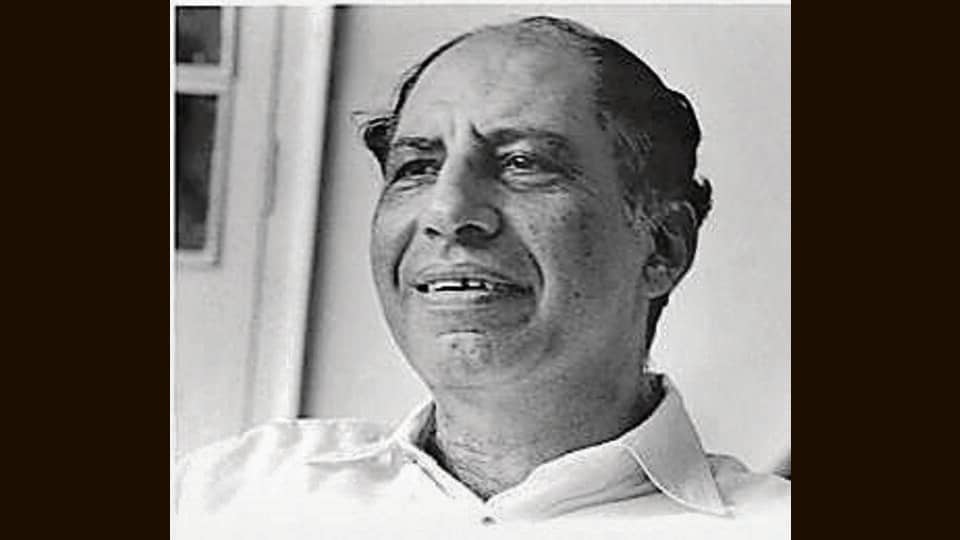
Daruwalla’s last rites were carried out on Friday afternoon at the Parsi Aramgah in Delhi. “He had a stroke a year ago and hadn’t been keeping well since. There were stroke-related complications. But it wasn’t a stroke this time, he basically died of pneumonia,” his daughter Anaheita Kapadia told PTI.
Daruwalla published his first volume of poetry in 1970, titled Under Orion, followed by Apparition in April (1971), Crossing of Rivers (1976), The Keeper of the Dead (1982) – for which he won the Sahitya Akademi award in 1984 – and The Scarecrow and the Ghost (2004), among others. Apart from poems, Daruwalla was also a short story writer and a novelist – and Love Across the Salt Desert, a collection of short stories published in 2006, is one of his notable works, along with his novel Pepper and the Christ (2009).
“Every writer looked at him as their personal friend. The first time I met him was in 1995, and was awestruck. He made light of his stature. A few years later, we reconnected and held creative writing workshops together for the Sahitya Akademi, and once the internet age was upon us, we began exchanging emails and continued to do so till he published Landfall, his volume of poetry, in 2023. He never made you feel like he was a literary giant. Keki had a perspective which wasn’t just global, it was civilisational. He wrote about Persia with the same felicity as he did about rituals in Benares. He was the last of the great poets,” said author Neelum Saran Gour, who won the Sahitya Akademi award last year.
“Keki Daruwalla was a dear friend of over four decades. His kindness, his integrity, and his larger philosophical vision are aspects of him I shall never forget. His literary legacy extends to a vast repertoire of outstanding poetry as well as his mastery as a narrator and prose stylist . I greatly admired his novels and short fiction, especially his recent work in those genres. His passing leaves a vacuum in the literary community,” said Namita Gokhale, writer, publisher and festival director at the Jaipur Literature Festival.
In 2015, after writer MM Kalburgi was killed, Daruwalla – like several other writers – returned his Sahitya Akademi award, and shot off a letter to the then Akademi head, Vishwanath Prasad Tiwari. “...In recent months it (the Akademi) has not stood up as boldly as it should for values that any literature stands for, namely freedom of expression against threat, upholding the rights of the marginalised, speaking up against superstitions and intolerance of any kind. The Akademi has also not distinguished itself in standing by authors who are under political duress. Nor has the Akademi, under your dispensation, spoken out against organisations/ideological collectives that have used physical violence of the worst sort against authors,” he wrote.
Daruwalla ended the note with, “I admit this award I got is prestigious and I must have gained in reputation from it. It still is almost the only award open to a poet writing in English. But there are times when one must stand up to be counted, as the cliché goes. The rising tide of intolerance being what it is, I am constrained to return the Sahitya Akademi Award (1984). My signed letter and cheque will be in your office tomorrow.”
For Dharini Bhaskar, associate publisher, literary, HarperCollins India, it was this “keen sense of politics of the land, exemplary understanding of the times, which seeped into his poetry,” that made Daruwalla a poet like no other.
Writer Nilanjana Roy told HT, “Keki led a capacious life. He – like many others at the time – fought very hard to make people accept that the English language was our own. He taught us that the world is ours, to explore, not own.”
On Friday, the Sahitya Akademi shared a note on Daruwalla’s demise: “His poetry was like a mirror, and he lifted that mirror to our faces whenever one visited his poems... (He) leaves behind an impressive body of work that will remain with us forever.”
Born in Lahore in 1937, Daruwalla studied at the Government College in Ludhiana, and joined the police force in 1958, rose the ranks and became special assistant on international affairs to former Prime Minister Charan Singh in 1979, and eventually joined the Research and Analysis Wing (R&AW) where he retired as chairman of the Joint Intelligence Committee in 1995.
Vappala Balachandran, former special secretary, Cabinet Secretariat, and Daruwalla’s old friend and colleague at R&AW, told HT, “People would often ask: ‘How can Keki be a police officer? He’s so generous!’ The most remarkable thing about him was his kindness and sincerity. He was most likeable and had a childlike innocence despite being a police officer. We met in the 1970s and at the time, he was already a poet who had been published and awarded.”
He recalled how Daruwalla – a dedicated and sincere officer – found time for poetry and prose. “He didn’t take leaves to finish his poems. He would go home, and just switch off. You’d find him staring into nothingness, with marbles in his fist that he would shake... And when he would stop, you’d know he had found inspiration for a beautiful story. It was a joke our two families shared that Keki, mid conversation, gets lost and comes back with poetry. He took out time for everyone. He was generous with his time and attention – both towards young poets and young R&AW colleagues,” recalled Balachandran.
From the halls of power to literary circuits, Daruwalla’s long list of friends and fans remember him as a man with endless generosity.
“I was in my 20s when I first edited Islands, a collection of his short stories for Westland. I was nervous but also excited to meet him and edit his work. What struck me was his humility and how generous he was in the way he took feedback,” said Bhaskar. “Over the years, we got to know each other not just as writer-editor but also friends. No matter what milestone it was – personal or professional – he would always say, ‘Hang in there’.”