E-Paper



India responds to White House report on Chinese goods transshipment
India says it is studying a White House report that flags the country among major hubs for transshipment of Chinese goods to evade US tariffs.

 Prefer HTon Google


India on Friday said it is examining a White House report that places the country in the top tier of nations allegedly being used for transshipment of Chinese goods to evade US tariffs, while defending the national framework of laws and regulations to prevent such practices.
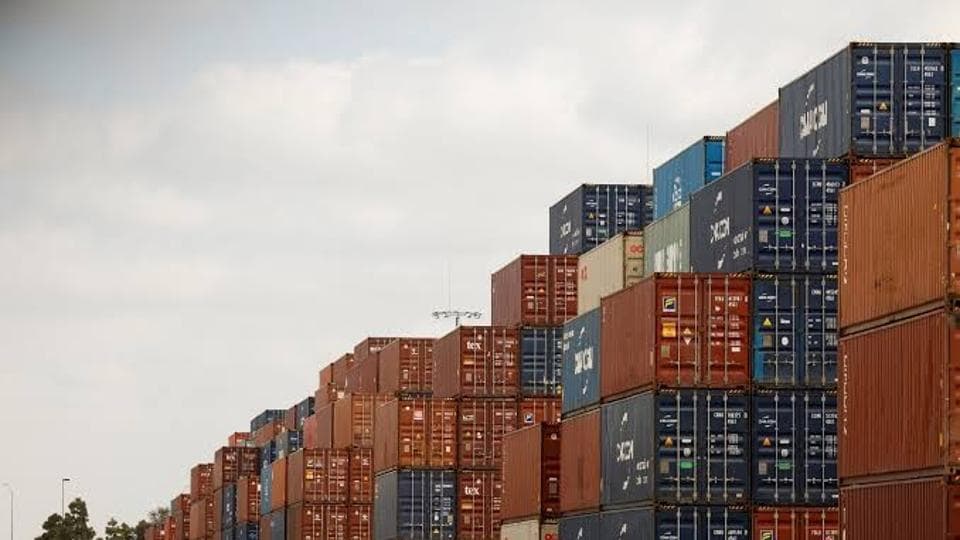
The report by the White House’s Office of Trade and Manufacturing Policy, seen as part of efforts to prevent Chinese products from circumventing US tariffs through third countries, listed India among more than 40 countries that are perceived to be exposed to China-linked transshipment risks. The report listed India among “China’s biggest enablers”.
“We have seen some reports on this particular matter. We would like to study the findings and the methodology that has been adopted in detail,” external affairs ministry spokesperson Randhir Jaiswal told a regular media briefing when he was asked about the White House report.
Deep Dive

“We have robust laws and procedures governing customs, rules of origin and exports, and any instances of violation that may be there are dealt with in accordance with law,” he said.
Jaiswal noted that the government had learnt of the US report on Friday morning and is still studying its findings and methodology. “Beyond that, I don’t have, at present, anything specific to add to what I’ve already said,” he said.
The report placed India, along with Canada, the European Union, Israel, Japan, Mexico, South Korea and Taiwan, in Tier 1 of “countries and trading blocs that account for large absolute volumes of China-linked goods while maintaining diversified industrial bases and major US-bound export platforms”.
The report contended that in these jurisdictions, “illegal transshipment risk is embedded within broad legitimate trade flows”.
“The countries that comprise China’s Shadow Transshipment Network include many of America’s largest trading partners. China’s biggest enablers range from Mexico and Canada on US land borders to the European Union, India, Japan and South Korea,” the report said.
The White House also estimated that “approximately $67 billion in US-bound goods were transshipped from China through the top hubs — Mexico, India and Vietnam — in 2025, producing an estimated $28 billion in lost tariff revenue”.
Jaiswal also dismissed speculation that the government referred a bill proposing changes to the Foreign Contribution (Regulation) Act (FCRA) to a joint parliamentary committee because of pressure from the US.
“As I have informed you earlier and let me reiterate again that legislative matters concerning India are our own internal matters on which the Parliament of India is there to decide, and only the Parliament of India is there to decide,” he said in response to another question.
“I would also urge you that you should disregard mischievous and misleading reports on this particular issue,” he said.
Reports had suggested that US Vice President JD Vance had spoken on the phone with Prime Minister Narendra Modi and US ambassador Sergio Gor had met Foreign Secretary Vikram Misri and National Security Adviser Ajit Doval regarding the Foreign Contribution (Regulation) Amendment Bill 2026 after several American lawmakers expressed concerns about its impact on Christian organisations and charities.