
 E-Paper



Courts must not apply SC/ST Act bail bar mechanically: Supreme Court
The order is likely to have significance in cases where allegations under the Atrocities Act are coupled with offences under general criminal law

 Prefer HTon Google


The Supreme Court has held that there cannot be a mechanical denial of anticipatory bail merely because offences under the Scheduled Castes and Scheduled Tribes (Prevention of Atrocities) Act are invoked, underlining that courts must carefully scrutinise the facts and allegations in each case before refusing relief.
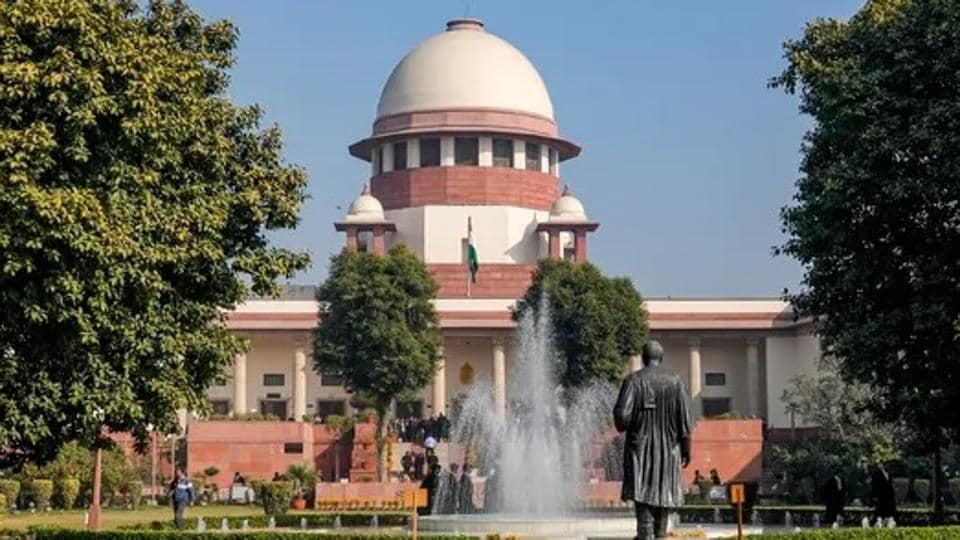
A bench of justices JB Pardiwala and Ujjal Bhuyan said that the statutory bar contained in Section 18 of the SC/ST Act cannot be applied in a routine or automatic manner and the nature of allegations in the FIR as well as supporting material on record must be examined.
“So far as the bar of Section 18 of the Atrocities Act is concerned, we may only say that it would all depend on the facts of each case. It would also depend on the nature of the allegations levelled in the FIR and the other materials on record. Section 18 of the Atrocities Act should not be applied mechanically,” the bench noted in its order passed last week.
The order is likely to have significance in cases where allegations under the Atrocities Act are coupled with offences under general criminal law, particularly in disputes arising out of personal relationships, where courts are often called upon to determine whether the ingredients of caste-based offences are prima facie established before denying liberty to the accused.
Also Read: Expanding judicial review in matters of faith troubling: SC
The ruling came while the top court was dealing with an appeal arising out of a Gujarat High Court order of March 2026 refusing pre-arrest bail to a man accused under Section 69 of the Bharatiya Nyaya Sanhita (BNS) and provisions of the SC/ST Act.
The prosecution case stemmed from allegations by a woman belonging to a Scheduled Caste community that the accused had entered into a relationship with her on the promise of marriage, established physical relations and later backed out. The FIR also alleged that despite knowing her caste identity, he had asked her to conceal it.
While rejecting anticipatory bail, the Gujarat High Court had observed that although the allegations under the SC/ST Act may not prima facie indicate that the relationship failed solely because of caste, the accusations under Section 69 of the BNS appeared serious enough to deny discretionary relief.
The high court had further held that the accused’s defence that he lacked financial resources to marry the complainant was unconvincing, particularly since records showed he had recently secured employment.
It also brushed aside the accused’s contention that he had approached the police complaining of threats from the complainant, observing that her statements about filing a police complaint could not be treated as criminal intimidation and that her alleged threats of suicide appeared to be “the reaction of a frustrated lover and nothing more”.
The Supreme Court, however, while considering the challenge to the high court order, emphasised that the embargo under Section 18 of the SC/ST Act does not completely oust judicial scrutiny and courts are duty-bound to assess whether the allegations genuinely attract the rigours of the statute.
The provision bars anticipatory bail for offences under the Act and has often been invoked to oppose pre-arrest protection to accused persons. However, the top court has repeatedly held in earlier judgments that courts can examine whether a prima facie case under the Act is actually made out before declining relief.
Reinforcing that position, the bench stressed that the application of Section 18 must be guided by the specific factual matrix of each case rather than by a blanket assumption that anticipatory bail is impermissible whenever the SC/ST Act is cited in the FIR.



