
 E-Paper



Covid detection with CRISPR, phones in offing
This new CRISPR diagnostic method doesn’t amplify coronavirus RNA but uses multiple guide RNAs that work in tandem to increase the sensitivity of the test, said the research team in the yet to be peer-reviewed study published in the pre-print server medRxiv.

 Prefer HTon Google


Researchers in the US led by the 2020 Nobel laureate for chemistry Jennifer Doudna have used a CRISPR gene-editing technology to develop a rapid, portable, accurate, and low-cost mobile-based test that can detect the pandemic coronavirus (Sars-CoV2) in five minutes.
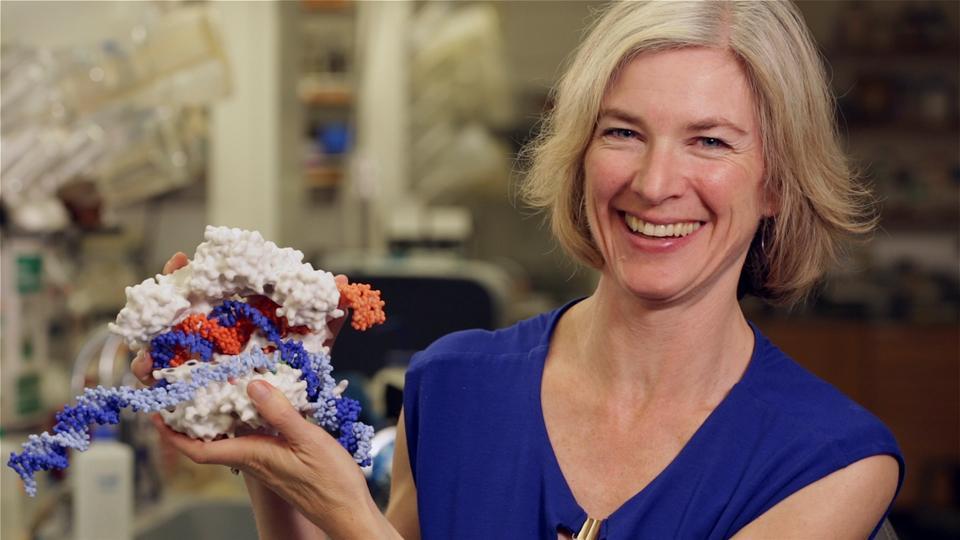
This new CRISPR diagnostic method doesn’t amplify coronavirus RNA but uses multiple guide RNAs that work in tandem to increase the sensitivity of the test, said the research team in the yet to be peer-reviewed study published in the pre-print server medRxiv. The test does not require expensive lab equipment, and can be deployed for rapid point-of-care testing at doctor’s offices, schools, and office buildings.
The diagnostic gold standard for coronavirus disease diagnosis is the quantitative reverse transcription-polymerase chain reaction (RT-qPCR) test, which takes five to six hours to produce result. CRISPR-based diagnostics that utilises RNA and DNA-targeting enzymes can augment gold-standard PCR-based testing if they can be made rapid, portable and accurate, said Doudna’s team.
“The assay achieved ~100 copies/μL sensitivity in under 30 minutes and accurately detected a set of positive clinical samples in under 5 minutes. We combined crRNAs targeting SARS-CoV-2 RNA to improve sensitivity and specificity, and we directly quantified viral load using enzyme kinetics. Combined with mobile phone-based quantification, this assay can provide rapid, low-cost, point-of-care screening to aid in the control of SARS-CoV-2,” write researchers.
The test also quantifies the amount of virus in a sample, with the strength of the fluorescent signal proportional to the amount of virus in a sample. This cannot be done in standard Covid-19 tests that amplify the virus’ genetic material to detect it. Detecting a patient’s viral load can guide treatment decisions. The test needs validation before it is commercially available.
CRISPR diagnosis work by identifying a sequence of RNA—about 20 RNA bases long—that is unique to SARS-CoV-2. They do so by creating a “guide RNA” that is complementary to the target RNA sequence so it binds to it in solution. The binding turns on the CRISPR tool’s Cas13 “scissors” enzyme that cuts single-stranded RNA to release a separately introduced fluorescent particle in the test solution. These fluorescent particles light up to when hit with laser light, signaling the presence of the virus.
CRISPR diagnostics is already being used for Sars-CoV-2 detection, but the new test is the fastest CRISPR-based diagnostic yet.
“I think this is an interesting new approach that is faster because it doesn’t have an amplification step. But, because it doesn’t have the amplification step, it cannot easily detect low viral loads unlike qRT-PCR or FELUDA. The five minutes result is only when starting from RNA with high amount of virus. For usual samples it will be more than 30 minutes. The device requirement is not zero but low - a constant temperature holder and a laser illumination optical box. I think CRISPR based tests will see a lot of innovation and it is a good sign for the fight against COVID-19,” said Dr Anurag Agrawal, director, Council of Scientific & Industrial Research-Institute of Genomics and Integrative Biology (CSIR-IGIB), New Delhi.
Scientist from CSIR-IGIB have also developed a precise and cost-effective strip test named after a popular Satyajit Ray detective FELUDA to detect Covid-19 in one hour, starting from RNA to giving a visual readout on the strip.
FELUDA, which is an acronym for FNCAS9 Editor-Linked Uniform Detection Assay, uses CRISPR gene-editing technology to identify and target the genetic material of Sars-CoV2, the virus that causes Covid-19. It has been developed by CSIR-IGIB senior scientists Dr Debojyoti Chakraborty and Dr Souvik Maiti.
FELUDA tests work by combining CRISPR biology and paper strip chemistry. A Cas9 protein, a component of the CRISPR system, is barcoded to interact specifically with the Sars-CoV2 sequence in the patient’s genetic material.
The complex of Cas9 with Sars-CoV2 is then applied to a paper strip, where using two lines (one control, one test) make it possible to determine if the test sample was infected with Covid-19.
Going forward, CRISPR-based tests have the potential for modification to detect the next emerging virus and rapidly scale up testing, if needed.


