
 E-Paper



CREDAI, EY report calls for focus on brownfield integrated urbanisation
The report said the real estate sector significantly boosts India’s tax revenues and there is scope for simplifying norms to prevent double taxation and improve GST compliance

 Prefer HTon Google


Focusing on brownfield integrated urbanisation to accelerate growth in the larger agglomerations rather than greenfield city development could be more efficient in realising the government’s vision of “Viksit Bharat (developed India)” by 2047, a Confederation of Real Estate Developers’ Associations of India (CREDAI) and Ernst & Young (EY) report has said.
The report said the impact of a higher Floor Space Index (FSI) in existing cities would be much earlier and at a lower government investment. It added that greater flexibility in land use and certain synergistic interventions across multiple sectors would have a greater impact on economic growth sooner than new greenfield interventions or focusing on highly underdeveloped areas.
The report, which was released on Tuesday, highlighted the availability of land through effective zoning and land acquisition policies could encourage planned satellite towns near major urban agglomerations.
The report advocated for simplification of development regulations, fast-track approval systems, and other policies that ensure transparency for private sector participation. It suggested a change in the alignment of property taxes with real estate market values, using the Real Estate Regulation and Development Act carpet area as the basis. The report asked the government to consider minimising land revenue and taxation to incentivise development and make housing affordable.
The report advocated for a housing finance guarantee scheme to promote affordable housing. It added the real estate sector significantly boosts India’s tax revenues and there is scope for simplifying norms to prevent double taxation and improve the Goods and Services Tax compliance.
The report backed making real estate investment trusts (REITs) more tax attractive. It cited contrast with the US, where 80% of listed real estate firms have REIT involvement, compared to India’s below 5%. It said that with Indian REITs’ market capitalisation at just 1% of GDP, there is ample scope for expansion.
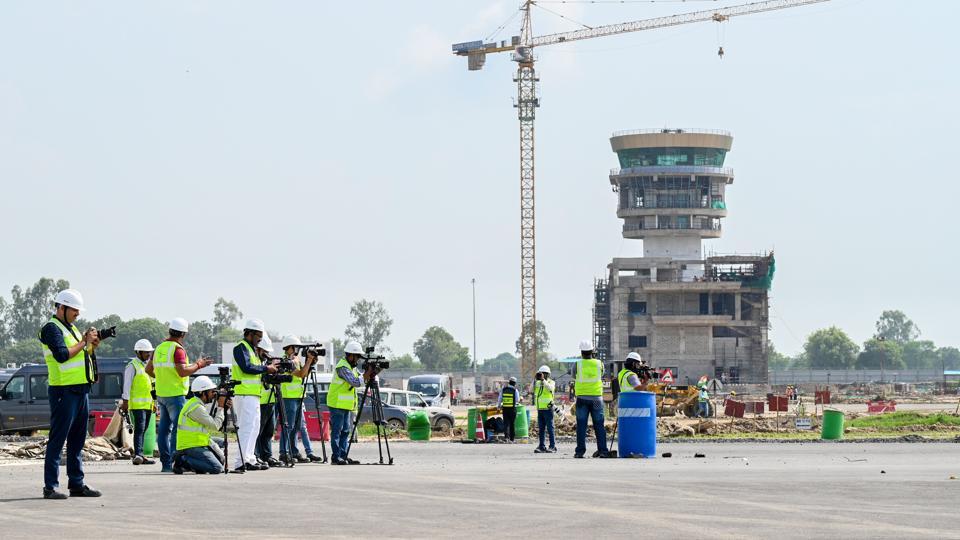
The report noted that India’s infrastructure and real estate sectors are closely linked, with initiatives such as the National Infrastructure Pipeline and PM Gati Shakti enhancing project planning and execution. The anticipated growth in airports, ports, railway terminals, and social infrastructure is set to unlock real estate investment opportunities in adjacent areas as seen in Navi Mumbai and Noida international airports.
Tathagata Chatterji, an urban governance expert and Xavier Institute of Management, Bhubaneshwar, professor said there cannot be a “one size fits all” approach. He added in general city urban renewal/brownfield development should be preferred as inner-city areas are closer to places of work and other amenities. “It is important to increase FAR[Floor Area Ratio]/FSI to promote multistorey buildings. FAR of most Indian cities are much lower compared to global standards.”
Chatterji said satellite city development should encourage transit-oriented development and eco-friendly mixed-use development. “Otherwise, most satellite cities lead to gated communities.”


