
 E-Paper



Delhi AQI: Air quality at ‘severe-plus’ category in some areas amid GRAP curbs
While the overall AQI was at 442 at around 7 am on Wednesday, the figures in some monitoring stations of Delhi were at the ‘severe-plus’ category.

 Prefer HTon Google


Delhi on Wednesday woke up to another day of toxic air with the overall Air Quality Index (AQI) standing at over 440 - ‘severe' category at around 7 am in the city where Stage 4 of anti-pollution curbs under the Graded Response Action Plan (GRAP) are in effect.
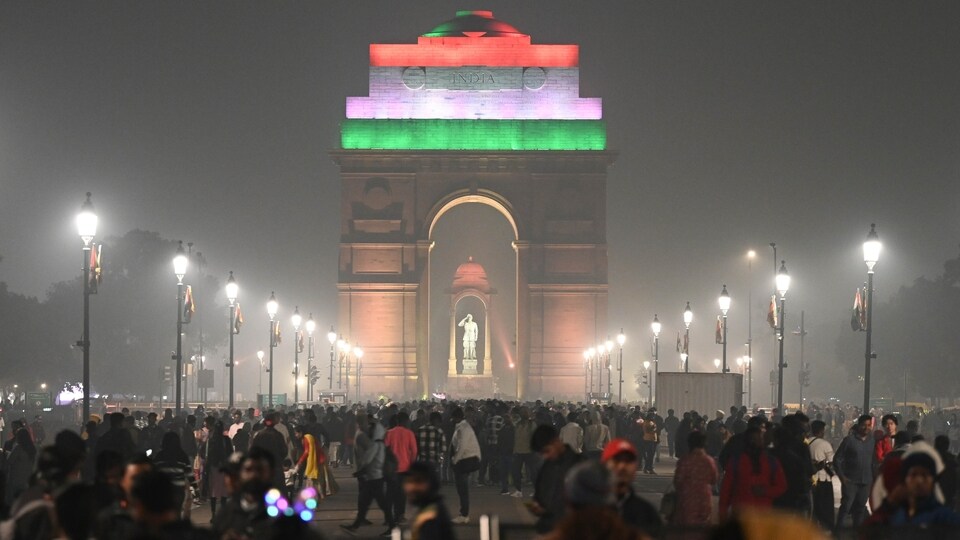
While the overall AQI was at 442 at around 7 am on Wednesday, the figures in some monitoring stations of Delhi were at the ‘severe-plus’ category.
Delhi AQI today
Of the 37 monitoring stations listed in the Sameer app, which provides hourly updates on the National Air Quality Index, the AQI at 21 stations stood at severe-plus category on Tuesday morning.
Some of the monitoring stations with the worst AQI were: Nehru Nagar (480), Alipur (471), Anand Vihar (481), CRRI Mathura Road (468), Jahangirpuri (468), and Rohini (466).
Also Read: Delhi shivers amid coldwave conditions as minimum drops to 4.5°C; AQI ‘very poor’
As oper the Central Pollution Control Board (CPCB), an AQI between 0 and 50 is considered "good," 51-100 "satisfactory," 101-200 "moderate," 201-300 "poor," 301-400 "very poor," 401-450 "severe," and above 450 “severe plus.”
The last time Delhi's AQI entered the severe-plus category was in mid-November.
GRAP 4 in Delhi
Delhi's plummeting air quality prompted auhorities to reimpose on Monday night the Stage 4 of GRAP which includes restrictions such as a ban on construction activities and the entry of trucks into the city.
Experts cited in a news agency PTI report pointed to a significant drop in wind speeds as the primary cause of the sudden spike in pollution, explaining that the lower speed allowed local pollutants to concentrate in the atmosphere.
During winters, the national capital enforces restrictions under the Graded Response Action Plan (GRAP), which categorises the city's air quality in four stages -- Stage I (Poor, AQI 201-300), Stage II (Very Poor, AQI 301-400), Stage III (Severe, AQI 401-450), and Stage IV (Severe Plus, AQI above 450).
GRAP IV also includes a ban on all construction and demolition activities, including public projects such as highways, flyovers, power lines and pipelines. Diesel trucks carrying non-essential items are prohibited from entering Delhi.
Public, municipal and private offices must decide on allowing only 50 per cent of staff to work in offices, with the remaining working from home. Additional measures such as closing colleges, non-essential businesses and implementing odd-even vehicle restrictions may also be considered.
GRAP Stage IV was invoked in Delhi for the first time this season in November due to consistently high pollution levels.
The Supreme Court allowed the Commission for Air Quality Management (CAQM) to relax the curbs in the first week of December after the city's air quality improved.
Unfavourable meteorological conditions, combined with vehicle emissions, paddy-straw burning, firecrackers and other local pollution sources lead to hazardous air quality levels in Delhi-NCR during winters.
Doctors say breathing Delhi's polluted air is equivalent to smoking approximately 10 cigarettes a day.


