
 E-Paper



GRAP IV restrictions reimposed in Delhi-NCR: What's allowed, what's not?
GRAP-4 was enforced in Delhi in November due to high pollution, but on December 5, the SC allowed the CAQM to relax it to Stage 2 as air quality improved.

 Prefer HTon Google


The Centre's air quality panel for Delhi-NCR on Monday enforced GRAP 4 restrictions under the winter air pollution control plan, including a complete ban on construction activities, as the region's air quality worsened to the 'severe' category due to adverse weather conditions. The Stage 4 curbs were implemented just hours after GRAP Stage 3 measures were imposed in the capital.
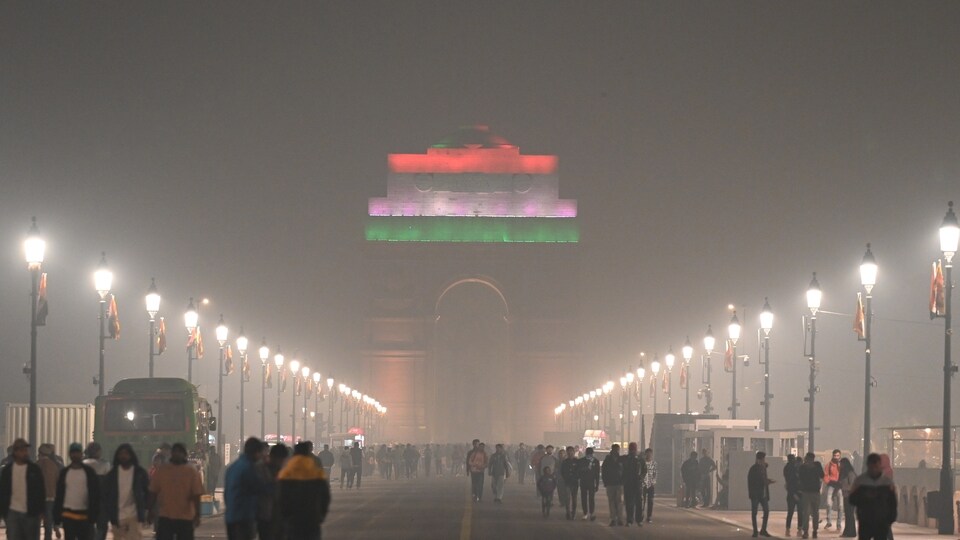
Delhi's 24-hour average Air Quality Index (AQI), which stood at 379 by 4 pm, crossed 400 around 10 pm due to stagnant wind conditions and the formation of an inversion layer, which limits the vertical dispersion of pollutants.
GRAP Stage 4 was implemented in Delhi for the first time this season in November following persistently high pollution levels in the city and nearby areas. Subsequently, on December 5, the Supreme Court allowed the CAQM to ease the GRAP-4 restrictions to Stage 2 after air quality levels improved in the Delhi-NCR region.
During winters, Delhi enforces restrictions under Graded Response Action Plan (GRAP), which categorises air quality into four stages – Stage I (Poor, AQI 201-300), Stage II (Very Poor, AQI 301-400), Stage III (Severe, AQI 401-450), and Stage IV (Severe Plus, AQI above 450).
GRAP 4: What's allowed, what's not
- Entry of trucks into Delhi would be restricted, with exceptions for those carrying essential goods or services and vehicles operating on LNG, CNG, electric, or BS-VI diesel.
- Delhi-registered BS-IV and older diesel heavy goods vehicles (HGVs) would be banned, except for those engaged in essential services or transporting essential commodities.
- The ban on construction and demolition (C&D) activities under GRAP Stage-III would be extended to linear public projects, including highways, roads, flyovers, power transmission lines, pipelines, and telecommunication infrastructure.
- Hybrid learning, combining online and offline modes, would be mandated for students in Classes VI to IX and XI in Delhi and districts such as Gurugram, Faridabad, Ghaziabad, and Gautam Buddh Nagar, where online options are feasible, with the choice of online mode left to students and their guardians.
- Other districts in the NCR would be encouraged to adopt hybrid learning for schools based on feasibility.
- Public, municipal, and private offices in NCR would be directed to function at 50% on-site capacity, with the remaining employees working from home.
- The Central Government would be advised to consider work-from-home options for employees in central government offices.
- State Governments could implement emergency measures, including closing colleges and non-essential commercial activities and introducing an odd-even vehicle registration scheme for private vehicles.


