E-Paper



Supreme Court collegium to recommend five judges for high court chief justices
The collegium is headed by Chief Justice of India Surya Kant and comprises of justices Vikram Nath and BV Nagarathna.

 Prefer HTon Google


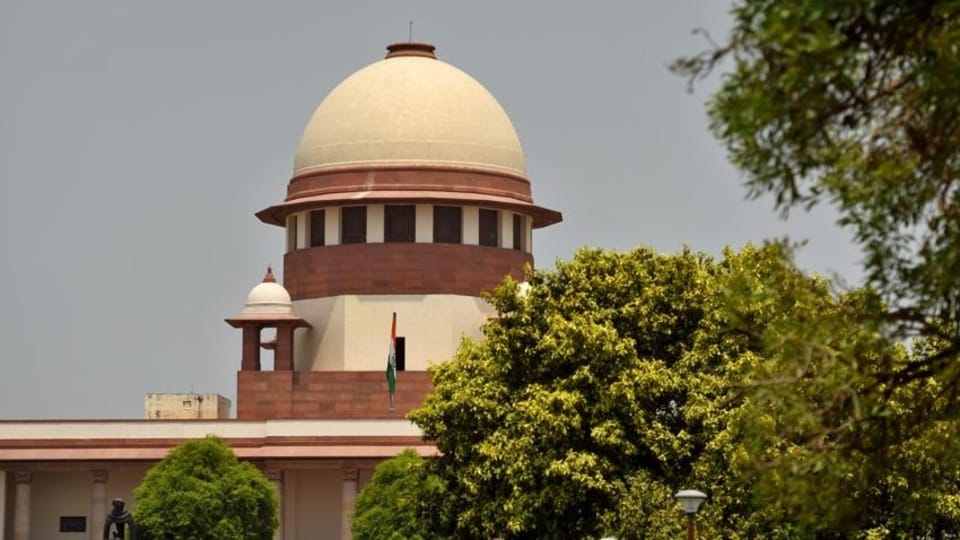
The Supreme Court collegium has decided to recommend five judges for appointment as chief justices of different high courts, in a move aimed at filling several vacancies that have left courts functioning under acting chief justices, people aware of the matter said on Saturday.
State-wise HC recommendations
The collegium, headed by Chief Justice of India Surya Kant and comprising justices Vikram Nath and BV Nagarathna, has decided to re-recommend Delhi high court judge justice V Kameswar Rao as chief justice of the Patna high court.
It has also decided to re-recommend two acting chief justices for appointment as full-time chief justices of their respective high courts — justice Ashwani Kumar Mishra for the Punjab and Haryana high court and justice Sanjeev Prakash Sharma for the Rajasthan high court.
The collegium has further decided to recommended Allahabad high court judge justice Mahesh Chandra Tripathi as chief justice of the Bombay high court and Bombay high court’s acting chief justice justice Ravindra Vithalrao Ghuge as full-time chief justice of the Calcutta high court.
The signed recommendations are expected to be sent to the Union government shortly, people familiar with the matter said.
No decision has, however, been taken so far on appointing full-time chief justices for the Madhya Pradesh high court and the high court of Jammu & Kashmir and Ladakh.
Also Read I Lakhimpur Kheri case: SC refuses to relax Ashish Mishra’s bail conditions
Full-time leadership over acting chief justices
The move comes against the backdrop of several high courts functioning under acting chief justices. According to the position as on August 1, the Bombay high court has been headed by justice Ghuge as acting chief justice since June 2, 2026, while the Calcutta high court has been under acting chief justice justice Tapabrata Chakraborty since June 21. The Madhya Pradesh and Jammu & Kashmir and Ladakh high courts have also had acting chief justices since June 2.
The Punjab and Haryana high court has been headed by justice Ashwani Kumar Mishra as acting chief justice since June 2, while justice Sanjeev Prakash Sharma has been acting chief justice of the Rajasthan high court since September 28, 2025. Patna, too, was shown as being headed by an acting chief justice in the August 1 position chart.
The recommendations would therefore provide full-time leadership to five of these courts, leaving Madhya Pradesh and Jammu & Kashmir and Ladakh without permanent chief justices for the time being.
The recommendations are also significant in view of the impending changes in the higher judiciary. The Supreme Court currently has three vacancies. Two more vacancies are scheduled to arise later this year with the retirement of justice Sanjay Karol on August 22 and justice Satish Chandra Sharma on November 29.
Justice Karol was elevated to the Supreme Court on February 6, 2023, while justice Sharma joined the apex court on November 9, 2023.