E-Paper



'Youngsters need to be counselled': Supreme Court agrees to hear plea against 'Sansad Chalo' march organisers
The Supreme Court is set to hear a petition regarding the July 20 protests in Delhi, citing the importance of restraint and community service for violators.

 Prefer HTon Google


The Supreme Court on Wednesday said that the “most powerful force” available to society and law enforcement agencies to prevent violence during protests is to listen to young people and counsel them, cautioning that any “aggressive action in the name of the mighty State” could aggravate tensions and trigger further unrest.
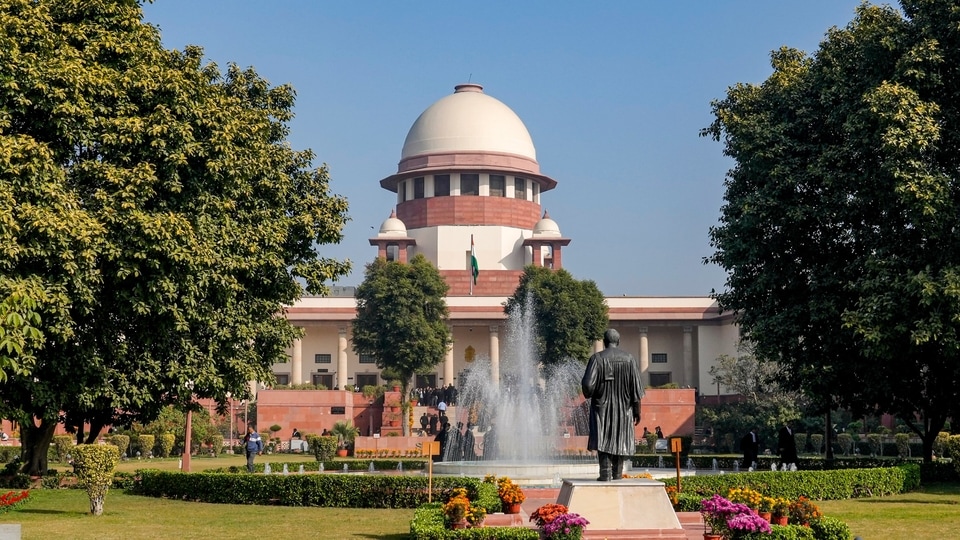
A bench comprising Chief Justice of India (CJI) Surya Kant and justices Joymalya Bagchi and V Mohana made the observations while agreeing to hear a petition seeking action against the organisers of the July 20 “Sansad Chalo” march in Delhi, during which violence broke out. The court directed that the plea be tagged with the batch of petitions already pending before it concerning the student protests and the alleged police excesses during the demonstrations.
The fresh petition was filed by former Indian Air Force officer Manish Solanki, who sought action and accountability against the organisers and alleged rioters involved in the July 20 march. The plea also urged the court to restrain the Union and state governments from withdrawing criminal cases arising out of the protests solely on the basis of political considerations.
Also Read | 21-year-old woman, who landed in ICU after cop action in CJP protest, discharged from Delhi's RML Hospital
It further sought directions to identify those who allegedly made derogatory remarks against police and security personnel and require them to perform community service.
Petitioner seeks accountability of protest organisers
Appearing for the petitioner, advocate Rizwan Ahmad argued that while questions were being raised about the accountability of governments and police, the organisers of the protest had escaped scrutiny. “It has been 15 days and after having created mayhem in a sensitive area, they are just moving from one television channel to another, delivering provocative speeches and still fanning the fire. The government could be on the back foot now but society and this court cannot be,” Ahmad submitted.
The bench, however, indicated that the issues raised would be examined along with the larger batch of pending matters.
“Better we hear this with the batch of other matters where several related issues are pending. We are open to all kinds of suggestions, viewpoints and dissenting views,” it observed.
When Ahmad pressed for issuance of notice, the bench stressed that the response to young protesters should be guided by restraint rather than confrontation.
“Youngsters are required to be pacified, counselled, and any aggressive action in the name of the ‘mighty State’ can unnecessarily aggravate the situation and precipitate further violence. That needs to be avoided,” the bench remarked.
‘Stone-pelters can’t be let off'
Ahmad contended that those who indulged in stone-pelting and violence could not be allowed to escape accountability merely because governments may be inclined to withdraw criminal cases.
“Ours is a petition arguing for community service. Stone-pelters cannot be let off… This will become a dangerous precedent. The government in the NCT of Delhi is bending backwards and this can become a dangerous trend in other states too,” Ahmad argued.
He further submitted that the July 20 march had been held without permission and that several conditions governing the event had allegedly been violated.
Also Read | 'Mere agitation can't justify lathi-charge': SC on July 20 student protest crackdown at Jantar Mantar
“There was no permission for the July 20 march. Twenty-two conditions were violated by the organisers, which was not even a registered organisation. How could they be allowed to march to Parliament or enter the temple of democracy? Who knew someone among them did not have a country-made pistol or a bomb?” he submitted.
‘Most powerful force is listening’
Responding to these concerns, the court underlined that democratic protests should begin peacefully and that authorities must exercise restraint even when isolated incidents occur.
“What is important is that democratic movements start peacefully. If some incidents take place, forces also need to exercise a lot of restraint so that the situation does not go out of hands. Wherever such incidents take place, we need to tread carefully so that youngsters do not indulge in violence,” it emphasised.
“The better way is to counsel them. The most powerful force is listening... listen to them and understand why they are there,” it added.
The court also said it would leave operational decisions to law enforcement agencies, while examining the broader legal issues raised before it. “Let us leave it to the wisdom of the law enforcement agencies. They know better how to handle situations on the ground. We are open to hearing all sides and all kinds of opinions. Let the government also respond to this,” the bench said.
The matter has now been tagged with the batch of petitions arising out of the nationwide protests over the NEET examination controversy.
The proceedings form part of the Supreme Court’s continuing examination of the fallout from the July 20 “Sansad Chalo” protest.
On Monday, the same bench clarified that its July 28 interim order did not prevent governments from closing or withdrawing criminal cases against eligible student protesters in accordance with law. It emphasised that only persons with “grave and heinous” criminal antecedents would remain outside the protection granted by the court.
Also Read | No more protests at Jantar Mantar? Supreme Court to hear plea against suitability of Delhi site
The bench had also expressed its willingness to facilitate the withdrawal of criminal cases against eligible students so that FIRs did not “keep hanging on the heads of the students”, while making it clear that the benefit would not extend to those accused of serious offences such as murder, rape or kidnapping.
During that hearing, the court disclosed that it was considering constituting a special investigation team to examine cases not withdrawn or closed, as well as a separate committee headed by a former judge to inquire into issues arising from the protests.
It also indicated that it intended to frame comprehensive guidelines on the use of pellet guns during crowd-control operations, stressing that neither police excesses nor violence by protesters should escape scrutiny.