
 E-Paper



DMK’s founding president and his political culture
DMK’s organisational dynamism and the election machinery are among the most significant revelations of Annadurai’s meticulous efforts in building the structural strength of the party

 Prefer HTon Google


CN Annadurai (Anna), the founding president of the Dravida Munnetra Kazhagam (DMK) and former chief minister of Tamil Nadu, was a great democrat during the period of 1967-69 and inherently possessed a democratic consciousness. He held a deep faith in democracy, and believed that in the age of democracy neither dictators can rule nor should be allowed to reign. He also considered that politics without democracy has no purpose or meaning. Anna not only emphasised the idea of democracy, but also set the structural model for developing the democratic process within the party by encouraging establishment of party offices in every district or branch level, and conduct elections for the office bearers and administrators of the party office(s) at corresponding levels of branches, districts and state.
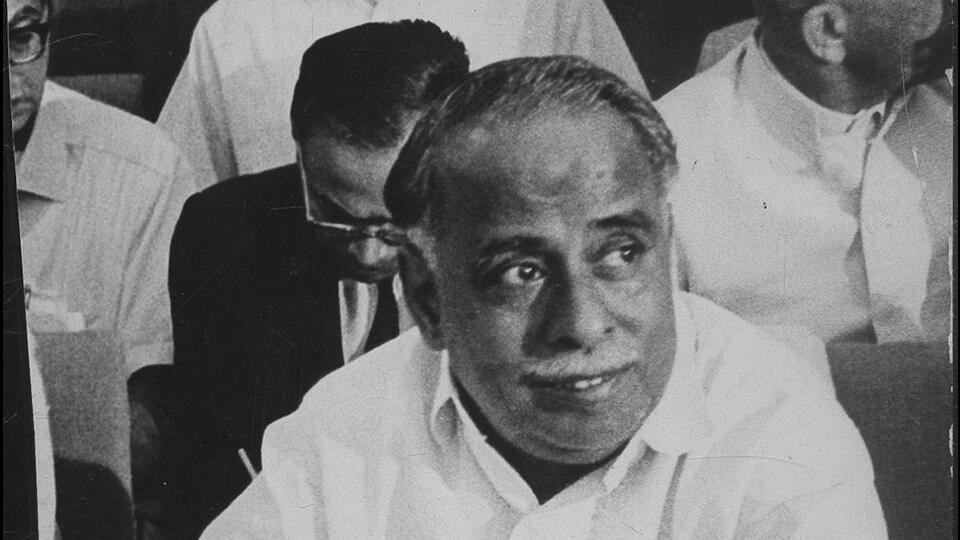
It may be noted that the DMK is one of the few political parties in the country and even across the world to conduct elections regularly for the party officials from the grassroots to the highest party governing council.
The party’s organisational dynamism and the election machinery are among the most significant revelations of Anna’s meticulous efforts in building the structural strength of the party. Anna was not content with the idea of party offices and wanted them to function as knowledge houses with library facilities and debating chambers. Anna, himself being a great writer and orator, led a battery of excellent writers, publishers and orators like EVK Sampath, Nedunchezhian, Karunanidhi, Aasaithambi and Kannadasan. It is observed that at one stage during the period of 1955-1960, the DMK and its supporters managed or published over 400 publications of different size and nature. Anna was even more democratic in publishing the viewpoints of those who disagreed with him and the policies of his party, while other publications chose to print only their views. Anna was able to inspire and draw ordinary people into politics. It is of curious interest that saloons, tea shops and cycle repair shops became assembly points for common people to gather and discuss politics. It was a common sight to witness DMK party members and activists carrying “Dravida Nadu” and “Murasoli” copies to discuss the political and party affairs.
Anna was convinced that electoral politics was necessary not only to achieve power but to execute the ideals of Dravidian politics. He wanted the consent of all the members of the party, especially the cadres. He sought the opinion of the party cadres regarding the electoral participation in May 1955 at the Trichy state conference of the DMK. The party cadres who attended the Trichy conference voted overwhelmingly — 56,942 — in favour of the decision that DMK should participate in the electoral process while 4,203 voted against the electoral participation. In March 1967, Anna consulted MGR and sought his opinion over the formation of his ministry with the names of nine members under his leadership, revealing his respect for others who contributed to the success of the party in the 1967 assembly elections.
Anna was a democrat who believed in political resolution of conflicts through debate and discussion than by any violent means. The Brahmin intellectuals even today agree that Anna and the Dravidian movement was critical of Brahminism, but showed no contempt or hatred towards the Brahmins. It took several years or even decades to understand the background and ideological basis of the Dravidian movement. Anna was the finest exponent and advocate of this ideological tradition with exceptional cultivation of mind and linguistic eloquence. Anna held dialogues with the members of the Hindi Language Goodwill Mission in 1950 and Vinoba about the language rights and Dravida Nadu demand before withdrawal of the demand for separate state after the Chinese aggression in 1962. Anna was a parliamentarian par excellence. It was his innate desire for debate and dialogue(s) endeared him to leaders like Atal Bihari Vajpaye (former Prime Minister of India) then Jan Sangh leader from Uttar Pradesh and Bhupesh Gupta from West Bengal. LK Advani once remarked that the BJP’s language policy is an extension of the Jan Sangh’s position mentored by the party ideologue Deendayal Upadhyaya. Anna’s speeches and writings on the subject of language rights had a deep influence and impact upon several leaders across the political spectrum of the national politics, including Vajpayee and his Jan Sangh party. But over the years, the enlightenment of leaders like Deendayal Upadhyaya and Vajpayee seemed to have overtaken by the likes of Amit Shah.
In stating that he was a proud Dravidian, Anna was not against others based on their race, language and culture. At the same time demanded the right to self-determination because of the idea and existence of a sub-nation within the Indian union, i.e., Dravida Nadu. After renouncing the demand for a separate state in 1963, Anna observed eloquently though we have renounced the demand for Dravida Nadu, yet the causes remain as live as ever. Then the demand for state autonomy and current debate on financial decentralisation are critical components of the continuing debate about the idea of India and the working of our federation. The challenges have multiplied with the ways of the Centre in handling the state rights whether in the area(s) of education, agriculture and finance. Anna believed that education is a state subject and the Centre has no right to interfere. Anna and his critique of the working of Indian federation is both significant and relevant even today given the Hindu nationalism advocated by the ruling BJP with demands of “One Religion- One Language – One Nation”, as a sign of united and strong India.
(Prof Ramu Manivannan is a Fulbright Scholar - Political Scientist - Social Activist in areas of education, human rights and sustainable development. He is currently the Director, Multiversity – Centre for Indigenous Knowledge Systems, Kurumbapalayam Village, Vellore District, Tamil Nadu.)


