
 E-Paper



Dreams of a midnight metropolis
As Indian cities continue to struggle to build a night-time economy, can Hyderabad’s bold new policy make it a truly 24/7 city?

 Prefer HTon Google


The world’s great metropolises rarely sleep. In New York, bars buzz till dawn, Broadway theatres run late shows, and Harlem’s jazz clubs play well past midnight. London stays alive with West End performances, rooftop cinemas, and 24-hour diners. In Bangkok, night markets thrive into the early hours, while in Berlin, the party often begins after dark.
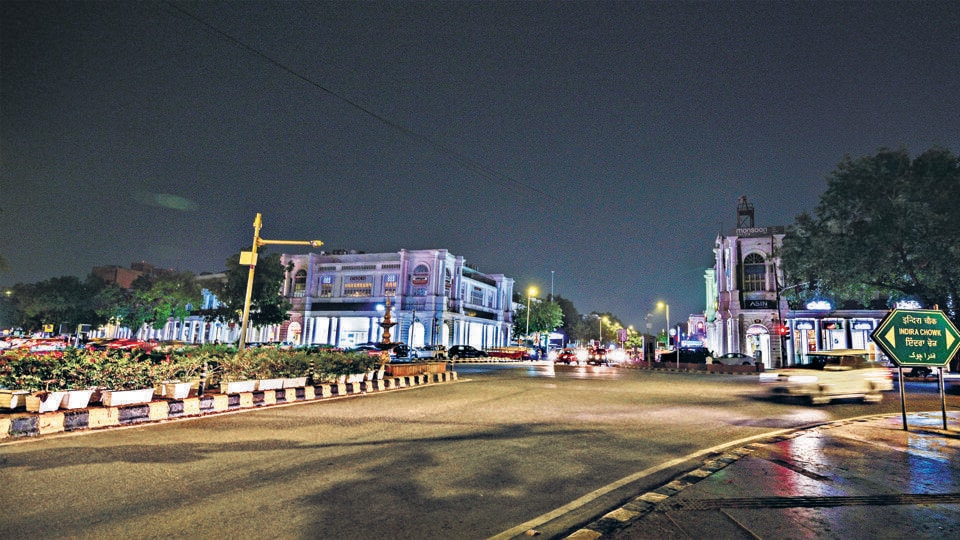
These cities boast a vibrant “night-time economy” (NTE) — a vital, revenue-generating ecosystem of retail, dining, entertainment, food, and transportation that thrives after dusk.
But, in India, despite more than a decade of policy discussions, pilot projects, and political promises, metro cities have largely failed to nurture a robust night economy –– quite an odd mismatch in a country with a rapidly growing urban middle class, millions of gig workers, and a youthful population hungry for flexible work hours and diverse entertainment options.

Cities continue to struggle to overcome a deeply entrenched “daytime mindset”. Come midnight, metros halt, shops shut, and streets empty — leaving behind only delivery riders and night-shift workers navigating an urban landscape that many find unsafe.
Reshaping nightlife
Now, Hyderabad is attempting to rewrite the script. The Telangana government is preparing to launch a comprehensive NTE policy for the city — India’s most ambitious effort yet to reshape urban nightlife. The plan includes appointing a “night mayor”, inspired by Amsterdam’s model, and establishing a dedicated Night-Time Economy Authority (NTEA).This body will coordinate night-related business activities, streamline civic services, and eliminate bureaucratic hurdles, while ensuring integrated late-night transport with metro, buses, taxis, and autos.

“Hyderabad is our engine of growth , contributing half of Telangana’s GDP. And the government believes a vibrant night-time economy can significantly boost the state’s economic growth by creating a city that never sleeps,” a senior Telangana government official said. Citing New York City’s flourishing NTE, the official says that NYC’s GDP rivals that of entire countries like the Netherlands or Poland.
“Hyderabad has the potential to be a truly global city. The government aims to grow Telangana’s economy to $1 trillion by 2035, from $200 billion today, and believes Hyderabad’s night-time economy could add a 3.5% annual increase to the city’s GDP, and help realise that dream, ” the official added. “The draft policy is ready, and an expert committee is finalising it. We plan to roll it out in phases starting October 2025, beginning with areas such as Gachibowli, Hi-Tec City, Financial District, Necklace Road, Tank Bund, and Hussain Sagar.”
Eligible businesses in these designated NTE zones will require no additional permits. These zones, the official said, will feature enhanced law enforcement, CCTV coverage, improved lighting, clear signage, pedestrian-friendly infrastructure, and extended access to public transport. “We will also partner with global cities that have successfully built night-time economies to implement best practices,” he added.
Shutdown after sundown
Indian megacities like Mumbai, Delhi, and Bengaluru have attempted to create a formal night-time economy in other parts of the city — but with little success.
Mumbai, for example, launched a 24/7 zone in Kala Ghoda in 2017, but the initiative faltered due to complex licensing, weak inter-agency coordination, and limited late-night mobility. Similarly, Delhi’s attempts to extend business hours in Connaught Place and Hauz Khas collapsed amid safety concerns and enforcement failures.

In a notification issued in September last year, the Karnataka government allowed shops and commercial establishments with more than 10 employees to stay open 24/7, but Bengaluru has seen little change on the ground, with a cautious approach from law enforcement keeping most businesses adhering to traditional hours despite the state-level clearance.
Delhi’s Master Plan 2041 briefly outlines a vision for a ‘24-hour city’, vision suggesting “nodes” , precincts, or circuits for cultural and commercial activity at night, leveraging the Model Shops and Establishments Act, 2015. This central law allows states to permit 24/7 operations for businesses while ensuring worker welfare.
According to experts, the core issue is the lack of an integrated city-level ecosystem –– one that unifies licensing, mobility, safety, and zoning. Bureaucratic inertia, inadequate public transport, fragmented licensing, and persistent safety issues have all contributed to the failure of Indian cities’ night economy ambitions.
“Many of these challenges are deeply layered — rooted in governance, social norms, and the psychological makeup of our cities,” said Dikshu Kukreja , an architect and urbanist. “Our licensing systems often reflect a legacy mindset that equates ‘activity after hours’ with risk or deviance. Urban safety is a genuine concern, especially for women. And, cities lack the infrastructure for ‘casual lingering’ — benches, clean toilets, late-night eateries, and reliable transport that allow people to stay out by choice.”
Ready for the 24/7 leap?
But, the biggest challenge, he added, is cultural. “In Indian cities, darkness is often associated with danger, uncertainty and shutdown. Changing that perception will require more than policy — it needs a cultural narrative shift, one that imagines the city as a shared home, not a place to retreat from after sundown.”
“What’s needed is smarter, coordinated allocation of resources. Mumbai introduced a 24/7 policy in select areas back in 2020, though implementation has been slow. Still, the city has the most promising night economy in India.”
But, a successful NTE, experts stress, must go beyond pubs and late-night eateries.
“The night-time economy is a good concept, but it must include more than just commercial activity,” said Kalpana Viswanath, co-founder and CEO of SafetiPin, an organisation that works to make cities safe and inclusive, especially for women. “It should encompass parks, libraries, cultural venues, and spaces for street vendors. Inclusivity is essential. From a woman’s perspective, this means safe, well-lit public areas, reliable and accessible transport, and amenities such as clean public restrooms that remain open at night.”
Urban designer Aakash Hingorrani said that Indian cities lack the kind of social infrastructure needed to sustain a healthy night culture. “Most people end up at malls by default because we don’t have enough diverse public spaces where people can gather, sit, eat, or just be,” he said.
“I believe a city is best experienced after hours. But, we need more inclusive public spaces to make that possible. Cities with vibrant nightlife are often safer — thanks to the ‘eyes on the street’ principle,” he added. “For example, Delhi’s monuments like Qutub Minar and Humayun’s Tomb could remain open late. Even neglected spaces like Barapullah Nallah could be repurposed as canals for boating.”
Not all projects require massive budgets. “Even simple interventions in neighbourhoods can kickstart the process,” he said.
Kukreja echoes this view, emphasising that night-time placemaking requires more than lighting and surveillance. “It’s about creating perceived safety through lighting design and spatial orientation, offering sensory comfort through soundscapes, and encouraging behavioural flow through interconnected public zones,” he said.
“Neuroscience tells us that humans perceive space differently at night. So the nighttime city must evoke comfort, curiosity, and care—not overstimulation or isolation.
A cultural shift, not just policy
Kukreja noted a vibrant NTE can foster social cohesion, bringing together people who may otherwise never cross paths. “It’s also a powerful tool for urban regeneration,” he said, adding that Hyderabad’s model shows real promise — because it’s thinking systemically. “The appointment of a night mayor and the creation of a dedicated authority suggest a shift from simply ‘managing’ the night to curating it.”
“Integrating transport, licensing, and digital governance shows a deep understanding of how night ecosystems work. But more than structural innovations, success will depend on whether the city can use the new policy framework to cultivate a local night culture that feels safe, inclusive, and rooted in its unique identity.”
Hyderabad’s cosmopolitan history, he said, gives it an edge. “It’s a city of layered identities — and night-time could become a space where those layers are expressed more freely. If done right, this policy could be a blueprint for other Indian cities to reimagine night — not as leftover time, but as a realm of vibrant possibility.”


