
 E-Paper



Armed Naxalism dealt with, now time to isolate ‘dimaagi Naxals’: PM Modi in I-Day speech
PM Modi said Naxalism and Maoism had destroyed the future of several young people.

 Prefer HTon Google


Prime Minister Narendra Modi, addressing the nation on the 80th Independence Day on Saturday, said Maoist extremism was nearing its end in the country, while calling for the identification and isolation of what he described as “dimagi Naxals”.
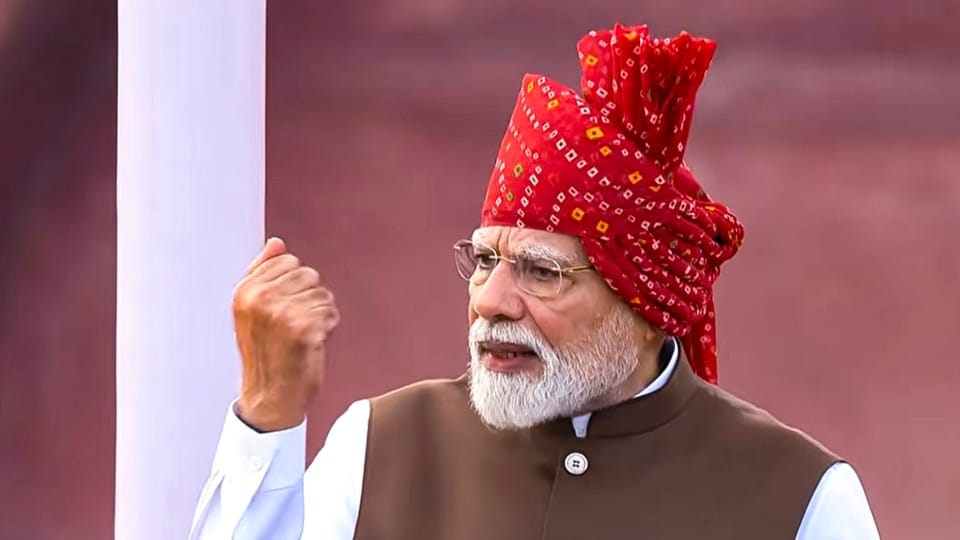
"These 'dimagi Naxals' have to be identified and isolated, and connect the youth with the mainstream," he said.
PM Modi also said Naxalism and Maoism had destroyed the future of several young people.
“In the 21st century, it is imperative that we eliminate challenges that are decades old. Naxalism and Maoism have destroyed the future of millions of young people. They have taken away the sons of many mothers, ruined countless lives and shattered the dreams of parents,” PM Modi added.
Also read | PM Modi announces free online coaching for competitive exams in Independence Day speech
He said large areas and their residents had remained under the grip of gun violence for four decades, while more than 3,500 security personnel had lost their lives protecting people.
"For four decades, huge areas and people were in their clutches under the fear of guns. Over 3,500 security personnel died protecting people; the number is higher than those who die in war," he said.
Also read | What is PM Modi's 'Saptadhara' plan to achieve Viksit Bharat: Explained
“When we came to power in 2014…”
"When we came to power in 2014, we swore to rid the country of Naxals. I am happy Maoist violence is taking its last breath," he said, adding that several areas have become free of Naxalites and are becoming developed.
Modi said people with a Naxal mindset had for years occupied positions in power corridors, including serving as advisers on government committees, and that Maoist thinking had influenced policies.
"We have succeeded in getting rid of armed Naxals in the jungles, but 'dimagi Naxals' (intellectual Naxals) are looking for opportunities to create violence, unrest … They want to drag the society on the wrong path," he said.
Also read | 'I ask for an hour of yours': PM Modi's big appeal to youth for Census
75-minute Independence Day address
PM Modi delivered a 75-minute Independence Day address on Saturday, making it his shortest speech in the past four years and the fourth shortest of his tenure.
On India's 79th Independence Day in 2025, Modi had spoken for 103 minutes, surpassing his previous record of a 98-minute address delivered in 2024 on the 78th Independence Day.
Before 2024, Modi's longest Independence Day speech was in 2016, when he addressed the nation for 96 minutes. His shortest address came in 2017, lasting 56 minutes.
Saturday's address marked Modi's 13th consecutive Independence Day speech from the Red Fort. In 2025, he had surpassed former prime minister Indira Gandhi's record of 12 consecutive Independence Day addresses from the Red Fort, placing him second only to Jawaharlal Nehru, who delivered 17 such speeches consecutively.
Modi delivered his first Independence Day address from the Red Fort in 2014, with the speech lasting 65 minutes.
Deep Dive


