
 E-Paper



Ecostani: As climate talks enter uncertainty, can countries deliver in 2025
With India setting 2047 as a year for becoming developed, there is rising clamour for a country of 1.4 billion people to ‘voluntarily’ reduce emission

 Prefer HTon Google


The Nationally Determined Contributions (NDCs) Synthesis Report and United Nations Emission Gap report comes have the same old story to tell --- climate change is a discussion for ballrooms over expensive food and drinks, and not for real change on the ground.
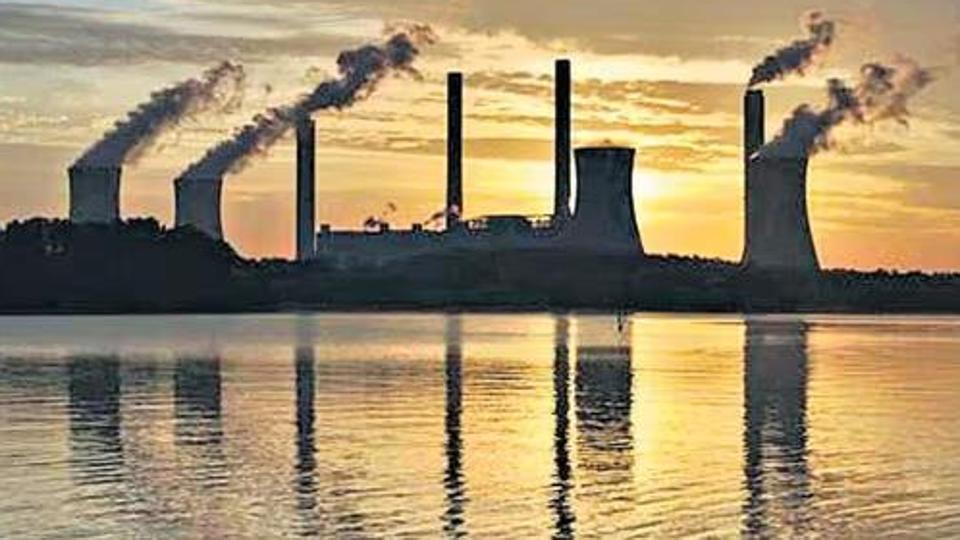
Even 26 years after the first climate protocol was enforced, the emission trajectory continues to grow and has not slowed down to the level, which can save the world from warming two degrees more than the pre-industrial level.
The context for the reports -- which highlight the collective failure of the world towards achieving climate change goals -- is that by next year countries have to submit fresh NDCs to the United Nations Framework Convention on Climate Change (UNFCCC).
Climate scientists and activists are asking policy makers to substantially increase country-wise targets under the NDCs to reduce emissions and for quicker transition towards net zero, latest by 2040.
The synthesis report’s findings are stark but not surprising – current national climate plans fall miles short of what’s needed to stop global heating from crippling every economy, and wrecking billions of lives and livelihoods across every country. Current plans combined – if fully implemented – would see emissions of 51.5 gigatonnes of CO2 equivalent in 2030 - a level only 2.6% lower than in 2019. Greenhouse gas pollution at these levels will guarantee a human and economic wreck for every country, without exception.
Also Read: Reforms to supercharge India’s carbon credit export potential
The Intergovernmental Panel on Climate Change has said that that greenhouse gas emissions (GHG) need to be cut 43% by 2030, compared to 2019 levels. By 2035, net global greenhouse gas emissions need to be cut by 60% compared to 2019 levels. This is critical to limiting global heating to 1.5°C this century to avert the worst impacts of climate change. Every fraction of a degree matters, as climate disasters get rapidly worse.
The UN Emission Gap Report said the GHG emissions increase will lead to temperature rise by 2.6 to 3.1 degrees Celsius by turn of the century as emissions have risen two times compared to the pre-industrial level and 43% since 1990, when the first conference of climate change was held in Rio De Janeiro, leading to signing of UNFCCC. It also said that emission cut of 42% by 2030 and 57% by 2035 to get on track for 1.5°C.
It remains technically possible to get on a 1.5°C pathway, with solar, wind and forests holding real promise for sweeping and fast emissions cuts, the emission gap report said, stating that sufficiently strong NDCs need to be backed urgently by a whole-of-government approach, measures that maximise socio-economic and environmental co-benefits, enhanced international collaboration that includes reform of the global financial architecture, strong private sector action and a minimum six-fold increase in mitigation investment.
The UNFCCC has urged nations to deliver on the next round of national climate plans and to have enough “ambition” to drastically cut emissions rather than just slowing down the emission trajectory and need to pass the ABC test: new emissions cut targets should be economy-wide, covering all greenhouse gases; keeping 1.5 degrees alive; must be broken down into sectors and gases and must be credible, backed up by substantive regulations, laws, and funding to ensure goals are met and plans implemented.
The UN has called on nations to ensure that the new NDCs detail adaptation priorities and investments to protect critical sectors, infrastructure and people from climate impacts, and align with National Adaptation Plan processes. They should have a time horizon until 2035, with much stronger 2030 targets to drive the deep emissions cuts needed globally this decade, the UN said, while releasing the synthesis report.
The COP29 conference to be held in November in Baku, Azerbaijan, is expected to frame the contours for NDCs, providing enabling economic frameworks for the needs of developing countries and more accountability from the developed world, which is responsible for 80% of the collective emissions. The COP29 comes at the time when there is a war in the middle-east with United States backed Israel on side and Iran-backed Hamas on the other and the impending United States presidential elections.
If former President Donald Trump wins, the future of climate talks will be uncertain. In 2016, when Trump won for the first time, US walked out of the Paris climate deal, to return only when Democrats led by Jim Biden returned to power. In wake of these uncertainties, not much should be expected from Baku climate conference.
However, if the countries agree on a robust and “real” emission reduction NDC framework, it would be an achievement as the first NDC framework under the Paris Agreement was weak as it aimed to bring as many countries on board of the voluntary global regime.
It would be interesting to see whether Baku agrees to voluntary emission reduction targets for emerging economies such as China and India, the clamour for which is rising globally as the two countries progress to enter the club of developed nations. With India setting a target to become a developed country by 2047, beating this clamour will not easy on the global climate stage.


