
 E-Paper



Germany announces €1 billion funding for energy transition projects in India
Wednesday’s announcement by German ambassador Philipp Ackermann comes days ahead of German foreign minister Annalena Baerbock’s visit to New Delhi during December 5-6.

 Prefer HTon Google


Ahead of German foreign minister Annalena Baerbock’s visit to India in December, Germany on Wednesday unveiled a proposal to provide €1 billion ( ₹8440 crore) for energy transition projects across the country under a bilateral partnership for green and sustainable development.
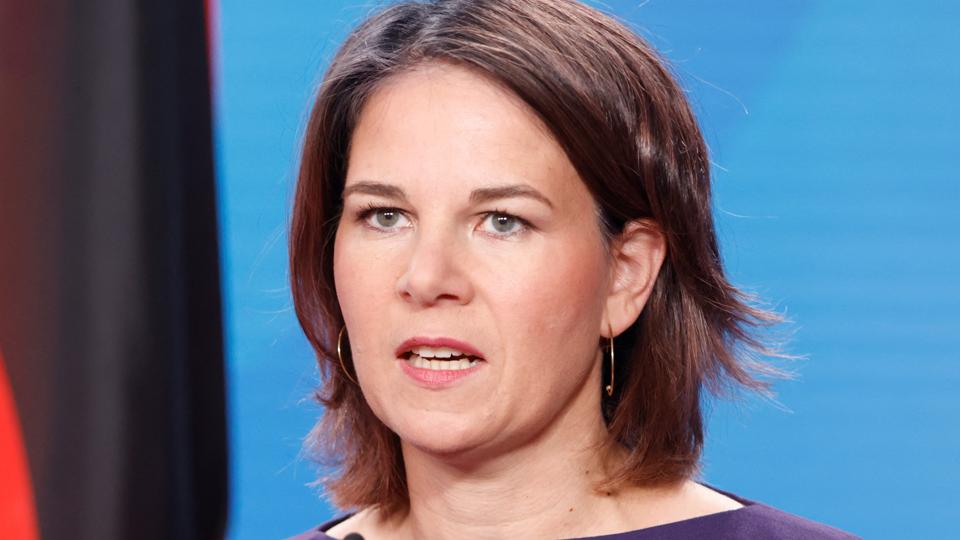
The two sides agreed on the funding for more than 20 development projects over the next year during discussions held on Tuesday. The funding, including 10% grants and 90% in the form of lines of credit, will support India’s efforts in the fields of renewable energy, sustainable urban development in smart cities and sustainable use of natural resources, German ambassador Philipp Ackermann said.
“India is the single largest recipient of German cooperation and this is part of the deliberate positioning of the German government. We see India as a key partner,” Ackermann told a media briefing, adding that both countries have shared concerns in the area of climate change and similar approaches to finding solutions.
Baerbock is expected to visit New Delhi during December 5-6 for talks with her Indian counterpart S Jaishankar aimed at reviewing the bilateral relationship. German Chancellor Olaf Scholz is also expected to make a bilateral visit to India next year.
In May, Scholz announced a support of €10 billion by 2030 under the umbrella of the new Indo-German partnership for green and sustainable development that he finalised with Prime Minister Narendra Modi. The funding of €1 billion for the projects in India is part of this pledge.
The lines of credit will be provided by KfW Development Bank with “very cheap interest” ranging from 2.7% to 3.2% for development projects in states such as Tamil Nadu and Meghalaya. “We are keen to cover the whole country through this initiative and support all good ideas,” Ackermann said.
Negotiations between the Indian and German governments on development policy this week focused on concrete agreements and projects. All the new ventures will help cut greenhouse gas emissions or help adapt to climate change.
In the field of renewable energy, Germany will support India in making its energy supply technically and economically efficient and ecologically sustainable. Indo-German cooperation has contributed to saving 100 million tonnes of CO2 annually in recent years and provided renewable electricity to 40 million people.
The funding will also support climate-resilient, sustainable urban development and climate-friendly mobility in smart cities. Germany will support India in expanding bus and metro systems and cycle paths. The bilateral cooperation has resulted in 106 million people having better access to sanitation and 9.7 million people having better access to bus and metro systems.
Germany will also support the expansion of ecological agriculture and sustainable management of forests. The German government is currently negotiating a Just Energy Transition Partnership (JETP) between the G7 and India together with the US. This is aimed at supporting India in expanding renewable energy, improving energy efficiency and the production of green hydrogen.



