
 E-Paper



India develops AESA radar to make IAF fighters more lethal
Project director D Seshagiri of Electronics and Radar Development Establishment (LRDE) confirmed this and said that the developed AESA radar is 95% indigenous, with only one imported subsystem.

 Prefer HTon Google


Later this month, the Indian Air Force (IAF) will demonstrate the use of an indigenously developed active electronically scanned array (AESA) radar, making India one of the few countries to have an indigenous force-multiplier that lies at the heart of electronic warfare, long-range missiles, and long-distance, precision-guided ammunition.
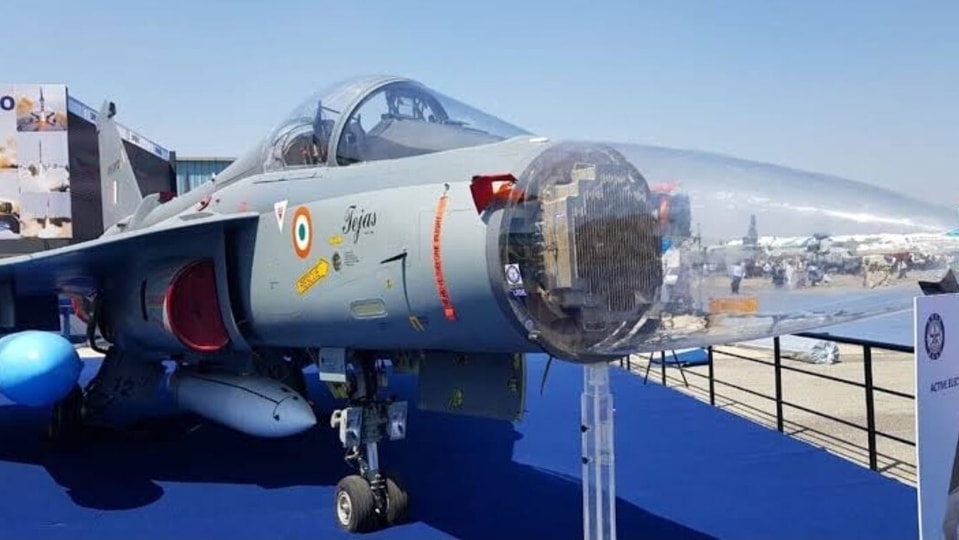
Project director D Seshagiri of Electronics and Radar Development Establishment (LRDE) confirmed this and said that the developed AESA radar is 95% indigenous, with only one imported subsystem. It has the capacity to track 50 targets in the sky at a range in excess of 100km and engage four of them simultaneously.
In the next five years, all 83 of IAF’s Tejas Mark I A fighters will have this radar, as will the future twin-engine AMCA fighter developed by the Aeronautical Development Agency (ADA).
The AESA radar will be mounted on the radar cone of Su-30 MKI aircraft as well as carrier-based MiG-29 K fighters of the Indian military, according to Seshagiri. “Already, the LRDE has signed an MoU with Hindustan Aeronautics Limited for being the lead integrator of the radar on the Tejas Mk I A with four identified vendors including BEL being the suppliers of key sub-systems.”
The first 16 Tejas MK 1A aircraft will be fitted with Israeli ELM 2052 AESA radars and the remaining will be fitted with the indigenous Uttam AESA radar, HT has learnt. “The radar has already been tested on two Tejas fighters as well as Hawker Siddeley 800 executive jet for over 250 hours. The radar will be finally demonstrated in a flight this month with the force multiplier ready for production. Only the US, the EU, Israel, and China have AESA radar capability,” Seshagiri said.
The National Flight Testing Centre, which is manned by IAF, has already greenlighted the radar after successful performance tests. Earlier, India was using primary radars on its fighters as well as indigenous airborne warning and control systems planes. The Pakistani Air Force’s retaliation for the Balakot strike in February 2019 would have turned costly for Islamabad if Indian fighters had AESA radars mounted on intercepting fighters.
The AESA radar is also the key to the DRDO-developed Astra air-to-air missile, which has a range well over 120km, and will deliver guided ammunition over long distances. This radar will nullify the air superiority China had gained with its J20 multi-role fighters, as the Indian-developed AESA radar compares well with that developed by Beijing.


