E-Paper



India, Central Asian states to work with Afghanistan to tackle security challenges
The NSAs and security officials emphasised the significance of security and stability in Afghanistan for the region

 Prefer HTon Google


India and the Central Asian states agreed on Thursday to work closely with Afghanistan to address security challenges and to foster connectivity and economic development.
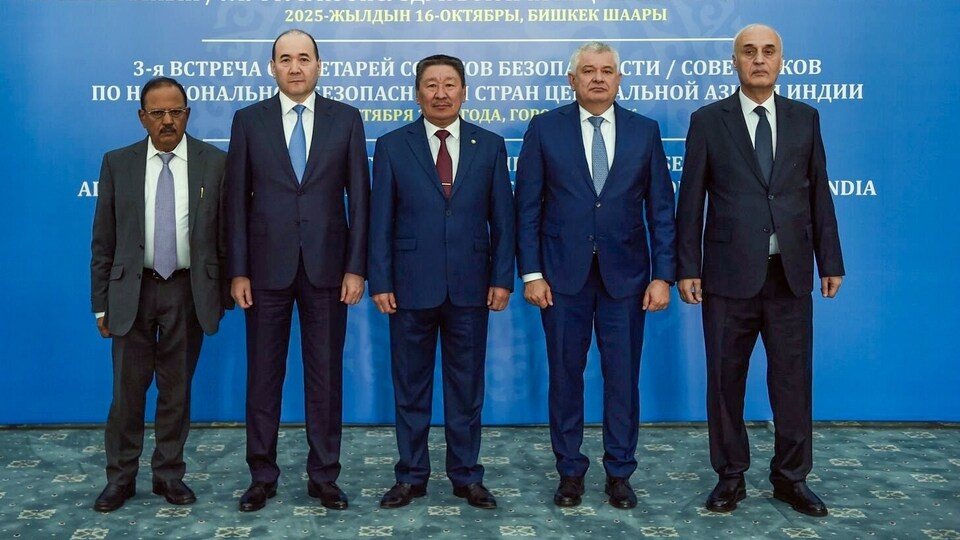
The decision was made at a meeting of national security advisers and senior security officials of India and the five Central Asian states held in Bishkek, the capital of Kyrgyzstan. India was represented by National Security Adviser Ajit Doval.
The meeting, held against the backdrop of fierce clashes along the Afghanistan-Pakistan border, discussed ways to enhance cooperation in countering terrorism, radicalisation, extremism and narcotics trafficking, according to a readout from the external affairs ministry.
The NSAs and security officials emphasised the significance of security and stability in Afghanistan for the region, and “agreed to work closely with Afghanistan in addressing security challenges, as well as in the areas of connectivity and economic development which could form the basis of long-term stability”, the readout said.
This was the third meeting of NSAs and senior security officials of India, Kazakhstan, Kyrgyzstan, Uzbekistan, Tajikistan and Turkmenistan.
The senior officials emphasised the importance of regular dialogue in view of the changing nature of security challenges, and the significance of security and stability in Afghanistan for the region.
The officials agreed to prioritise greater connectivity between India and the Central Asian states. They also agreed to expand the scope of cooperation under this format to include areas such as digital connectivity, infrastructure, AI, other emerging technologies, and space.
Doval met Kyrgyz President Sadyr Nurgozhoevich Zhaparov along with the other security officials of the Central Asian countries. He also held bilateral meetings with the Security Council secretaries of Kazakhstan, Kyrgyzstan and Uzbekistan.
This meeting of the security officials was held on the basis of the consensus reached at the first India-Central Asia Summit in January 2022. The first such meeting in this format was held in New Delhi in December 2022, and the second meeting was held in Kazakhstan in October 2023.