
 E-Paper



‘Unfair’: As world seeks Trump mercy, US senators now want him to ask India for tariff ease
The senators noted that Montana and North Dakota were the top two producers of pulse crops and India its largest consumer.

 Prefer HTon Google


Lawmakers of two US states have a suggestion for US President Donald Trump as trade negotiations with India continue. Republican Senators Steve Daines of Montana and Kevin Cramer of North Dakota have urged Trump to engage with India on “favourable pulse crop provisions” and lower the tariffs it currently imposes on American pulse imports - a development that goes against the trend of countries asking Trump for tariff relief.
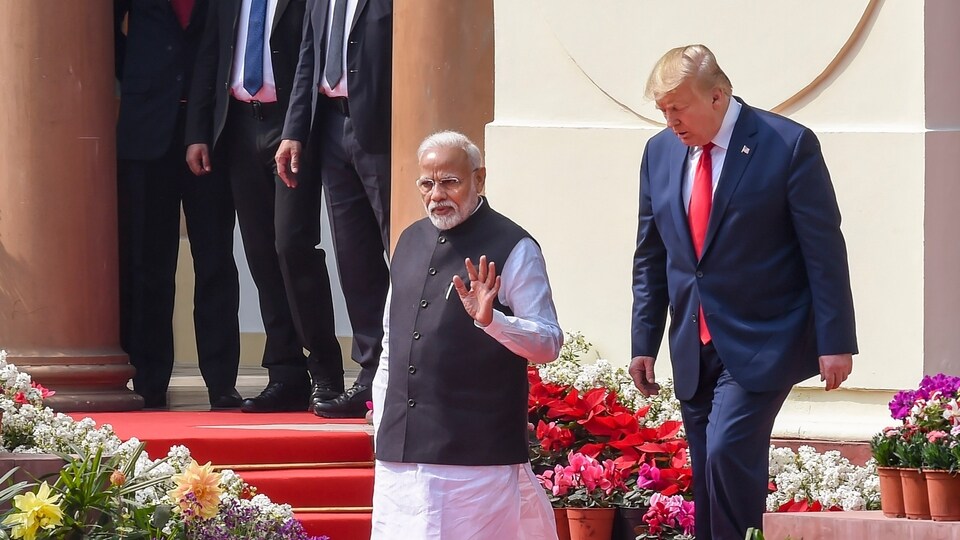
In a letter to the US President, the senators noted that Montana and North Dakota were the top two producers of pulse crops and India its largest consumer, at approximately 27 per cent of the world’s intake.
The senators noted that India had announced a 30 per cent tariff on yellow peas being exported out of the US and the duties took effect in November 2025. “As a result of the unfair Indian tariffs, US pulse crop producers face a significant competitive disadvantage when exporting their high-quality product to India,” the letter said.
The senators urged Trump to engage with Prime Minister Narendra Modi on the pulse tariffs and said that doing so would be beneficial to both American producers and consumers in India. “As the United States looks to rebalance trade disparities, American farmers are ready to help fill the gap,” the letter said.
Also Read: As trade talks with US drag, Republican leader defends India: ‘They bring investments’
The request to discuss the lowering of the Indian duties comes at a time when a 50 per cent tariff on Indian imports into the US remains enforced. Half of these duties were announced by Donald Trump as penalty for India's oil trade with Russia.
Why India imposed 30% tariffs
Back in October 2025, India's Department of Revenue announced 30% import duties on yellow peas. Of these tariffs, 10 per cent was standard rate and 20 per cent Agriculture Infrastructure and Development cess (AIDC) if the Bill of Lading is issued on or after November 1, 2025, the directive reportedly said.
Prior to the directive, yellow peas were allowed entry into India duty-free and this was supposed to last until March 2026.
However, the government modified its policies after domestic Indian farmers urged authorities to intervene because an influx of cheap imports suppressing local crop prices, news agency Reuters had said in a report.
Also Read: Trump aide's 'Modi didn't call' claim, then a Jaishankar-Rubio call. What next for India-US trade deal?
The North Dakota and Montana senators argued against India's 30% tariffs on yellow peas, saying lentils, chickpeas, dried beans, and peas are most commonly consumed in India.
They also said that Trump had hand-delivered their earlier letter to Prime Minister Narendra Modi during the 2020 trade negotiations with India.
Where does the India-US deal stand?
Several months have passed but Trump's 50 per cent tariffs on Indian imports remain in place and India and the US are yet to arrive on a trade deal.
In a recent development, US commerce secretary Howard Lutnick claimed that a potential trade deal between India and the US fell through because PM Modi “didn't call” Trump. However, India rejected these claims, saying it continues to be interested in concluding a mutually beneficial agreement.
Later, US ambassador to India, Sergio Gor, also expressed the same sentiment, saying both sides remain engaged on trade.


