E-Paper



India’s first disk-footed bat recorded in Meghalaya; dwells in bamboo grooves
Till now, the species was recorded in few localities in Southern China, Vietnam, Thailand and Myanmar. The location in Meghalaya where the species was found is nearly 1,000 km westward of its earlier known areas

 Prefer HTon Google


A team of scientists have discovered India’s first bat species with disk-shaped sticky feet in Meghalaya. With this find, the number of bat species in India increases to 130, and in Meghalaya, to 66.
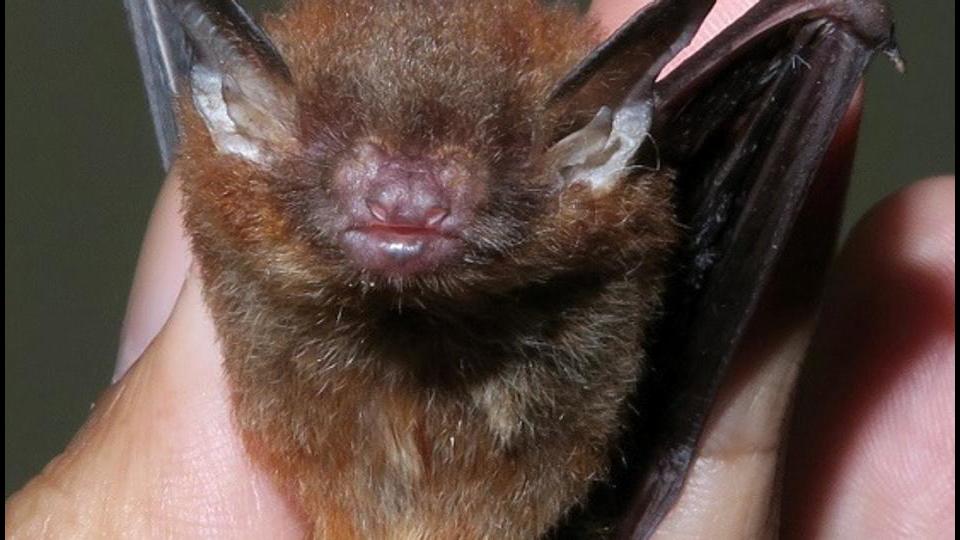
The species, Eudiscopus denticulus, was found by a team of scientists led by Uttam Saikia from Shillong office of Zoological Survey of India and scientists from a few European natural history museums at Lailad close to Nongkhyllem Wildlife Sanctuary in July last year.
The finding about the “very specialised bamboo-dwelling bat species” has been published in the recent issue of Revue Suisse de Zoologie, a bi-annual journal published by the Geneva Museum and the Swiss Zoological Society.
“The bat species is very distinctive in appearance with prominent disk-like pads in the thumb and bright orange colouration,” said a press note on the finding.
“From the modifications in the feet, it was presumed to be a bamboo-dwelling species which was later identified as a disk-footed bat. This bat is reported to roost inside bamboo internodes aided by their adhesive disks,” it added.
Till now, the species was recorded in few localities in Southern China, Vietnam, Thailand and Myanmar. The location in Meghalaya where the species was found is nearly 1,000 km westward of its earlier known areas.
Also Read | From Rajasthan to Delhi, states ramp up measures to battle Covid-19
The researchers found that though several bamboo-dwelling bat species are common throughout Southeast Asia, this particular species is rare and found only in a few localities worldwide.
Comparison of the DNA sequence of the species found in Meghalaya with specimens from Vietnam revealed that despite the vast distance separating the two specimens, they were found to be identical.
The researchers have hypothesized that populations of the species from Meghalaya and Vietnam may have very recent common origin and all existing bat populations expanded from the same region following recent expansion of man-made bamboo forests.
“From analysis of the very high frequency echolocation calls of the Meghalaya individual, the scientists noted that the cell structure is suitable for orientation in a cluttered environment like inside bamboo grooves,” the note said.