
 E-Paper



J-K party offices deserted, confusion among workers
The scene is no different at the Peoples Democratic Party (PDP) office near Sher-i- Kashmir Park, a five-minute drive away. Here too the gates are shut, with no one in sight.

 Prefer HTon Google


The only indication that the Nawa-i-Subh Complex at Srinagar’s Zero Bridge is the home of Kashmir’s oldest and most recognised political party, the National Conference (NC), is a board with its name. The gates to the office are locked and a lone policeman sits guard outside.
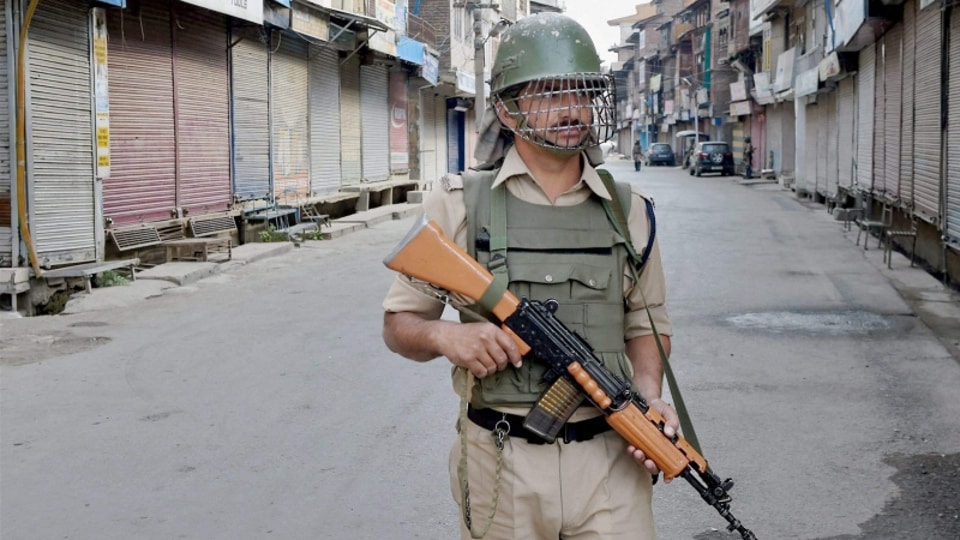
The scene is no different at the Peoples Democratic Party (PDP) office near Sher-i- Kashmir Park, a five-minute drive away. Here too the gates are shut, with no one in sight.
The party offices reflect the state of the political mainstream in Jammu and Kashmir that has been in a vacuum since August 5, when scores of political leaders in the Kashmir Valley were detained as the state was divested of its special status and bifurcated into two union territories -- J-K and Ladakh -- in a sweeping reorganisation .
The only exception is the Bharatiya Janata Party (BJP) office in Jawahar Nagar, where security has been tightened for officials preparing to dominate the space so far out of reach for the party.
Senior leaders of all hues, including former chief ministers Farooq Abdullah and Omar Abdullah of the NC, former chief minister Mehbooba Mufti of the PDP, Sajjad Lone from the Jammu and Kashmir People’s Conference, and Shah Faesal, the bureaucrat-turned-politician who launched the Jammu and Kashmir People’s Movement, have all been detained.
Consequently, workers of these parties now find themselves at sea in the absence of their leadership and the communication blackout.
“We don’t know who to take directions from. We haven’t been able to meet our leaders and there’s no telling how we will regroup,” said Shamima Mir, vice president of the Congress’s Srinagar district unit.
Mir was at the Congress office at MA Road on Saturday with a few colleagues because they had seen on television that a delegation of opposition leaders, including Rahul Gandhi and Ghulam Nabi Azad, was to visit Srinagar. The delegation was not allowed to leave the airport and sent back to New Delhi. The sprawling Congress office was otherwise deserted.
“There’s an absolute vacuum. We don’t know who to turn to. But one thing is for sure that this time we are all one,” said Akbar Lone, NC’s Lok Sabha MP, among the few political leaders in the Kashmir Valley who haven’t been detained.
Their political space having shrunk overnight, most leaders are coping with the double blow of trying to regain their clout and contend with an angry public. There is little sympathy for the political class, and the sentiment across districts in the Kashmir Valley is cold, cynical and critical of the mainstream leadership.
“It is true people are unhappy with us and they’re angry but we have to face it. We are the ones who stood with India and against separatists, but we were kept in the dark about this decision (of scrapping Kashmir’s special status and dividing the state into two union territories) that has pushed us towards separatism,” said Lone.
The helplessness cited by regional satraps hasn’t cut ice with people, whose complaints against the leaders range from poor governance to corruption, and now, for not acting as a bulwark against the Centre’s fiat to revoke the Constitution’s Articles 370 and 35A, which conferred special status on Jammu and Kashmir and barred non-residents from purchasing land and other benefits such as government jobs.
In Kupwara, a group of residents blamed regional parties for failing to read New Delhi’s intent. In Srinagar, another group blamed them for being an ally to decisions “imposed” on the people.
Senior government functionaries, besieged with requests for meetings with detainees, have a different take. On condition of anonymity, three officials of different departments said families of detainees, who approached the courts to allow meetings, hadn’t sought their release. “In the case of Sajjad Lone, the application is not for his release,” said an official.
Amid the trust deficit and public anger, it’s the BJP and new entities that are ready to thrown their hats into the ring.
“These parties hobnobbed with Delhi, they indulged separatists when it suited them. All these years, they did nothing to improve the lives of the ordinary people, but exploited the trust deficit and misled people,” said Mir Junaid, a former National Students Union of India (NSUI) functionary readying for his political debut.
Mir said statistics for unemployed youth –72% according to the 2011 census – shows the old political class failed the people. “Most people are happy with the changes, they want jobs and development and that’s what these old parties cannot offer.”
The BJP, riding on the success of delivering on the decades-old election promise of scrapping Article 370, is confident of its prospects in Kashmir. In the last general election, the party didn’t win any seat in the Valley but retained two seats in Jammu and one in Ladakh. It also took its vote share from 34.40 % in 2014 to 46.4%.
The BJP claims it’s close to shedding its image of a party dominant in “Hindu Jammu”.
“The so-called leaders looted people. There were bigger celebrations on scrapping Article 370 than (on) Eid. People are looking forward to more universities, better health care, jobs and development. It’s a myth the BJP is not popular in the Valley. In the past month alone, we added 175,000 new members,” said party leader Thakur.
There is little evidence on the ground to back Thakur’s claims, but the younger lot in the Kashmir Valley isn’t averse to a new dispensation. While the younger people want employment and a better life, they aren’t easily persuaded by arguments put forth by the BJP for justifying the changes in Kashmir.
“They have betrayed us, Article 370 was a bridge between Kashmir and India and they burnt it down. We are without leaders, we don’t accept the BJP and the older lot are opportunists. Why have the four MPs (two from PDP and two from NC) not resigned so far?” questioned a student at Islamia College who didn’t want to be named.
For their part, the MPs currently flitting between Delhi and Kashmir are reluctant to resign. Both Lone and Fayaz Ahmad Mir, PDP’s Rajya Sabha MP, said their resignation would serve no purpose as they haven’t been given the go-ahead by party bosses and they want to be the voice of Kashmir in Parliament.


