
 E-Paper



Karnataka govt tables new bill to help decongest Bengaluru
The Bengaluru metropolitan land transport authority (BMLTA) bill, the state government said, would be an umbrella body to regulate, supervise issues related to traffic and bring together efforts of agencies whose roles overlap in performing similar functions.

 Prefer HTon Google


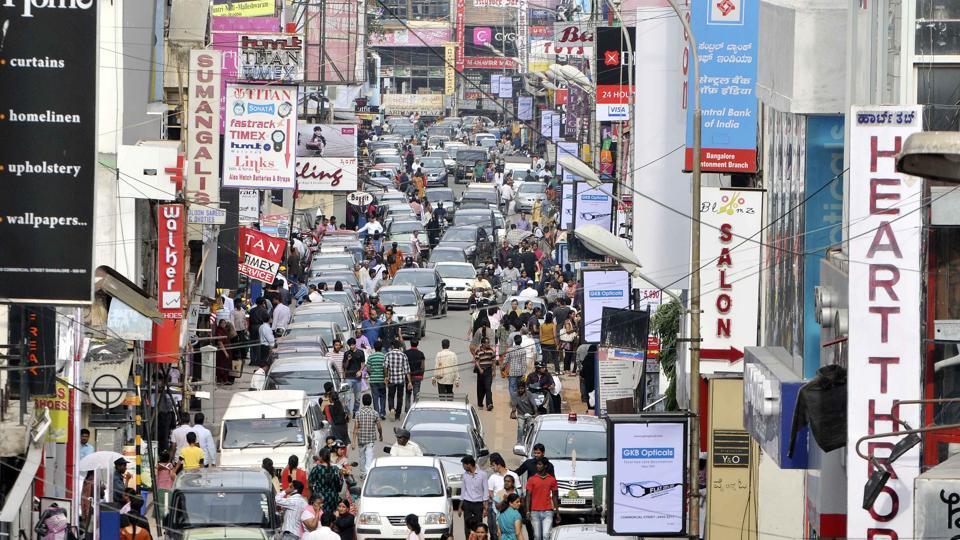
The Karnataka government on Friday tabled a bill that aims to bring in different departments to decongest Bengaluru, its growth engine, that has come to be known globally for one of the slowest moving traffic due to poor infrastructure and design among other factors.
The Bengaluru metropolitan land transport authority (BMLTA) bill, the state government said, would be an umbrella body to regulate, supervise issues related to traffic and bring together efforts of agencies whose roles overlap in performing similar functions.
“Whereas multiple institutions or agencies such as Bangalore development authority, Bengaluru metropolitan transport corporation, Bruhat Bengaluru Mahanagara Palike, Bangalore Metro rail corporation Limited and transport department are responsible for planning, developing, implementing and managing activities relating to urban mobility in the above institution and departments are empowered under different legislations to deal with matters relating to urban mobility with a certain framework,” according to a statements on objects of the bill.
“And whereas multiplicity of institutions, departments and independent legislations that they are bound to follow are currently causing overlap in responsibilities andfcuntions, which impede the process of planning and implementation of major transportation schemes aimed at streamlining and improving urban mobility,” it added.
The bill was tabled in the just concluded monsoon session of the state legislature, but was not taken up for discussions, indicating that the entire legislation was prepared and presented in haste.
Chief minister Basavaraj Bommai had, on September 8, said a decision has been made to constitute an authority to manage traffic density in Bengaluru, a city that has over 10 million vehicles for a population of around 12 million people.
He made the statements after meeting with union minister for road transport and highways Nitin Gadkari.
The statements come at a time when Bengaluru’s traffic has gained notoriety globally and topped the list of the world’s worst traffic in 2020.
According to a 2019 report by the Netherlands-based global provider of navigation, traffic and map products, TomTom, Bengaluru beat 415 other cities in 57 countries to emerge on top of this list.
Since then, traffic has become worse on account of several factors, including higher dependence on private transport due to fear of contracting the novel coronavirus which causes Covid-19, poor connectivity, difficulty to move through pot-hole laden and poor quality dug up roads and more recently, the water-logging that added to time spent on the roads.
“Bengaluru takes the top spot this year with drivers in the southern Indian city expecting to spend an average of 71% extra travel time stuck in traffic,” TomTom said in the ninth edition of its report.
The live tracking system indicated that there were 291 traffic jams currently amounting to a total length of 145.7 kms in Bengaluru.
According to the report, Bengalureans spent 243 hours in traffic or 10 days and three hours. The report said that at the same time, Bengalureans could have planted 244 trees, watched 215 episodes of Game of Thrones or watched 139 games of football.
Delays in completion of mega-projects like metro, sub-urban rail and stagnation of bus fleets have also contributed to increase in private transport usage.
Since there was no discussion, the bill will either have to be pushed through as an ordinance or wait till December for it to be taken up for discussions.
The authority will be headed by the chief minister and will comprise senior officials of all major departments involved in transport other than urban mobility experts, academia and others.
The bill also empowers BMLTA to prepare a comprehensive mobility plan (CMP) and draft integrated and planned development of urban mobility. They can also draft policies for parking, non-motorised transport, multi-modal integration and others but will have to seek public feedback before finalising any of them.
The bill also mandates preparation of an annual traffic management plan.


