
 E-Paper



Bengaluru: Lack of open spaces puts strain on sporting culture
Bengaluru's public playgrounds face neglect and proposed fees, limiting access for youth while private turfs thrive

 Prefer HTon Google


As availability of open plots in Bengaluru has contracted over the past three decades, the question of who can afford to play sport has moved from the margins to the centre of civic debate.
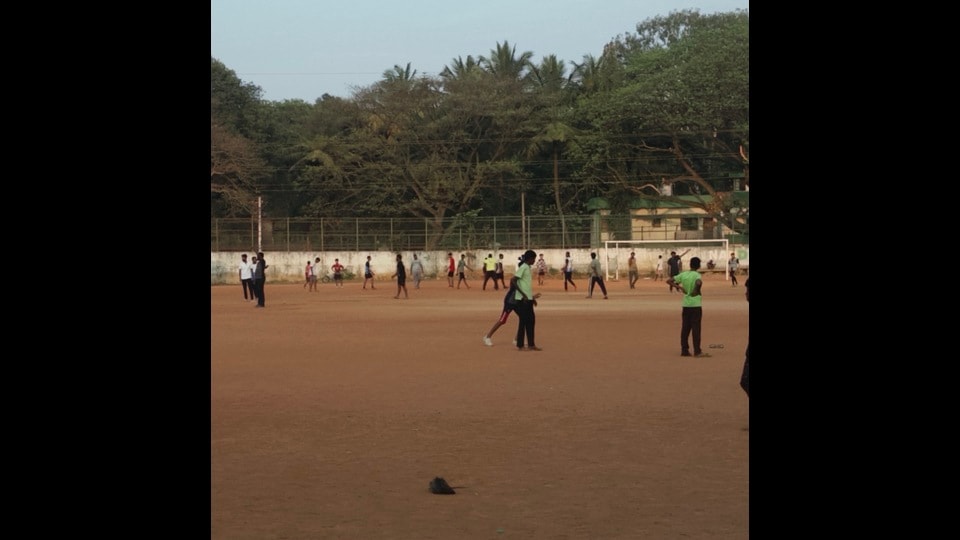
Public playgrounds that once functioned as free training grounds for neighbourhood youth are increasingly neglected or earmarked for “upgrades” that introduce fees, while private turf arenas, orderly, lit and bookable, have become the dependable alternative for those able to pay.
The strain is visible at Nandan Ground in Austin Town, one of the city’s oldest open playing fields and long associated with the early development of football in Bengaluru. The ground has produced prominent Olympic and national-level footballers, including Sarangapani Raman, T. Shanmugham, Muhammad Kannayan and Berland Anthony, and for decades it operated without barriers, allowing anyone to join a game.
“In public grounds, there will be more people and we can play with anyone,” said Rajiv, a volleyball player who spends his evenings there. “People will say, come we will play together, that’s why I like to play here.”
That openness came under threat in December 2025, when a proposal surfaced to convert the site into a turf facility along with a stadium. Residents and regular users protested, arguing that managed facilities would bring charges that many local players could not afford. The proposal was later withdrawn, but promised basic improvements, including toilets and changing rooms, have not materialised, according to those who use the ground.
77-year-old David George, a retired Navy seaman who has visited the ground since childhood and now walks there daily, described worsening conditions. “Nobody is taking care properly,” he said. “No toilet, no drinking water.” Another regular, Harish Kumar (20) said assurances of infrastructure remain unmet. “He said there would be sheds over here, a sitting place and toilets over there, but nothing is here yet.”
JL Andrew, a football coach who has trained players there for 40 years and works with 30 to 40 students each evening free of charge, said deterioration has changed the environment. Pointing to rubbish, a dead rat and belongings of homeless squatters, he said, “The atmosphere is not good here anymore, you yourself think about this atmosphere.” He added that users are asked to pay for cleaning, even though civic authorities are responsible. “Our boys only have to clean, BBMP people sit here, but they don’t clean.”
For Andrew, the risk of converting such grounds into paid facilities is clear. “Those who don’t have money and those in poverty come here for practice. Those who have money, they go to academies and turfs,” he said. “Now it’s free, after turf, they will tell all reasons for maintenance and management and people will have to pay to play.”
Many younger athletes already rely on private venues. Siddharth Nair (19) a college cricketer, often books time at a turf in Koramangala. “On turfs, you can just book, be with your people and play,” he said, describing public grounds as largely “mud and dirt.” But access comes at a cost. “Yes, there are people who don’t show up because of payment problems,” said Abu Bakkar, 19, another turf user.
Saanvi Banayana, 18, said she considers fees of ₹500 to ₹700 per session worthwhile because “a turf is much more secure than a public ground. Most of the time public grounds are undermaintained and have no security, rules and regulations.” Juhi Nagadia, 21, who books turf sessions for badminton, said pollution, poor upkeep and lack of equipment pushed her away from public grounds. “You have to pay at most places anyway, or else you can’t play at the time you want,” she said. “I don’t want to compromise on my practice.” All said they would return to public grounds if infrastructure and safety improved.
Urban strategist V. Ravichandar said the tension reflects a broader contraction of shared space.
“Anything which is a government asset, to convert it and then have a charge, is a no-no,” he said. He cited the city’s Comprehensive Development Plan, which shows open spaces declining from about 25% of the city area in the mid-1990s to around 9% today.
A study by Nilanjan Bhor and Dhananjayan Mayavel of the Indian Institute for Human Settlements found that 19 of Bengaluru’s 198 wards had no park. Parks in eastern areas with high Scheduled Caste populations, and in low-income neighbourhoods in the west and south, were often inaccessible, indicating uneven distribution and inequitable access.
“The remaining spaces being made inaccessible through ‘improvements’ is just not right,” Ravichandar said. “These are the only few spaces left and they have to be accessible to the local community without any charge.”
Environmental expert A.N. Yellappa Reddy said roughly 40% of government land in Bengaluru has been encroached upon and is being reclaimed. Once recovered, he said, it should be designated as public playgrounds and parks and planted with heritage trees. “Greening is also a very important infrastructure that is required,” he said, adding that citizens must push for proper upkeep despite funds allocated for maintenance.


