
 E-Paper



No AC, toilets: Consumer forum forced to halt work in Delhi
The south-west Delhi consumer commission had to put off proceedings in a case until the onset of winter

 Prefer HTon Google


Justice should be a cooling balm, but a consumer court in the national capital has been forced to put the brakes on imparting justice due to sweltering conditions. In a stark illustration of the inadequate infrastructure at the district consumer commission in Delhi, a recent court order has shed light on the failure to conduct proceedings due to lack of air conditioning, water supply, and functional restrooms as temperatures soar in the city.
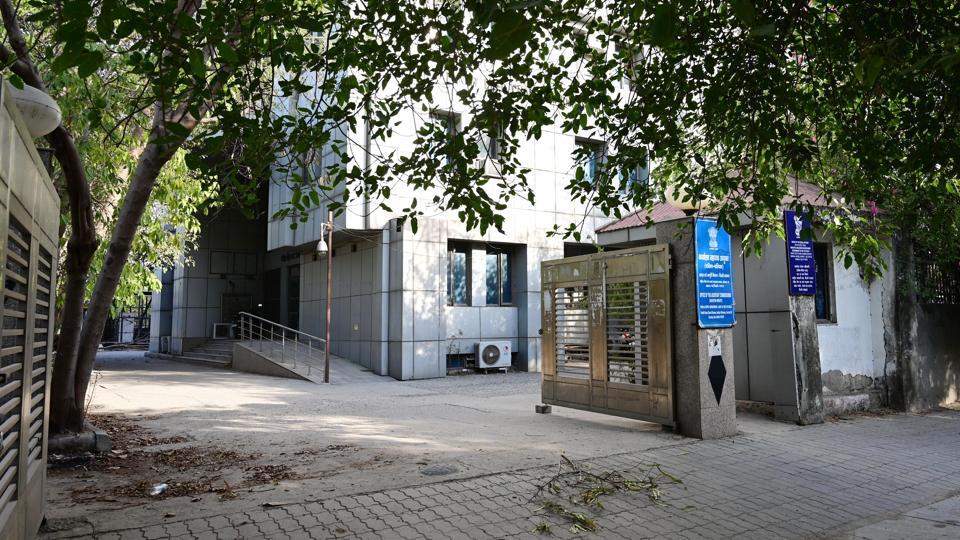
The south-west Delhi consumer commission had to put off proceedings in a case until the onset of winter, citing the state of infrastructure under which it is forced to function.
“There is neither air conditioner nor cooler in the court room. The temperature is more than 40 degree Celsius. There is too much heat in the courtroom which led to sweating as such it is difficult to hear arguments. Moreover, there is no water supply even to go to the washroom to ease ourselves. In these circumstances, arguments cannot be heard so case is adjourned for the arguments,” stated the commission in its order on May 21.
Detailing the appalling conditions that led to the adjournment of a case scheduled for arguments, the commission, headed by its president, Suresh Kumar Gupta, adjourned the matter to November 21. The commission order also endorsed signatures of two other members, Harshali Kaur and Ramesh Chand Yadav.
Read Here: Maximum temperature hits 45.8°C in Delhi on hottest day of season, closes in on 50°C in parts
The commission directed that a copy of its order be also sent to the secretary-cum-commissioner in the department of consumer affairs “for information”.
Consumer courts are constituted under the central consumer protection law by the Centre’s department of consumer affairs. State governments are, however, responsible for appointments in these bodies and their infrastructure.
The unfortunate scenario, which is not just a local embarrassment for the Capital but also reflects poorly on the entire justice delivery system in consumer fora across India, has come to light even as the Supreme Court is currently seized of proceedings initiated on its own motion on the same issue.
The Supreme Court in January 2021 initiated suo motu proceedings on account of “inaction of the government” in appointing members of the consumer courts and providing adequate infrastructure.
Read Here: Delhi govt ‘rationalises’ water supply to city
While hearing this matter, the court issued a series of orders directing the Centre and states to expeditiously fill up vacancies in consumer courts across the country, besides taking stock of the infrastructural challenges plaguing the justice delivery system.
During the hearing of this case, the apex court also flagged the lapse of conducting a “legislative impact study” before the new consumer protection law was notified in July 2020. The court, in February and August 2021, underlined that a legislative impact study was a must to ascertain the volume of cases consumer courts at different levels will be burdened with not only now but in a reasonable time in the future, and the available infrastructure in wake of changes ushered in by the 2019 law.
The 2019 consumer protection law broadened the meaning of “consumer”, allowing them to file a complaint from their place of residence; brought e-commerce platforms within the fold of the law; provided for timebound redressal; made celebrity-endorsers also liable; and enhanced the monetary jurisdiction of consumer courts at all levels.
Under the new law, a district forum can decide a consumer dispute up to ₹1 crore as against ₹20 lakh under the old law. Similarly, pecuniary jurisdiction of state commission has been enhanced from ₹1 crore to ₹10 crore, and a national commission can now decide disputes over and above ₹10 crore.



