E-Paper



No casual remarks, SC tells judges on ‘Pak’ row
The bench warned that “casual observations” made by judges during open court sessions could inadvertently project bias.


New Delhi The Supreme Court on Wednesday stressed that off-the-cuff observations made by judges during legal proceedings can influence public perception and, at times, cause undue harm to the image of the judiciary. The court’s observations came as it reproached a Karnataka high court judge for referring to a Muslim-dominated area in Bengaluru as “Pakistan”.
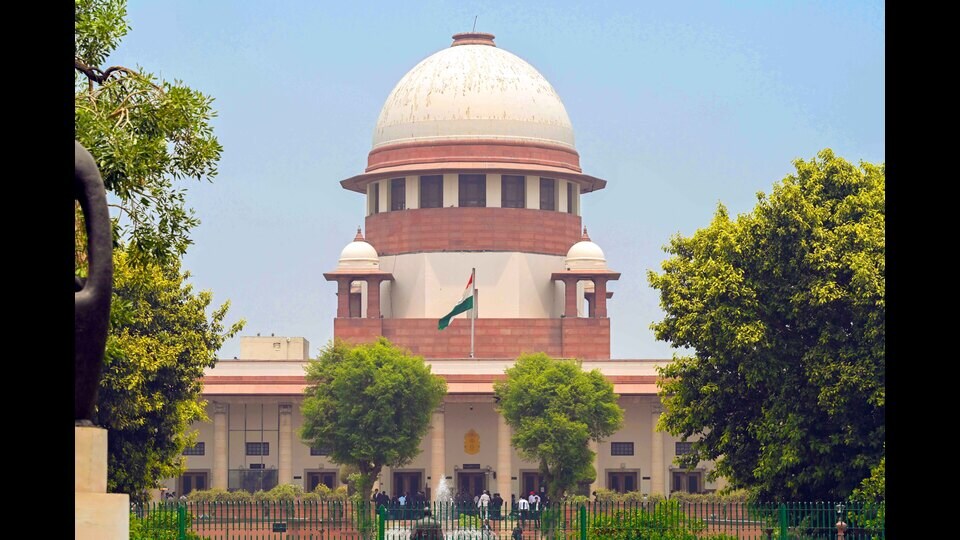
While closing proceedings initiated on its own motion regarding the controversial remarks made by the judge during judicial proceedings, a bench comprising the five most senior judges of the top court noted that such comments not only undermine the territorial integrity of India but can also have broader social implications.
“No one can call any part of India as Pakistan. It is fundamentally against the territorial integrity of the nation,” observed the bench, underlining the need for decorum and restraint from judges in the digital age when court proceedings are frequently live-streamed and closely watched and shared on social media.
The bench, comprising Chief Justice of India Dhananjaya Y Chandrachud, and justices Sanjiv Khanna, Bhushan R Gavai, Surya Kant and Hrishikesh Roy, warned that “casual observations” made by judges during open court sessions could inadvertently project bias, particularly when the remarks are directed against a specific gender, community or region.
“Casual observations may indicate a certain degree of individual bias, particularly when perceived to be directed at a certain gender or community. Courts, therefore, have to be careful not to make observations that can be construed as misogynistic, or for that matter, prejudicial to any segment of our society,” held the bench.
“A perception of justice to every segment to society is as important as the rendition of justice as an objective fact,” stated the bench in its order, recording its “serious concern” over the high court judge’s “reference to gender and a segment of the community”.
“Such observations are liable to be construed in a negative light, thereby impacting not only the court of the judge who expressed them but also the wider judicial system,” stressed the bench, calling for “modulation of behaviour” on the part of the bar and the bench to meet the expectations in the digital age.
The top court on September 20 initiated proceedings on its own motion against controversial remarks made by Karnataka high court judge, justice Vedavyasachar Srishananda, in two videos widely that recently surfaced on social media. In one clip, the judge was heard referring to a Muslim-dominated area in Bengaluru, Gori Palya, as “Pakistan,” while in another, he was heard making inappropriate comments directed at a woman advocate, sparking widespread criticism on social media, drawing the ire of legal professionals and the public alike. On the day, the bench ordered a report from the Karnataka high court registry regarding these remarks.
A day later, justice Srishananda expressed regret in open court, saying that his observations were unintentional, but they were reported out of context on social media platforms. “I express my sincere regrets if they hurt any individual or any section of the society or community,” said the judge on September 21, addressing bar leaders and other lawyers in the high court.
On Tuesday, when the matter was taken up, attorney general R Venkataramani suggested that continuing with judicial proceedings against the high court judge may not be proper and that the top court may consider dealing with the issue on the administrative side. Solicitor general Tushar Mehta recommended that the judicial proceedings be closed in view of the judge’s apology, adding he completely agreed with the bench that a restraint by the bar and the bench is imperative to maintain judicial decorum.
The five-judge bench decided to close proceedings against justice Srishananda after taking note of his “contrite apology” and in deference to the “dignity of the institution”, even as it was careful to frame its decision within a broader context.
Noting how the digital age, accelerated by the Covid-19 pandemic, has made courtroom interactions accessible far beyond the physical boundaries of the courtroom, the court highlighted that judicial remarks are being scrutinised by audiences far removed from the legal profession.
With this expanded reach comes a greater responsibility for judges, lawyers, litigants and all parties involved to be mindful of the impact their words may have on society at large, said the bench, delving into the necessity for judges to be self-aware of their own biases and predispositions and stressing the importance of impartiality.
“As judges, we are conscious of the fact that each individual has a set of predispositions based on early or later experiences of life. The heart and soul of a judge is the need to be impartial and fair. Intrinsic to this is for a judge to be aware of his own predispositions to be able to deliver objective and fair justice,” it held.
The only values that guide judicial decision-making are the ones enshrined under the Constitution of India, said the bench, cautioning against personal biases that may inadvertently emerge in casual remarks made in court.
In the present case, the bench noted that justice Srishananda’s remarks made in the proceedings in June and August were unrelated to the judicial determination and should have been “eschewed”. The bench said it was desisting from passing any adverse order against the high court judge since he was not issued personal notice of the proceedings in view of preserving the dignity of the institution.
As the suo motu proceedings by the top court came to a close, AG Venkataramani cautioned against the “vitriolic” social media comments around the comments made by the high court judge. He added that the Supreme Court order should not become a handle for the social media users to target the judge again. SG Mehta added that social media cannot be controlled but anonymity attached to it makes it a very dangerous tool.
Responding, the bench was emphatic that closing the doors of the court room cannot be an answer. “Answer to sunlight is more sunlight... Not to suppress what happens in the court. This is a very important reminder to everyone. The answer is not to close doors and shut down,” it told the AG.
The bench’s remarks came a day after the Karnataka high court restrained public and social media platforms from sharing the court proceedings, live-streamed on the high court’s YouTube channel. The interim order was issued on Tuesday on a petition filed by the Advocates Association Bengaluru (AAB), which complained that the social media platforms and private YouTube channels were editing the videos of live-streamed proceedings of the high court, contrary to the Karnataka Rules on Live-Streaming and Recording of Court Proceedings, 2021.