E-Paper



Over 54K clear entrance exams for IIT, 12.7% rise since last year
According to the results declared by IIT Kanpur, which was the conducting institute this year for JEE-Advanced, of the 54,378 qualified candidates, 44,974 are male and 9,404 are female

 Prefer HTon Google


A total of 54,378 candidates have qualified in the Joint Entrance Examination (JEE) Advanced-2025, the results of which were announced on Monday, marking a 12.7% jump from last year, when 48,248 aspirants cleared the qualifying examination for entry into the premier Indian Institutes of Technology (IITs) .
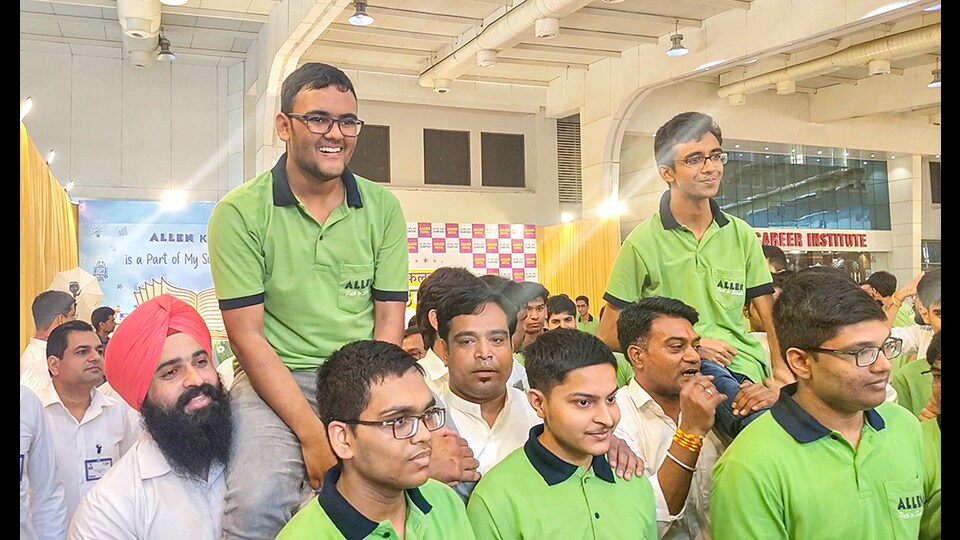
According to the results declared by IIT Kanpur, which was the conducting institute this year for JEE-Advanced, of the 54,378 qualified candidates, 44,974 are male and 9,404 are female. The number of male and women candidates clearing the IIT entrance exam also saw an increase of 11.6% (from 40,284 in 2024) and 18% (from 7,964 in 2024), respectively.
While Delhi zone’s Rajit Gupta bagged the overall top rank in JEE advanced scoring 332 out of a maximum of 360, Devdutta Majhi of IIT Kharagpur zone topped among female candidates scoring 312 (she was 16th on the common rank list or CRL).
“We successfully ensured that the results were released ahead of schedule at 6 am on Monday before the listed time of 10 am. A key challenge was managing the large volume of data securely and ensuring minimal downtime on the jeeadv.ac.in portal during peak traffic,” Prof Manindra Agrawal, director of IIT Kanpur, told HT.
The qualified candidates will now compete for around 18,000 undergraduate engineering (BTech courses) seats across 23 IITs. This effectively means that only one in three qualified candidates will be able to secure an IIT seat through the Joint Seat Allocation Authority (JoSAA) counselling.
A total of 180,422 candidates, out of 187,223 registered for the entrance test, appeared in both papers 1 and 2 of the JEE Advanced held on May 18 across 258 centres in 155 cities. A total of 116 foreign candidates also appeared for the exam, 13 of whom have qualified.
In the zone-wise results — thel 23 IITs are divided into seven zones, with each being coordinated by a specific institute for organising and managing JEE Advanced and related administrative tasks across the country — the most candidates, 12,946 , qualified from IIT Hyderabad zone while the Guwahati zone accounted for the least number of successful candidates, 2,743 .
Out of the top 10 qualifiers, four are from IIT Delhi zone, three from Bombay, two from Hyderabad, and one from IIT Kanpur zone.
This year’s JEE Advanced results saw an increase in the number of candidates qualifying compared to last year as the cut-off marks dropped for all categories.
This year’s JEE Advanced cut-off (or the minimum qualifying marks) was 76 for general category, 66 for OBC-NCL (other backward class, non creamy layer) and EWS (economically weaker section), and 37 for SC and ST (scheduled caste and scheduled tribe). Last year, the corresponding figures were 109 for general category, 98 for OBC-NCL and EWS and 54 for SC and ST.
In every course, 10% of seats are reserved for candidates from the General-EWS category, 27% for OBC-NCL candidates, 15% for SC candidates, and 7.5% for ST candidates.
Agrawal pointed to the “unprecedented female engagement” this year, with 43,413 female aspirants, or 23% of the total , registering for JEE Advanced, up from 42,947 a year ago.
“Of the 54,378 qualifiers, 9,404 were female candidates (17.29%). Previous year saw 7,964 female qualifiers out of 48,248 or 16.50%. This is a positive sign of the increasing acceptance of Science, Technology, Engineering, and Mathematics (STEM) among young women,” the IIT Kanpur director said.
He added that the “record female qualifying numbers are a result of the success of initiatives such as ‘supernumerary seats for female candidates’ and targeted outreach programmes like ‘STEM empowerment for girls’ in collaboration with non-profit partners.”
Supernumerary seats for female candidates are additional seats created in IITs to improve gender diversity without reducing the existing seats for other candidates.