
 E-Paper



Pak Taliban group claims Islamabad bombing, Sharif blames India & Afghanistan
Attack on Tuesday killed 12 at Pak capital’s G-11 judicial complex. Sharif said such attacks “cannot not shake Pakistan’s resolve to root out terrorism”

 Prefer HTon Google


Even after the terror group Tehreek-e-Taliban Pakistan (TTP) claimed responsibility for a suicide bombing that 12 people in Islamabad on Tuesday, Pak PM Shehbaz Sharif has sought to pin it on India.
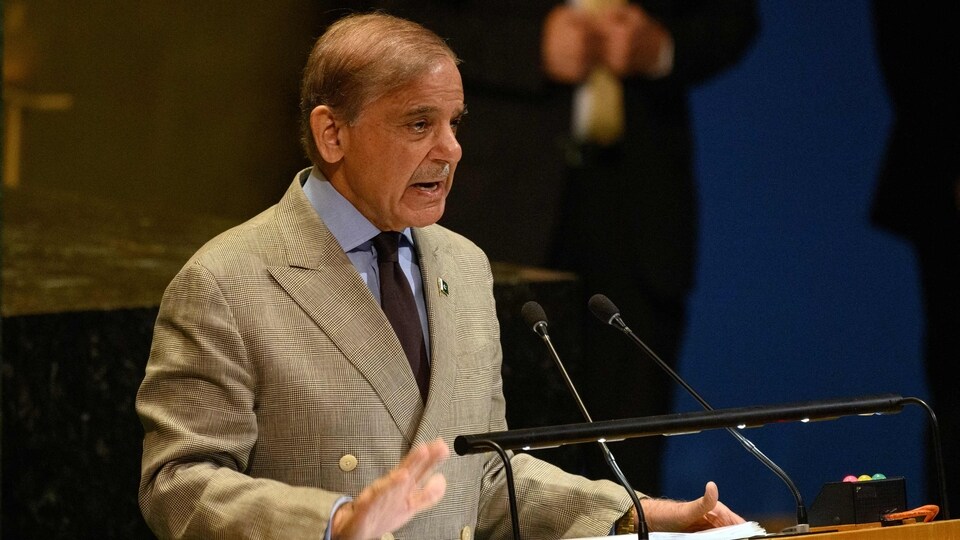
He condemned the perpetrators, calling them “Indian-sponsored terrorist proxies". “These attacks are a continuation of India’s state-sponsored terrorism aimed at destabilizing Pakistan,” he added, as per a report by his country's news agency Associated Press of Pakistan (APP).
India has not reacted yet to the allegations, as of 7:30 pm, November 11, but has in the past rubbished such assertions by Pakistan'a.
Sharif, without citing evidence, also claimed the same network operating from Afghan territory had attacked children in Wana. He was referring to the Monday attack outside a Cadet College in Wana, Khyber Pakhtunkhwa, bordering Afghanistan in which three people died. According to security officials, this attack too was carried out by the banned Tehreek-e-Taliban Pakistan (TTP).
Addressing the Inter-Parliamentary Speakers’ Conference in Islamabad, Shehbaz Sharif said, “Afghanistan must understand that lasting peace can only be realised by reining in TTP and other terrorist groups operating from Afghan territory.”
In an X post on the Government of Pakistan account, Sharif also claimed that the “suicide attack” in the capital Islamabad on Tuesday originated in Afghanistan "with India’s backing”.
Islamabad accuses Kabul of harbouring armed groups, particularly the TTP or Pakistani Taliban, which regularly claims deadly attacks in the country. The Afghan Taliban deny sheltering the group.
“No condemnation is enough for these attacks being carried out from Afghan soil under Indian patronage,” Sharif said, as per APP.
The attack on Tuesday took place at the federal capital’s G-11 judicial complex. Sharif said such attacks “cannot not shake Pakistan’s resolve to root out terrorism completely”.
Islamabad has largely been spared major militant violence in recent years, with the last suicide attack occurring in December 2022. But Pakistan is facing a resurgence of attacks, which officials attribute mainly to armed groups allegedly sheltered on Afghan soil.
The Islamabad court complex bombing came as Pakistani security forces battled militants who had holed up in a school in Khyber's Wana.
Recent attacks prompted a bloody clash between Pakistan and Afghanistan in October, their worst fighting across their border in years. More than 70 people were killed on both sides, including about 50 Afghan civilians, according to the United Nations.
The two countries agreed to a fragile ceasefire, but failed to finalise its details during several rounds of negotiations that collapsed last week. Each side blamed the other for the impasse.
Pakistan's Defence Minister Khawaja Asif said the Islamabad suicide attack should be seen as "a wake-up call". "In this environment, it would be futile to hold out greater hope for successful negotiations with the rulers of Kabul," he wrote on X.
(with inputs from AFP, PTI)


