
 E-Paper



Parties aim to woo workers returning home for Chhath
Bihar's Assembly elections face challenges with potential migrant voter exodus post-Chhath festival, prompting parties to urge them to stay for voting.

 Prefer HTon Google


With Bihar set for a high-stakes Assembly election, political parties are worried about the possible exodus of migrant voters after the Chhath festival. Around 4.6 million people from Bihar live and work outside the state, and with the first phase of elections (on November 6) coming nine days after Chhath -- the second is on November 11 and the results will be declared on November 14 -- there are fears of migrants returning home for the festival leaving before voting day.
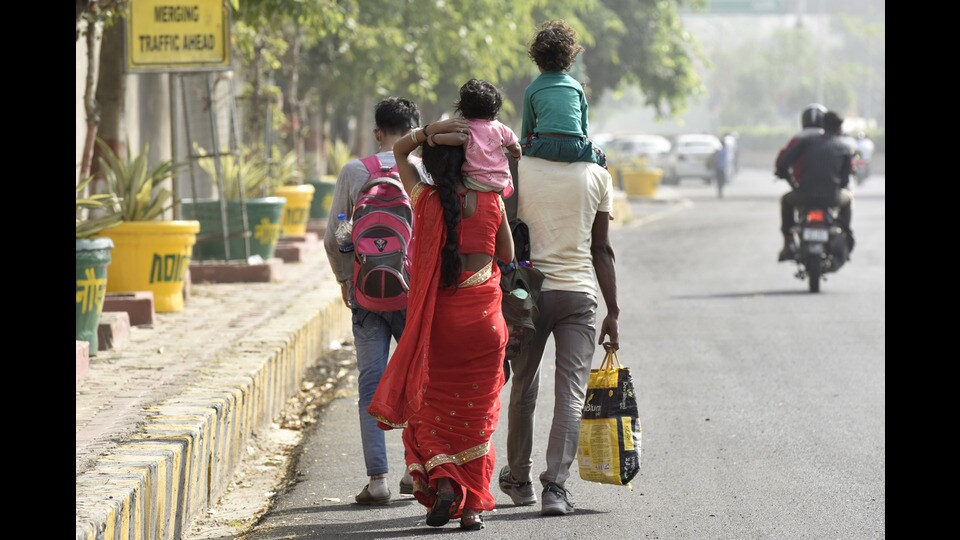
According to Bihar government data, 4.578 million residents work in other Indian states, while around 217,000 are employed abroad. Most of the domestic migrants belong to economically weaker sections and migrate seasonally for work.
The first phase of voting will take place after nine days of Chhath, while the second phase will be held after 14 days of the festival.
Chhath is expected to bring lakhs of migrants back home.
Political parties across the spectrum have begun internal exercises to identify constituencies most affected by outmigration and to reach families of migrant workers.
Rashtriya Janta Dal (RJD) spokesperson Mrityunjay Tiwari admitted that migrant voters can make or break close contests in some seats.
“We are trying to persuade them to stay back for a few more days after Chhath. In several districts, local party units are being asked to run awareness drives stressing the ‘value of every single vote’. Some are even considering logistical support to help migrants travel to polling booths or delay their departure,” he said.
Data shows the highest outmigration from Patna (5.68 lakh), East Champaran (6.14 lakh), Siwan (5.48 lakh), Muzaffarpur (4.31 lakh) and Darbhanga (4.3 lakh). Gaya, Samastipur, West Champaran and Nalanda also have large numbers of workers employed elsewhere. To be sure, it wasn’t immediately clear how many of these people have votes back home.
The first phase of voting will cover Patna, Muzaffarpur, Darbhanga, Samastipur, Nalanda and Siwan districts, while the second phase includes Gaya, East Champaran, West Champaran, Jamui, Nawada, and Buxar.
“Had polling coincided with Diwali, most migrants would have been home. Now, convincing them to stay back after Chhath will be a challenge,” admitted Santosh Pradhan, a BJP leader.
Experts say the episode underscores Bihar’s persistent job crisis and pointed out that nearly one in ten households depends on remittances.
Political analyst Dhirendra Kumar said that while the Nitish Kumar government claims to have expanded local employment through skill centres and industrial projects, the migration trend remains unabated.
“Seasonal migration not only drains Bihar’s labour but also its political participation. Every election, parties wake up to this issue, but none address its structural roots. As the campaign intensified, party cadres will be seen gearing up to greet returning workers at railway stations and bus stands after Chhath, urging them to stay long enough to cast their vote.”
Kumar is convinced that whichever party manages to keep its migrant supporters home will “ gain a decisive edge”. “In Bihar, this year’s Chhath will be more political than religious,” he said.


