
 E-Paper





Follow the latest breaking news, major developments and agenda-setting stories from India and around the world with the newsdesk at Hindustan Times. Operating round the clock, the desk brings together experienced editors, reporters and correspondents to deliver fast, accurate and contextual reporting across subjects that influence public policy, governance, business, society and international affairs. The HT News Desk covers politics, elections, government policies, the economy, business and markets, science and technology, the environment, law and order, infrastructure, education, climate issues and geopolitics, while closely tracking developments across states, institutions and global capitals. The team also leads coverage of major breaking news events, policy announcements, court proceedings, natural disasters, public emergencies and significant international developments. Reports published by the newsdesk are based on information gathered from reporters on the ground, official statements, government agencies, court records, regulatory filings, recognised institutions and other authoritative sources. Stories undergo editorial scrutiny and verification processes to ensure accuracy, fairness and relevance, and are updated as events evolve and additional information becomes available. Whether covering a key political decision in New Delhi, an economic policy shift affecting millions, a landmark court ruling or a major global event, the HT News Desk aims to provide readers with reliable, fact-based journalism that delivers not only the latest developments but also the context and analysis needed to understand their wider implications.
PM Modi hits delete on his Weibo account after banning it in India. It isn’t easy
New Delhi had initially tried to delete PM Modi’s account but it turned out that the Chinese social media platform had a “complex procedure” for VIP accounts, people familiar with the development said.


Prime Minister Narendra Modi has deleted his posts on Weibo, China’s Twitter-like account after India decided to ban 59 mobile applications linked to China. New Delhi had initially tried to delete PM Modi’s account but it turned out that the Chinese social media platform had a “complex procedure” for VIP accounts, people familiar with the development said.
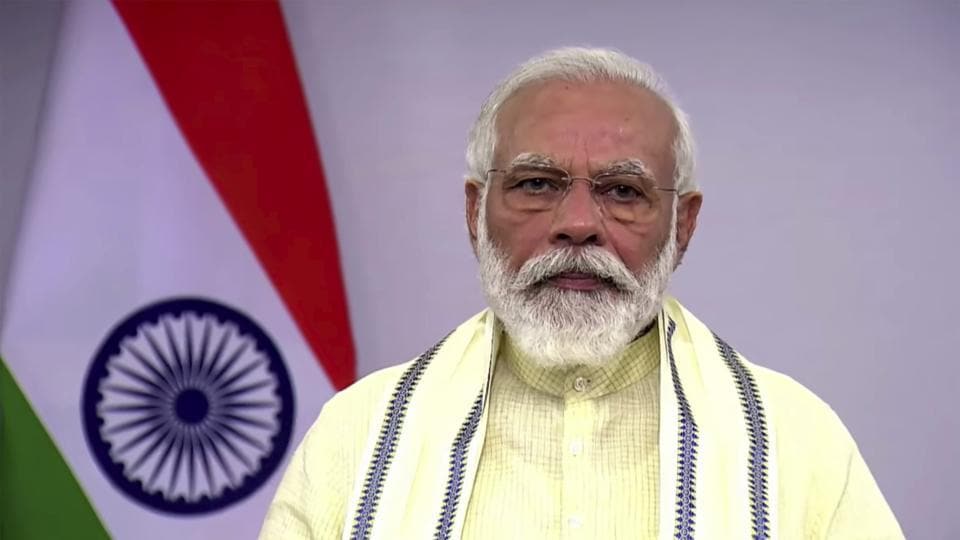
The government has initiated the process for deletion of the account. “For reasons best known to the Chinese, there was great delay in granting this basic permission,” a government functionary said.
As an interim measure, the Prime Minister’s Office decided to remove its posts from the platform. PM Modi made his debut on the Chinese social media in 2015.
“PM Modi had 115 posts on Weibo. It was decided to manually delete them and after much effort, 113 posts were removed,” news agency ANI added, quoting sources.
The government had on Monday ordered the ban on the 59 mobile apps after an assessment that “they are engaged in activities which is prejudicial to sovereignty and integrity of India, defence of India, the security of the state and public order”.
The move, which many analysts say, could become the template for other countries to act against Chinese companies, have angered Beijing. In a statement last evening, China claimed that the ban selectively and discriminatorily targets Chinese apps on ambiguous and far-fetched grounds and abuses national security exceptions.
Back home, China has for years banned internet websites that it felt could hurt its national security. Beijing does not allow its nationals to access sites such as Twitter, Facebook and YouTube.


