E-Paper



‘Respecting LAC essential’: PM Modi’s clear message to Xi on Brics sidelines
Foreign secretary Vinay Kwatra said PM Modi, Prez Xi agreed to “direct their relevant officials to intensify efforts at expeditious disengagement”

 Prefer HTon Google


Prime Minister Narendra Modi has told Chinese President Xi Jinping that maintaining peace and tranquillity in border areas and respecting the Line of Actual Control (LAC) are “essential” for normalising bilateral relations.
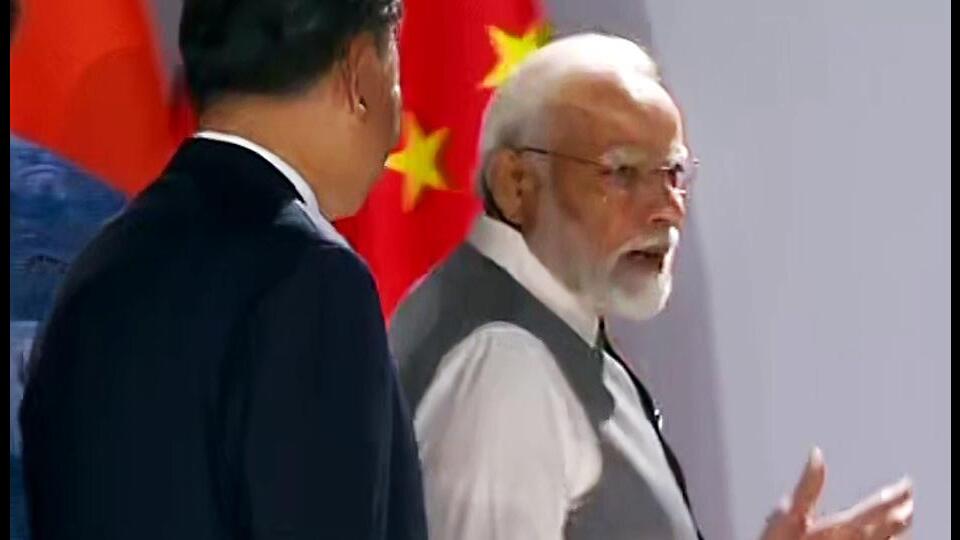
PM Modi conveyed India’s position during a conversation with Xi on the margins of the Brics (Brazil-Russia-India-China-South Africa) Summit in Johannesburg, foreign secretary Vinay Kwatra told a media briefing on Thursday. He didn’t specify when the conversation occurred or give many details.
“On the sidelines of the Brics Summit, prime minister had interactions with other Brics leaders. In a conversation with President Xi Jinping of China, prime minister highlighted India’s concerns on the unresolved issues along the LAC in the western sector of the India-China border areas,” Kwatra said.
Also Read: Facing China at Brics, India stands its ground
“Prime minister underlined that the maintenance of peace and tranquillity in the border areas and observing and respecting the LAC are essential for the normalisation of the India-China relationship,” he added.
The two leaders agreed to “direct their relevant officials to intensify efforts at expeditious disengagement and de-escalation”, Kwatra said.
People familiar with the matter said the two leaders were part of several informal interactions during the summit. The conversation apparently happened during a pull aside on Wednesday.
Also Read: Will strengthen grouping, says PM Modi as Brics decides to invite 6 countries
Footage beamed by South Africa’s public broadcaster SABC also showed Modi and Xi interacting briefly before a news conference by Brics leaders on Thursday. The two leaders were seen speaking to each other for less than a minute as they walked towards the dais from where they delivered their remarks.
Modi and Xi, who sat on either side of South African President Cyril Ramaphosa, also spoke briefly and shook hands at the conclusion of the news conference.
This was the first public interaction between the two leaders since a short encounter during last year’s G20 Summit in Bali. Modi and Xi met briefly at a dinner hosted by Indonesian President Joko Widodo on November 16, 2022.
At that time, the Indian side characterised the interaction as a mere exchange of courtesies. After China’s foreign ministry contended in July that Modi and Xi “reached an important consensus on stabilising China-India relations” during the Bali interaction, the external affairs ministry said the leaders discussed the need to stabilise bilateral ties.
There was intense speculation about a bilateral meeting between Modi and Xi on the margins of the Brics Summit following a string of diplomatic and military engagements between the two sides. Indian and Chinese corps commanders held their 19th round of talks on the LAC standoff on August 13-14, and this was followed by several rounds of talks among local commanders that began on August 18.
National Security Adviser Ajit Doval and external affairs mister S Jaishankar met Wang Yi, currently China’s foreign minister, on the margins of multilateral meetings in July and discussed the standoff, which has taken bilateral relations to a six-decade low.
Following a brutal clash at Galwan Valley that killed 20 Indian soldiers and at least four Chinese troops, the two sides have deployed nearly 60,000 troops each in the Ladakh sector. Despite several rounds of diplomatic and military talks, they are yet to disengage frontline troops at friction points such as Depsang and Demchok.