
 E-Paper



SC junks Maharashtra govt, Deshmukh’s plea against CBI probe
The bench of justices Dhananjaya Y Chandrachud and MR Shah wondered why the state had filed an appeal when the investigation was directed against its former minister.

 Prefer HTon Google


The Supreme Court on Wednesday rapped the Maharashtra government for standing in the way of a probe ordered by the Bombay high court into allegations of bribery and extortion against its former home minister, Anil Deshmukh. It also dismissed separate petitions filed by the state and Deshmukh challenging the HC order allowing the Central Bureau of Investigation (CBI) to investigate the matter.
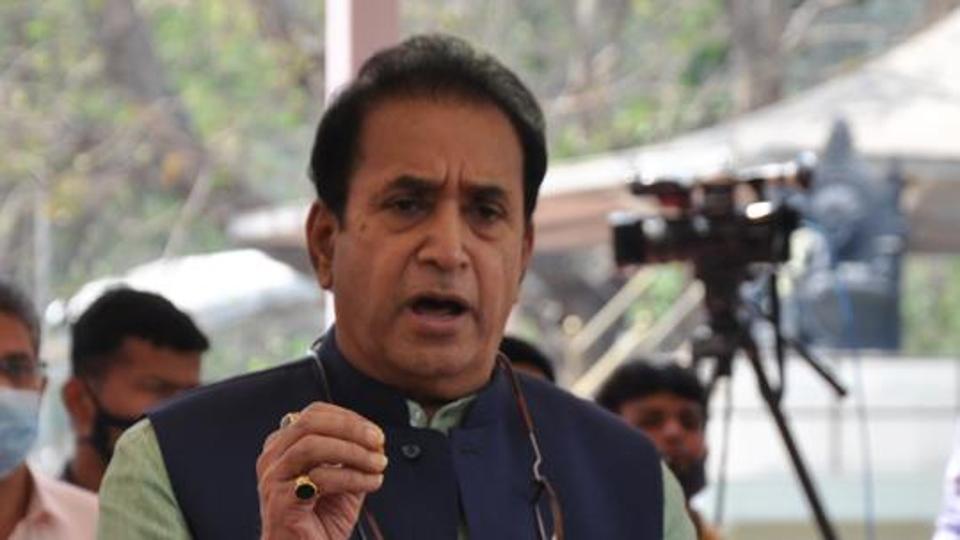
The bench of justices Dhananjaya Y Chandrachud and MR Shah wondered why the state had filed an appeal when the investigation was directed against its former minister. “An impression is being given that your government is trying to protect this person (Deshmukh). Investigation is not against the state but against your home minister. At every stage you seem to stultify the investigation. Why does the state have to oppose? It should rather come forward and allow full and fair investigation,” the court said.
The charges against Deshmukh stemmed from a letter written in March 2021 by former Mumbai Police commissioner Param Bir Singh to chief minister Uddhav Thackeray in which he alleged that the minister ran a corruption ring in the police department. The allegations against him pertained to extorting money from bars and restaurants on a monthly basis, exerting undue influence in pending investigations in high-profile cases, and using his position to effect transfers and postings of police officers. With these allegations as a basis, one Jaishree Patil wrote to the police seeking an investigation. When nothing moved, she approached the Bombay High Court demanding action against Deshmukh.
Incidentally, the state was not prepared to argue its own appeal on Wednesday. Advocate Rahul Chitnis appearing for the state had moved a letter for adjournment late Tuesday night after the senior counsel engaged by the state returned the case file. But the bench turned down his request as they had already spent considerable time reading the files and noted that Chitnis was a seasoned lawyer capable of arguing the matter.
Chitnis submitted that the HC order of April 5, 2021, ordered a preliminary enquiry based on Patil’s letter, which did not contain allegations of transfer or posting but of extortion from bars and restaurants. He further stated that in October 2020, the state had withdrawn consent under Section 6 of the Delhi Special Police Establishment (DSPE) Act, 1946, preventing CBI from taking up any investigation in the state.
Deshmukh also moved the top court, asking for the quashing of the FIR lodged by CBI on April 21. Senior advocate Amit Desai appeared for the former home minister and said his client enjoyed the protection of Section 17A of the Prevention of Corruption Act, 1988 (amendment introduced in 2018), which offers public servants protection from any enquiry or investigation into any offence relatable to any decision taken by them in the discharge of their official duties. Such a probe could be possible only upon the approval of the competent authority, in this case the state government.
The bench said, “Which government will order a CBI probe or grant sanction against its own home minister? This is the reason why the high court has proceeded in the matter and ordered an enquiry so that justice is not just done but seen to be done.”
The bench further noted that sections 6 and 17A only offer protection from unjust prosecution of innocent public servants. “Here the high court has taken on itself the decision to refer the matter to CBI because the home minister is himself involved. If your argument is accepted that consent of state will be required, the very purpose of the high court order will get defeated. It will denude the courts of their constitutional power.”
Deshmukh’s lawyer had also challenged a July 22 HC judgment that refused to quash the CBI case lodged against him. Desai argued that HC made certain conclusions that were not part of the letter written by Param Bir Singh or Jaishree Patil.
Even in CBI’s preliminary enquiry report, no cognisable offence was made out as the issue was of transfers and postings. It was for this purpose, Desai argued, that HC ordered a preliminary enquiry and did not direct CBI to straightaway register a case.
The bench discarded this view: “Transfer is only an incidental thing. The manner in which transfers were made for oblique purposes and illegal gratification is in question here….The high court was satisfied that prima facie a cognisable offence is made out. But bearing in mind the Supreme Court decision in Lalitha Kumari case (2013) mandating a preliminary enquiry, and the fact that allegations were against the home minister of the state, the high court ordered a preliminary enquiry by CBI.”
The bench noted that the requirement under both Section 6 and Section 17A of the Prevention of Corruption Act applies at the threshold. This stood “obviated” by the HC coming to the conclusion that public interest requires the ordering of an enquiry. This also protects the accused as the HC held that upon completion of enquiry, the CBI director shall apply his mind and proceed in accordance with the law, added the bench.
The top court dismissed Deshmukh’s petition finding “no error in the high court judgment”.


