E-Paper



Supreme Court junks ‘luxury’ plea over packaged water
The Supreme Court refused to entertain a plea seeking fresh and stricter standards for PET bottles used for bottled water and other food items.


The Supreme Court on Thursday disapproved of what it termed an “urban-centric approach” to public interest litigation, refusing to entertain a plea seeking fresh and stricter standards for polyethylene terephthalate (PET) bottles used for bottled water and other food items, remarking that such causes overlook the far more basic problems faced by large sections of the population.
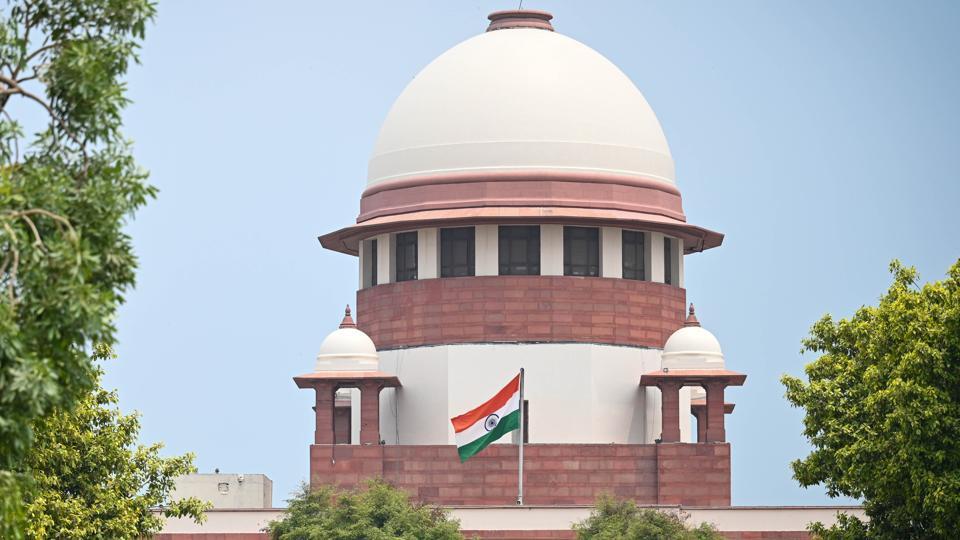
A bench, comprising Chief Justice of India Surya Kant and Justice Joymalya Bagchi, lamented that while “luxury” petitions frequently reach the apex court, the concerns of the poor and marginalised often remain unaddressed.
Pointing to the stark reality that many parts of the country may still not have access to safe and potable drinking water, the bench questioned the propriety of invoking the court’s jurisdiction to seek judicial intervention on standards governing bottled water, which is largely consumed by the urban population.
The court was hearing a public interest litigation filed by architect and environmentalist Sarang Yadwadkar, represented by senior advocate Anitha Shenoy, which raised concerns about antimony and synthetic chemical DEHP leaching into water and food from PET plastic packaging. Antimony, a metalloid used as a catalyst in the manufacture of PET plastic, and DEHP, a phthalate, can migrate into water or food, especially when plastic bottles are stored at higher temperatures, potentially posing health risks.
Shenoy argued that there were inadequate standards governing bottled water and plastic food packaging in India, and that this posed serious public health concerns. She relied on Section 18 of the Food Safety and Standards Act, 2006, which lays down guiding principles for food safety, and contended that international standards and scientific evidence had not been adequately factored in by Indian regulators such as the Food Safety and Standards Authority of India (FSSAI) and the Bureau of Indian Standards (BIS).
The bench, however, was unconvinced. “There is no potable water in many areas and here you have filed a petition for standards of bottled mineral water,” remarked the court, observing that bottled water is accessed primarily by urban consumers, while people in rural and remote areas continue to depend on groundwater, wells and other sources.
Describing the plea as reflective of an urban and metropolitan mindset, the bench said it would have been more appropriate had the petitioner approached the court with data on regions still deprived of basic drinking water facilities.
“These are all luxury litigations,” said the bench, taking exception to the petitioner’s reliance on Canadian, Australian and other foreign guidelines. With India’s population size and developmental challenges, the court said, it was not appropriate to press for standards drawn from developed countries without considering local realities.
“Let this country grow at its own pace. Wait for some more years,” observed the bench, adding that hardly anyone took up the cause of poor people before the court.
In a pointed remark, the bench invoked Mahatma Gandhi’s return to India, noting that he travelled extensively across the country to understand where India truly lived. Referring to the petitioner’s professional stature, the court said he should similarly travel and see “real India” to appreciate the everyday struggles of those without access to basic amenities.
During the hearing, Shenoy sought permission to withdraw the petition with liberty to make a representation before the appropriate statutory authorities. Accepting the request, the bench allowed the withdrawal and granted liberty accordingly.
In its prayers, the PIL had sought quashing of FSSAI notifications fixing permissible limits of antimony and DEHP in food items, alleging that they were arbitrary and violative of Article 14 of the Constitution and the Food Safety and Standards Act. It also sought directions to mandate adoption of World Health Organization standards pending revision of Indian norms, to strike down BIS standards on DEHP migration in plastic packaging, to require public disclosure of health risks, and to compel authorities to undertake independent and transparent risk assessments based on cumulative toxic effects.