
 E-Paper



Targeted terror attacks in Pak, at least 72 killed
More than 72 people were killed in Balochistan, Pakistan, in attacks by separatist militants on police, paramilitary stations, railway lines, and buses. The BLA claimed responsibility.

 Prefer HTon Google


More than 72 people were killed in Balochistan province of Pakistan when separatist militants attacked police and federal paramilitary stations, railway lines and passenger buses in the most widespread attacks by ethnic militants, officials said on Monday.
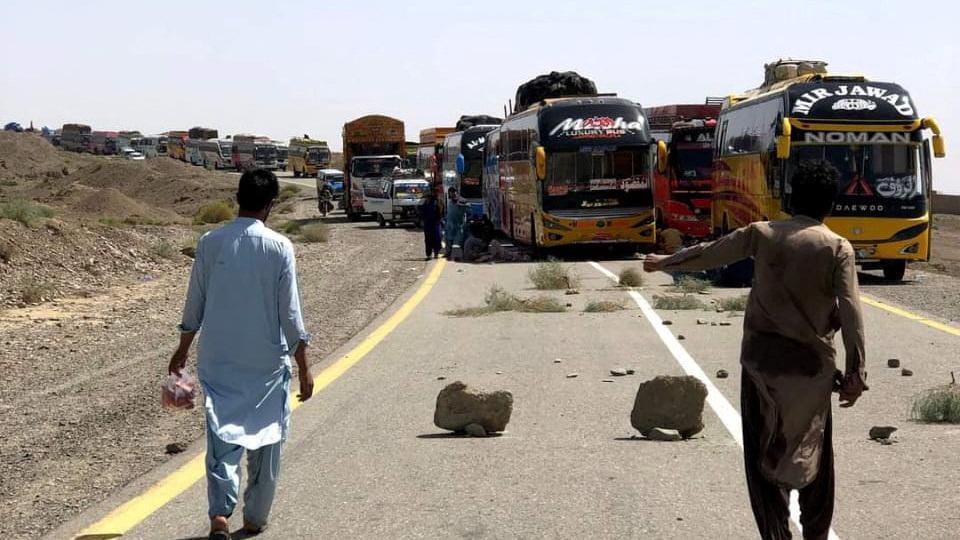
The Baloch Liberation Army (BLA) armed militant group took responsibility for the operation they called “Haruf” or “dark windy storm”.
“These attacks are a well thought-out plan to create anarchy in Pakistan,” interior minister Mohsin Naqvi said in a statement about the Sunday and Monday attacks.
Pakistan’s military said 14 soldiers and police personnel, and 21 militants, were killed in fighting after the largest of the attacks, which targeted buses and trucks on a major highway.
Local officials said at least 23 people were killed in the highway attacks, in which armed men checked passengers’ IDs before shooting many of them and torching vehicles.
Rail traffic with Quetta was suspended following blasts on a rail bridge linking the provincial capital to the rest of Pakistan. Militants also struck a rail link to neighbouring Iran, railways official Muhammad Kashif said.
Police said they had found six bodies near the site of the attack on the railway bridge.
The first of the attacks was on Sunday night, when armed men blocked a highway in Balochistan, marched passengers off vehicles, and shot them after checking their identity cards, said senior superintendent of police Ayub Achakzai.
They set afire 35 vehicles, including trucks, on the highway in the Musakhail area.
“The armed men also not only killed passengers but also killed drivers of trucks carrying coal,” said Hameed Zahir, deputy commissioner of the area.
Militants have targeted workers from Pakistan’s eastern province of Punjab whom they see as exploiting their resources.
In the past, they have also attacked Chinese interests and citizens in the province, where China runs the deepwater port of Gwadar, as well as a gold and copper mine in its west.
POLICE STATIONS TARGETED
Officials said militants also targeted police and security stations in Balochistan — Pakistan’s largest province by area but least populated — killing at least 10 people in one attack. These included six security personnel, three civilians and one tribal elder as armed militants stormed a station of the Balochistan Levies, a federal paramilitary, in the central district of Kalat, said police officer Dostain Khan Dashti.
Officials said police stations had also been attacked in two southern coastal towns, but the toll from these incidents was yet to be confirmed.
Prime Minister Shehbaz Sharif vowed that security forces would retaliate and bring those responsible to justice.
General Li Qiaoming, commander of China’s People’s Liberation Army Ground Forces and Pakistan’s army chief Asim Munir met on Monday, though a Pakistani military statement released after the meeting made no mention of the attacks.
European Commission spokesperson Nabila Massrali said on social media platform X that the EU condemned the attack, adding that violence “threatens the foundation of democracy.”
BLA CLAIMS RESPONSIBILITY
In a statement to journalists, BLA claimed they carried out more attacks, but these were not confirmed by authorities.
The attacks form part of a decades-long effort to win secession of the resource-rich southwestern province, home to major China-led projects such as a strategic port and a gold and copper mine.
The BLA is the biggest of several ethnic insurgent groups battling the central government, saying it unfairly exploits gas and mineral resources in the province, which suffers high levels of poverty. It wants the expulsion of China and independence for Balochistan.
The group said four suicide bombers, including a woman from the southern port district of Gwadar, had been involved in an attack on a major paramilitary base though Pakistani authorities have yet to confirm that attack.
Monday was the anniversary of the death of Baloch nationalist leader Akbar Bugti, who was killed by Pakistan’s security forces in 2006.


