E-Paper



UN climate summit outcomes may cause larger conflicts at COP28 in UAE next year
The Sharm El Sheikh implementation plan gives us a peek into what is to be expected next year at COP28 in United Arab Emirates (UAE) and further years to come.

 Prefer HTon Google


The recently-concluded UN Climate Conference (COP27) in Egypt will go down in history for the decision to set up a Loss and Damage Fund, something that environmental activists and vulnerable communities had been demanding for over 30 years.
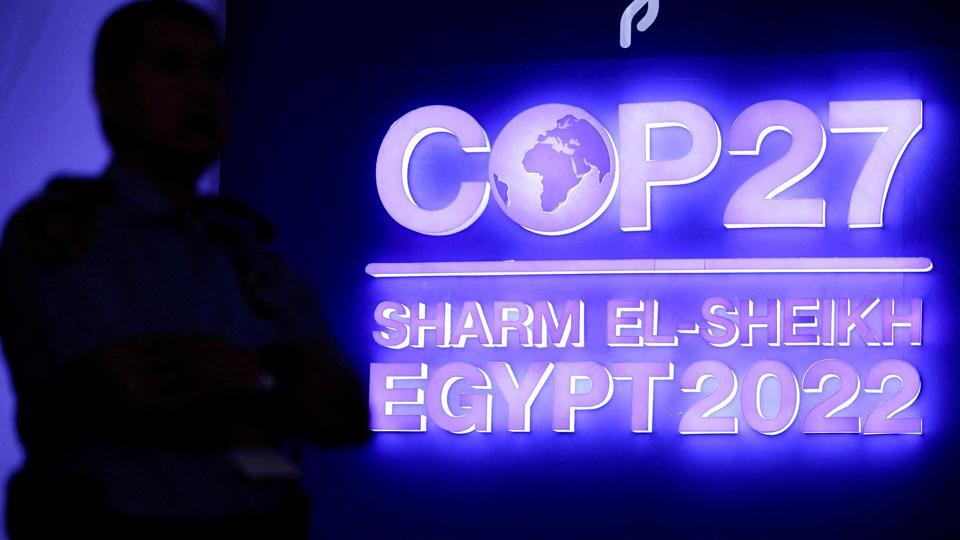
But, the Sharm El Sheikh implementation plan, which summarised the key consensus outcomes of COP27, gives us a peek into what is to be expected next year at COP28 in United Arab Emirates (UAE) and further years to come.
Compared to COP26 in Glasgow, COP27 saw the rifts that may have predated the United Nations Framework Convention on Climate Change, causing anxiety among observers as to how the talks can be steered to save the world from a climate catastrophe, while doing so equitably.
The most debated issues at COP27 were the 1.5 degree C goal; phasing down/phasing out of fossil fuels; the operationalisation of the Loss and Damage fund; how can multilateral banks be reformed to reduce indebtedness of least developed and developing countries and carbon offsets. Here we look at what each of these issues means when it comes to implementation:
1.5 degree C goal
The Sharm El Sheikh Implementation Plan reiterated that the impacts of climate change will be much lower at the temperature increase of 1.5 degree C compared with 2 degree C and resolved to pursue further efforts to limit the temperature increase to 1.5 degree C.
The 1.5 degree C global warming threshold is likely to be breached in the next 10 to 20 years (by 2040) in all emission scenarios, including the one where carbon dioxide (CO2) emissions decline rapidly to net zero around 2050, the intergovernmental panel on climate change (IPCC) had said last year.
“From a physical science point of view, it is still possible to limit global warming to 1.5°C and that would mean these changes could be slowed. If we reduce GHG emissions to net zero by 2040 there is still a two-thirds chance to limit global warming to 1.5°C and if we manage to reach net zero emissions by middle of the century there is still a one-third chance,” Friederike Otto, associate director, Environment Change Institute, University of Oxford had said last August when IPCC’s ‘Climate Change 2021: The Physical Science Basis’ report was released.
If current emissions levels persist, there is a 50% chance that warming of 1.5 degree C over pre-industrial levels will be exceeded in the next 9 years and warming of 2 degree C will be exceeded in the next 30 years, a new analysis titled Global Carbon Budget 2022 at COP27 on November 10 said.
To keep global warming under 1.5 degree C or net zero CO2 emissions globally by 2050, CO2 emissions need to fall by 1.4 GtCO2 each year, comparable to the recorded fall in emissions in 2020 due to Covid 19 lockdowns, the report said. It projected that total global CO2 emissions fuelled by fossil fuel consumption will rise 1 % compared to 2021, reaching 36.6 GtCO2 – above the 2019 pre-Covid 19 levels indicating that global CO2 emissions continue to increase with no sign of abatement anytime soon.
The Sharm El Shiekh plan itself states that limiting global warming to 1.5 degree C requires rapid, deep and sustained reductions in global greenhouse gas emissions of 43% by 2030 relative to the 2019 level. In comparison, emissions if accounted based on implementation of all latest nationally determined contributions, is estimated to be 0.3% below the 2019 level.
Despite the unrealistic expectation on the 1.5 degree C goal, the rich countries championed the cause of 1.5 degree C and rued that developing nations were not doing enough to keep global warming under 1.5 degree C. On November 20 at the closing plenary of COP27 after nightlong negotiations to reach a compromise, EU Climate Policy chief, Frans Timmermans made a long and emotive speech about his disappointment in pushing through stronger mitigation.
“The European Union tried to bridge these gaps as we showed ambition by being fully aligned with the 1.5 scenario. We have a clear statement of our intention to phase out unabated fossil fuels. 80 countries now support this goal. Sadly, we don’t see this reflected in the mitigation work programme. It doesn’t refer back to 1.5 degree C goal. But it certainly puts unnecessary barriers in the way and allows parties to hide from their responsibilities. But we will not stop fighting for more. And nothing hurts us from doing more. We will be holding ourselves and everyone here accountable. But last night, we saw too many parties are not ready to make more progress today in the fight against climate crisis. There were too many attempts to even rollback on Glasgow. Some are afraid to transition ahead…” he added.
To say, developing nations are not showing ambition to meet the 1.5 degree C goal is wrong on many counts, explain experts. 1. The remaining carbon budget for a 50% likelihood to limit global warming to 1.5 degree C has reduced to 380 GtCO2, which may be exceeded in the next nine years, which needs to be divided equitably because most of the carbon budget has already been consumed disproportionately by the rich countries.
“At the current rate, in less than 10 years the world could blow through its chances of staying within 1.5 C of global warming. More than half of this damage was done before 1990 when economies like India started to develop. Even now, India’s emissions are rising from a low base compared to other large economies, and the average Indian’s emissions are a fraction of the European or American. Going forward, India is fortunate to have abundant renewable energy to fuel its growth, but needs timely finance to build the infrastructure to store and transmit this energy. Adoption of clean technologies by India will not just cut carbon but can also prevent millions of premature deaths due to air pollution,” Ulka Kelkar, director of the Climate Program, World Resources Institute had said on November 10.
A related argument that developing countries are arguing is that based on fair share, the rich countries must achieve carbon neutrality before 2030 to facilitate equitable distribution of the carbon budget.
Unrealistic goal but need urgent action
“The current commitments by global nations are not sufficient to keep the global temperature change under 1.5 degree C by 2040 or even 2 degre C by 2060. As three decades of negotiations pass by, we have so far not seen any substantial reduction in emissions or flattening of temperatures. What we need is a strong collective action urgently for mitigation. While the mitigation efforts are going on, we should not wait for it to work out as it is too late. In India, we also need to focus on urgent adaptation measures tailored to the local changes as we are already facing the wrath of 1 degree C in the form of intense heat waves, floods, droughts and cyclones that are threatening the lives and livelihoods of more than a billion,” said Roxy Mathew Koll, a climate scientist at the Indian Institute of Tropical Meteorology and IPCC author.
Coal, Oil and Gas
One of the major weaknesses of the Sharm El Sheikh Implementation Plan is that it has no language on phasing down or phasing out fossil fuels. This can slowdown mitigation of emissions required for 1.5 degree C goal and even the 2 degree C goal under Paris Agreement. Though both EU and UK and other rich countries called for phasing out unabated fossil fuels. The text did not find a place in the Plan. India was among the first to propose that the cover text should have language covering all fossil fuels and not single out any one of them. They had also sought equitable distribution of the remaining carbon budget.
EU said it supports India’s call for phasing down of all fossil fuels, not selectively choosing coal alone, in the cover decision of COP27.
But, Frans Timmermans, executive vice-president, European Commission for the European Green Deal said EU will support India’s call only if it doesn’t diminish the earlier agreement in Glasgow on phasing down coal first.
Observers pointed out that though the rich countries made statements on phasing down unabated fossil fuels, they were not willing to strongly deliver on it because of their domestic compulsions of sourcing gas following the Ukraine crisis. There was stiff resistance from Arab countries also on clubbing oil and gas to phasedown text, negotiators said.
Asked by journalists on EU looking to source natural gas from Africa, he said: “We have to make sure our households and businesses survive in the next couple of years. We will be faced with this winter and next two winters where we have to ensure we have fossil fuels to survive.”
“Because of speeding up deployment of renewables and because of consumption reduction we are still on target. So yes, we are burning more coal than we had intended and look for LNG where we can find it but that’s only for next three years,” he said on November 15 in a press briefing referring to the disruption in gas supply to Europe due the Ukraine crisis.
“It is hypocritical that the EU, UK and other developed countries talk of fossil fuel phase out when many of them are expanding fossil fuel expansion of oil and gas and even coal as we speak. What ambition is this? The EU is asking Africa to produce gas for its use. So the emissions will be Africa’s,” said Meena Raman, director of Third World Network and an expert on the climate negotiations.
This, however, did not stop, UK and the High Ambition Coalition, an informal group of approximately 61 countries like Canada, Norway, island countries etc from trying to take a moral high ground by claiming that their advice was not taken onboard which weakened the COP27 outcome.
“We joined with many parties to propose a number of measures that would have contributed to this. Emissions peaking before 2025, as the science tells us is necessary. Not in this text. Clear follow-through on the phase down of coal. Not in this text. A commitment to phase out all fossil fuels. Not in this text. And the energy text, weakened in the final minutes [to endorse “low-emissions energy,” said Alok Sharma, UK’s Cop26 president.
Introduction of “low-emissions energy” in the text is a proxy for gas, various experts have said. The text says: “Stresses the importance of enhancing a clean energy mix, including low-emission and renewable energy, at all levels as part of diversifying energy mixes and systems, in line with national circumstances and recognizing the need for support towards just transitions.”
In a briefing on COP27 on Wednesday organised by Centre for Policy Research, Sunita Narain said such phrases equated to backsliding on mitigation.
Loss and Damage Fund
The Loss and Damage funding agenda stirred a hornet’s nest at COP27 and led to some negotiations that are likely to rise again at COP28. The main issue around Loss and Damage fund, which was proposed by G77+China was that rich nations led by EU sought to include ‘emerging economies’, ‘parties with capacity’ and ‘high income’ countries to be donors to the fund.
EU’s climate chief Frans Timmermans said on November 16, “I have to say the proposal that we’ve seen from the G77 will sadly not get us where we need to be. The first reason is that their proposal starts from a situation 30 years ago, from 1992 and not from 2022. So if you freeze the time, and I tried to, some countries that today have huge financial potential and grown enormously could be off the hook and contributing to supporting the most vulnerable in the world. And I think that is unacceptable.”
He had earlier said loss and damage funding and mitigation are two sides of the same coin.
In this context, EU made it clear that they want a reaffirming of the Glasgow Climate Pact and pursuit to limit global warming to 1.5 degrees; peaking global emissions before 2025; reaffirming the call to reduce by 2030 non-carbon dioxide greenhouse gas emissions like methane; pushing all parties to urgently increase their efforts to closing the remaining mitigation gap to pathways consistent with 1.5 degrees; accelerating the phase down of unabated coal power as soon as possible and submit roadmaps towards this aim.
They have even suggested that parties have an annual report on progress towards implementing the phasedown of unabated coal power and the phase-out of inefficient fossil fuel subsidies; all parties to enhance the implementation of renewable energy sources and enabling 1.5 degree C compatible pathways, observers in negotiation rooms said.
“This basically means shifting of the mitigation burden to developing countries. Its an offer against setting up of the Loss and Damage fund. The developed nations also want a clear shift in conversations on who pays for Loss and Damage, mitigation and adaptation. They have said it openly in negotiating rooms. So, this will become a challenge in future even though Paris Agreement is clear about country categories in their annexures,” said a negotiator during COP27.
In the final hours of COP27, a compromise was however struck leaving some loose ends in the text on how will sources of this funding will be determined. It has decided to establish a transitional committee which will decide the modalities, sources etc which will be considered at COP28 in November–December 2023. The Transitional Committee will have 23 members, comprising 10 members from developed country Parties and 13 members from developing country Parties. The Committee will consider (a) Establishing institutional arrangements, modalities, structure, governance and terms of reference of the fund (b) Defining the elements of the new funding arrangements (c) Identifying and expanding sources of funding; (d) Ensuring coordination and complementarity with existing funding arrangements. “COP 27 does not reflect the need for urgency in action -- both in terms of mitigation and financing. The loss and damage fund, though agreed upon, is weak on detail and intent. The fact that the EU and other western countries faced with energy crisis want to continue use of natural gas, also a fossil fuel, has made the rapid transition out of fossils now even more difficult. I believe this COP should go down as one in which the world leaders failed us badly,” said Sunita Narain, director general, Centre for Science and Environment on Monday.
“Be certain that expansion of donor base tactics will be used by developed countries again next year. India needs a good strategy,” said a former climate negotiator from India.
The Loss and Damage fund text has invited international financial institutions to consider, at the 2023 Spring Meetings of the World Bank Group and the International Monetary Fund, the potential for such institutions to contribute to funding arrangements, including new and innovative approaches, responding to loss and damage associated with the adverse effects of climate change.
Narain said the text doesn’t have enough detail on who will pay, how much and by when, which is a matter of huge concern.
MDB reform
The Sharm El Sheikh Implementation Plan has called for reform of multilateral banks. It calls on the shareholders of multilateral development banks and international financial institutions to reform multilateral development bank practices and priorities to reduce debt burdens of developing countries. It calls for them to align and scale up funding, ensure simplified access and mobilise climate finance from various sources and encourages multilateral development banks to define a new vision and commensurate operational model, channels to adequately address climate emergency, including deploying a full suite of instruments, from grants to guarantees and non-debt instruments, taking into account debt burdens, and to address risk appetite, with a view to substantially increasing climate finance.
“A sharp new message from COP27 is to reform multilateral development banks to provide more climate finance without forcing developing countries deeper into debt. COP27 also creates a new just transition work programme which is relevant for countries like India that have large workforces in fossil fuel dependent sectors. Just as the G20 communique made a strong statement against war, the final decision from COP27 could have made a powerful commitment in the current energy crisis to phase out all fossil fuels. Instead, it only called for a diversified energy mix, implicitly accepting the continued expansion of gas,” said Ulka Kelkar, director, Climate Program, World Resources Institute (India).
Richa Sharma, India’s lead negotiator, described the COP27 outcome to be significant when it comes to adaptation finance, which has been asked to be doubled and the doubling will be monitored; the loss and damage finance, which is a victory for climate justice and reforms recommended for multilateral banks.