
 E-Paper



Uttarakhand flash floods: State seeks Doppler radars, high-tech warning systems
The Doppler radars provide advanced information, enhancing the lead time essential for saving lives and property in the event of a disaster associated with severe weather


Uttarakhand has urged the Union government to set up three Doppler radars in the state’s higher reaches, like Kedarnath and Bhagirathi valleys, and help it with high-tech early warning systems for flash floods and landslides to deal with extreme weather events.
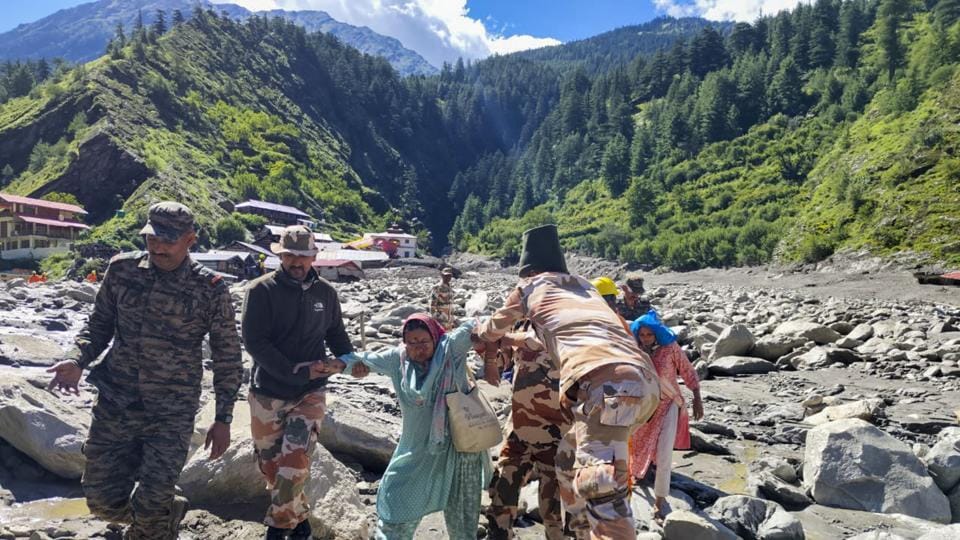
The request was made days after flash floods in Uttarkashi. Climate change and environmental degradation have triggered a string of disasters in Uttarakhand over the last few years. “We requested NDMA [the National Disaster Management Authority] to set up three Doppler radars in the higher reaches of Uttarakhand,” said secretary (home) Shailesh Bagauli on Friday. “We have three Doppler radars. But three in higher reaches will help us in dealing with extreme weather there.”
The Doppler radars provide advanced information, enhancing the lead time essential for saving lives and property in the event of a disaster associated with severe weather.
Conventional radars can track and predict cyclones. Doppler radars provide detailed information on the internal wind flow and structure. The severity of the weather systems can thus be quantitatively estimated more accurately, and more precise warnings can be generated to save lives and property.
Uttarakhand has Doppler radars at Lansdowne (Pauri Garhwal), Mukteshwar (Nainital), and Surkanda (Tehri Garhwal). They were set up a year after the 2013 flash floods in Kedarnath, which killed 4,127 people, under a programme to improve weather forecast services in the Himalayan states and help in reducing human losses due to extreme weather events.
Activist Ajay Gautam, who has filed petitions related to disasters in the state, said higher Himalayan valleys are more susceptible to tragedies like the one in Kedarnath in 2013, and in Chamoli in 2021, when a glacial burst claimed 204 lives. He said such incidents will continue, and the government has to prepare and take measures to lessen human losses.
“One of the best ways to do this is to establish advanced warning systems and more Doppler radars, for which I had filed a plea in the Uttarakhand high court in the aftermath of the 2013 tragedy. Three have been set up, but we need more in higher reaches. The severity of the weather systems, many of which trigger landslides and cloud bursts, can help authorities to quantitatively estimate the weather more accurately and issue more precise warnings for saving human lives.”
Over 51% of the state is in very high landslide susceptible zones, according to Dehradun’s Wadia Institute of Himalayan Geology.


