
 E-Paper



Who was Madhav Gadgil, veteran ecologist known for his Western Ghats work
Madhav Gadgil was also named one of the six "Champions of the Earth" for 2024 by the United Nations Environment Programme (UNEP).

 Prefer HTon Google


Veteran ecologist Madhav Gadgil, known for his work on the Western Ghats, died at the age of 83 after a brief illness in Pune on Wednesday night.
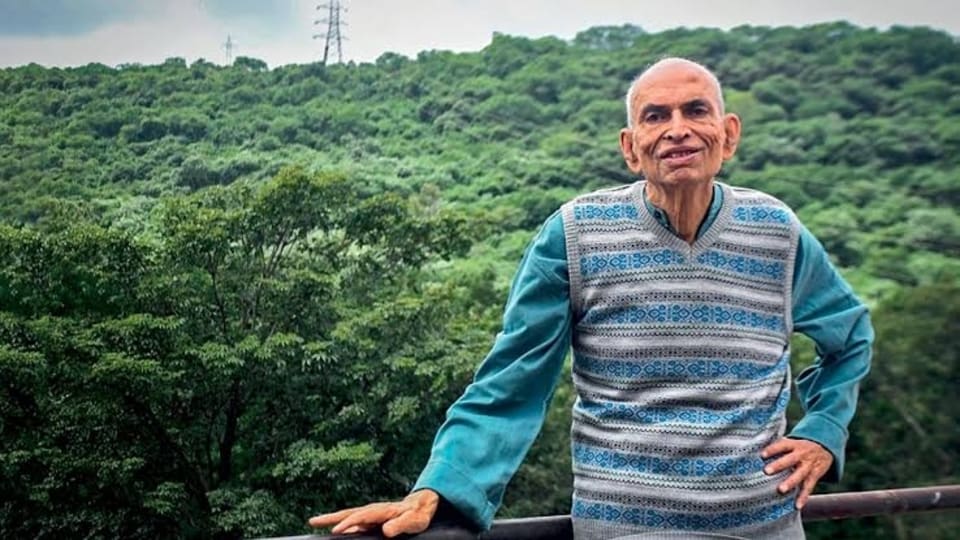
His son, Siddartha Gadgil, said in a statement, "I am very sorry to share the sad news that my father, Madhav Gadgil, passed away late last night in Pune after a brief illness."
Madhav Gadgil played a significant role in shaping grassroots environmentalism in India.
Who was Madhav Gadgil?
Born in 1943 in Pune, Madhav Gadgil was influenced by his father, a birdwatcher, learning to recognise birds from their pictures before he could even read.
Gadgil's interests were a rare combination -- he was fascinated by the diversity of the natural world, the landscapes and the life they support and was also curious about the diversity of people's cultures and lifestyles, which were rooted in the soil of the nation.
ALSO READ | Wildlife cannot be placed above human lives: Madhav Gadgil
He graduated in biology from Fergusson College, University of Pune, and later secured a master's degree in zoology from Mumbai University. Gadgil also earned a PhD from Harvard University, USA.
Gadgil served as a professor at the Indian Institute of Science, Bengaluru, for 31 years. He was a visiting professor for Human Biology at Stanford University.
He established the Centre for Ecological Sciences during his time at the IISc and engaged in basic as well as applied research in collaboration with tribals, farmers, herders, and fisherfolk.
He was also a member of the Science Advisory Council to the Prime Minister of India from 1986 to 1990. Additionally, Gadgil was a member of the national advisory council from 2010 to 2012 and chairman of the Western Ghats Ecology Expert Panel from 2010 to 2011.
ALSO READ | ‘Destructive activities are carried out in name of development’: Madhav Gadgil
Madhav Gadgil is renowned for correctly warning that building infrastructure and development projects in the Western Ghats would result in disastrous consequences.
His landmark work, dubbed the Gadgil Report, called for the protection of the ecologically fragile Western Ghats mountain range against the backdrop of the growing threats from industry and the climate crisis.
The 2011 report, whose recommendations are yet to be implemented, was prophetic about the fallout of the mountain range.
Gadgil was also named one of the six "Champions of the Earth" for 2024 by the United Nations Environment Programme (UNEP).
"In a scientific career that has spanned six decades – taking him from the halls of Harvard University to the upper echelons of India’s government – Gadgil has always considered himself a “people’s scientist,” the UNEP statement had said.
Madhav Gadgil's work helped protect marginalised people, promote the community-driven conservation of ecosystems, and influence policymaking at the highest level.
He was also involved in the drafting of India's Biological Diversity Act.
Madhav Gadgil's wife and noted monsoon scientist, Sulochana Gadgil, passed away in July last year.


