
 E-Paper



Will changing age of marriage help women?
Legal minimum age: Statistics highlight the urgent need for addressing women’s nutrition in India, which is likely to worsen after motherhood, and ensuring participation in labour force.

 Prefer HTon Google


In his Independence Day speech, Prime Minister Narendra Modi spoke about a committee deliberating on the minimum age of marriage for women. “We have formed a committee to ensure that the daughters are no longer suffering from malnutrition and they are married off at the right age. As soon as the report is submitted, appropriate decisions will be taken about the age of marriage of daughters,” he said.
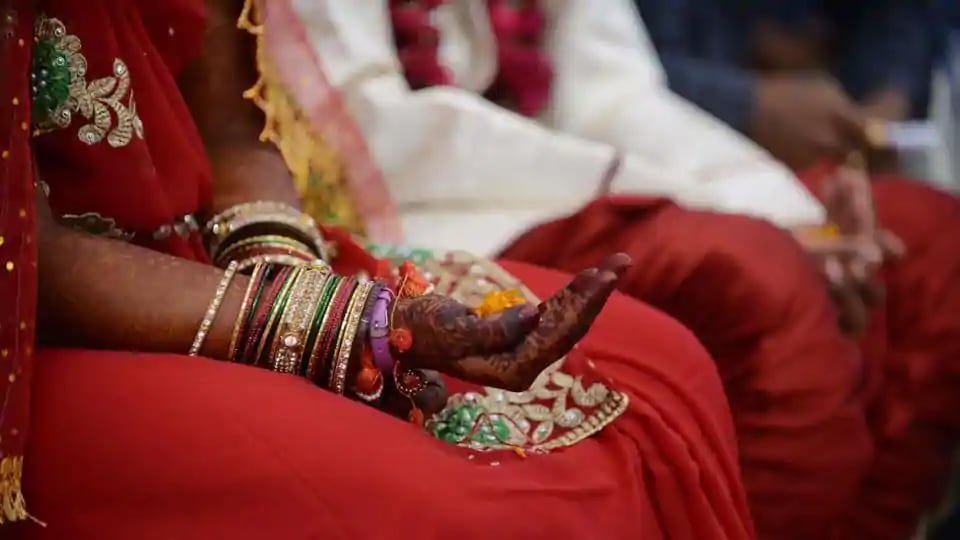
The PM was likely referring to a task force set up by a central government notification issued on June 4. The terms of reference of the task force require it to examine the correlation of health indicators such as infant and maternal mortality rates and nutrition with the age of marriage and motherhood. It has also been asked to suggest measures for promoting higher education among women. An HT analysis shows that motherhood increases the chances of nutrition-related deficiencies. However, marriage also has a deeper cultural and economic impact on the lives of women. The norms of marriage seem to matter more than the legal age of marriage for these effects. Marriage restricts women from seeking skilled employment and education way beyond the minimum age of marriage, and also affects their mobility.
The minimum age of marriage for men and women in India is 21 and 18 years, respectively. According to the latest National Family Health Survey (NFHS) conducted in 2015-16, 58.8% of 20-49-year-old women were married by the age of 20, below the minimum age of marriage for men. The survey also shows that motherhood has an impact on the nutritional status of women. Fifty-eight percent breastfeeding women and 50% pregnant women were anaemic compared to 52% women who were neither pregnant nor breastfeeding. This suggests that while nutritional status improves slightly during pregnancy, it actually becomes worse during childcare.
Also read: ‘1 in every 5 girls in UP is a child bride’
However, malnutrition among Indian women is generally high. In the reproductive age group (15-49 years), 22.9% of Indian women are underweight (those with body mass index less than 18.5) compared to 20.2% men; and 53.1% women are anaemic compared to 22.7% men. Indian women are also worse off than their peers globally. According to the 2020 ‘The State of Food Security and Nutrition in the World’ report of the Food and Agriculture Organization (FAO) released earlier this year, the share of reproductive age women in India who were anaemic was 51.4% in 2016. The share was 39.9% for Bangladesh, 48.7% for Southern Asia (including India), and 43% for lower-middle-income countries (including India). According to the Demographic and Health Survey (DHS) conducted in countries across the world, the share of women who are underweight is also higher in India and decreasing slowly. In 1998-99, the share of such women was 36.3% in India, much lower than in Bangladesh at the time (45.4%). This share dropped to 18.6% in Bangladesh in 2014, but was at 22.9% in India in 2015-16.
These statistics highlight the urgent need for addressing women’s nutrition in India. The focus of such an effort has to be on younger women, as they suffer more from malnutrition. The share of anaemic women was 54.1% among 15-19 year old women and about a percentage point lower in each subsequent 10-year age group, according to the latest NFHS. The share of underweight women was 41.9% in the 15-19 age group and 25% or lower in the subsequent 10-year age groups.
Addressing malnutrition among women will need the government to spend money, as it is the poorest women who suffer the most from malnutrition. Women from the bottom 20% households were three times as likely to be underweight as those from the top 20% and 1.2 times more likely to be anaemic, according to the latest NFHS. However, budgetary allocation under the biggest nutrition scheme of the government – the Integrated Child Development Scheme (ICDS) – whose beneficiaries are children in the 0-6 age group, pregnant, and lactating women has been falling as a share of total budget expenditure. The amount of expenditure under the Anganwadi Scheme (or core ICDS) has also declined in real terms compared to 2014-15. In 2019-20; the real expenditure under the scheme was 86% of the amount in 2014-15. Some of this gap has been filled by more money being pumped into a maternity benefit programme from 2017-18. However, accounting for this too only brings the 2019-20 real expenditure under nutrition-related schemes of the umbrella ICDS to the 2014-15 levels. The real expenditure under these schemes for 2020-21 cannot be calculated because annual Consumer Price Index (CPI) figures for this fiscal year will be available only at the end of it.


The minimum age of marriage may have an impact on women to the extent that motherhood affects their nutritional status. The task force’s findings on this aspect will be useful. However, marriage also has an adverse cultural and economic impact on the lives of women that has little to do with the minimum age of marriage. For instance, contrary to popular belief, in the 15-17 and 18-20 age groups, married women are more likely to participate in the labour force -- number of people who are either working or looking for work -- than unmarried women, according to the Periodic Labour Force Survey (PLFS) conducted in 2018-19. It is in the older age groups that unmarried women are more likely than married women to participate in the labour force.
To be sure, this doesn’t mean that it is good for younger women to be married just because marriage is positively correlated with labour force participation in those age groups. Experts say that participating in the labour force at an early age implies that the work is going to be of unskilled or semi-skilled nature. It is possibly because married women primarily do unskilled and semi-skilled work that the labour force participation rate (LFPR) is higher among married women in younger age groups. These statistics, therefore, highlight a more urgent need to address the norms surrounding marriage than the minimum age for marriage.

“The real question is about decoupling marriage norms from entering the labour force,” said Neelanjan Sircar, assistant professor, Ashoka University, and visiting senior fellow, Centre for Policy Research. “What we do know is that as women get married, there is a consequence in terms of what is expected of them at home. So, the big challenge that we have is women are restricted in how far they are able to go from their home and the hours for which they are able stay out of home. So agricultural labour is fine, but being in a full-time job an hour away is difficult,” he added.
In an article published in this newspaper in September 2018, Jayati Ghosh, professor at Jawaharlal Nehru University had highlighted one of these aspects. The article argued that if a women’s unpaid domestic work is recognized, the share of workers among women is higher than among men. The PLFS data shows that marriage is to blame for pushing women into domestic work.
Marriage doesn’t prevent younger women from seeking unskilled work, but it does affect their prospects of pursuing education. Ninety-five percent married women (including those who were widowed, separated or divorced at the time of the survey) in the 18-20 age group, for instance, were engaged in some kind of domestic work if they were not looking for work, according to the PLFS conducted in 2018-19. In the same age group, only a third of those who were never married were engaged in domestic work if not looking for work. The remaining two-thirds women were studying. To be sure, even among unmarried women, the share of those doing domestic work increases with age. This comes closer to the share among married women in higher age groups.

The 2015-16 NFHS report further shows that trends in education and employment are influenced by cultural norms around marriage. A quarter of men, for instance, said decisions about visits to wife’s family or relatives are made mainly by the husband, compared to 7% who said the decision is mainly made by the wife. 16% men similarly said husbands are justified in beating their wife if they go out without telling him. This sentiment was also shared by 26% women respondents.
Ghosh said the government’s move addresses a side issue rather than the actual needs of women. “It just involves another law and creating a criminality where there is none. What we need to do for women is very well known. We need to make sure they get adequate nutrition; we need to make sure they get through the 12 years of schooling; and we need to make sure that marriage is not made the only important thing in a woman’s life. This, of course, would involve much more work on the part of the government,” she said.


