
 E-Paper



Flavour savers: These experts preserve old recipes, with delicious results

 Prefer HTon Google


Grandma’s recipes as voice notes. The family masala mix on an app. Regional techniques in Reels. See how tech is helping solve India’s culinary cold cases
What do you think of when you think of an inheritance? Grandpa’s furniture, languishing in the family home; Grandma’s saris, featuring designs we just don’t see anymore. Mum’s gold earrings, packed in deep pink tissue. What are we missing? “Recipes!” says Shruti Taneja, 37, the founder of food documentation platform Nivaala. “They should be considered heirlooms too. They’re not just a blueprint for making a dish, but also a time-machine into the past.”
But recipes, unlike furniture, saris and earrings, don’t stay quiet. They tend to fade away as families grow and as new cuisines capture our fancy. Some recipes were never written down at all and exist only in memory. Others call for rough measurements, hard-to-source spices, hours of grinding, more oil than today’s families want to use. There’s more to reviving a family recipe than just listing the ingredients and instructions, experts say. See how apps, voicenotes and YouTube channels are helping solve old mysteries.
Fare trial
To know how hard it is to record an old recipe, try asking someone over 70 how they make their best dish. Most older folks know exactly what to do in the kitchen, but can’t put it into words. “It’s just muscle memory for them, and so instinctive that it’s hard for them to quantify,” says Taneja. So, when she tried to compile her mum’s and grandma’s recipes after they’d passed away, she had to rely on her nani’s sisters, who cooked those foods the same way. “I realised that my nephew would not grow up eating the same Punjabi food that we ate – kacche aam subzi, methi roti, and all those achars. I wanted him to share the same food language.”
Even with grandaunts helping, it took a few tries. Taneja got their version of dahi tadka recipe, down pat. But the special-occasion poorni, a flat kachori filled with a spiced moong dal, which the family had been making even before 1947, is trickier. Taneja says she’s got it 80% right, she still has to adjust the spice levels so it tastes exactly like her grandmother’s.
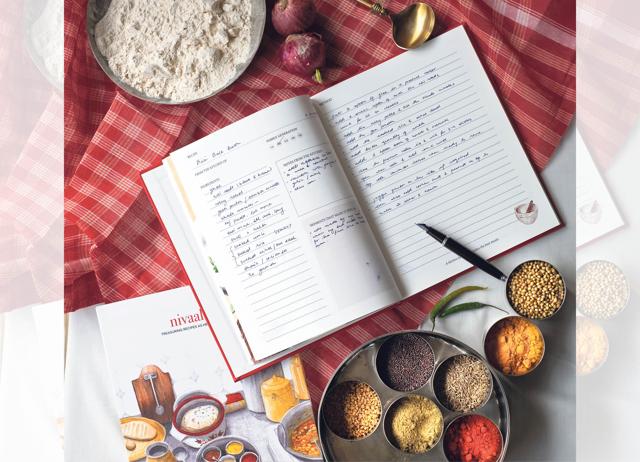
Taneja knows that every family in India is probably facing the same challenge. So, in 2020, she set up Nivaala to help people preserve and share their family’s recipes. Their recipe journal prompts users to note not just the ingredients and methods but also why a dish is special. Their app helps record and transcribe the making of a dish. “Recording someone narrating a recipe takes away the stress of having to write it down – and you’ll have the memory of their voice as well, which I wish I had,” says Taneja. Up next an online food atlas – featuring maps of homestyle recipes shared by chefs and food enthusiasts from across India.

Finders, keepers
“Some recipes need refashioning, not recreating,” says Bridget White-Kumar, 72, author and consultant on Anglo-Indian food. In 2000, when she started looking though the family recipes – there were some 500 – she discovered they had no measurements or details, just approximations and rough lists. How big was a dollop? Were the onions in one dish to be chopped or minced? One recipe listed tomatoes, but not what to do with them.
So White-Kumar had to work through each dish, getting each ingredient and action to make sense. Fresh meat cooked on firewood takes longer than broiler fowl in a gas stove, she learnt. Along the way, she uncovered funny stories. “Dak Bungalow Chicken, which was made at guesthouses, was also known as Sudden Death Curry, because the chickens would run away when they heard the stagecoaches approaching, knowing that they’d be cooked for lunch!” The recipes, which would have been ignored or forgotten, have been included in nine books written by White-Kumar.

Bubbling under
Being a recipe-keeper is a lifelong project, says Osama Jalali, 42, food historian and chef. He, along with his wife, Nazia Khan, and mother, Nazish Jalali, started collecting recipes from traditional Rampuri and Mughlai cuisine in 2005. “When I meFet a new person, I ask them to give me a recipe, and note it down in the journal I carry for the purpose,” says Jalali. They’ve convinced fourth-generation khansamas to part with their signature techniques and translations of old Persian texts too. It’s yielded more than 1,000 recipes so far, among them a pasanda made with a cut of mutton that no butcher is familiar with anymore, and a Mughlai kofta with a hollow centre (created by adding cold ball of ghee into the kofta, which melts when its cooked).
There’s an unusual mutton halwa too. Jalali recalls how a Persian cookbook made a brief mention of a Nawab who liked to eat it. An acquaintance recalled serving it at his wedding, 50 years ago. “It reassured me that the dish was not a figment of the Nawab’s imagination,” he says laughing. So Jalali, his wife, and mother worked out their own recipe (sugar, milk, minced mutton, spices). “I’ve served it to Shah Rukh Khan, Rajkummar Rao and chef Sanjeev Kapoor. They couldn’t guess that it was made of mutton!”
Jalali is gearing up to start his YouTube channel, Osama Jalali’s Food World. “Expect to see how traditional regional recipes were made – and how they’ve evolved over the ages.”
Stir crazy
The reason we’re recording recipes in the first place is because there are so few of us together in the kitchen, learning from each other. Families are smaller, older folks are farther away, and much is lost even when a dal recipe is passed on over a video call. “It means that grandmothers and grandfathers aren’t really talking to kids about why paush khichda is made in winter, or what the right way to eat bajra porridge is,” says recipe researcher Dipali Khandelwal. Her platform, The Kindness Meal, records family recipes and culinary practices from Rajasthan. They also host dedicated playdates for children aged nine to 14 and their parents and grandparents. The two-day workshop gets kids to act as culinary sleuths, asking the older folks to think back on where the dishes they cook come from, and work on a scrapbook of recipes.
Our food traditions run closely parallel to our family histories, Khandelwal says. Her own household developed their recipes differently because her grandfather would source ingredients from different places when he travelled on business. “So, our jaggery was from Kolkata, and the apricots would be from Himachal Pradesh.”
It’s the same with other families, as she’s found on her rural trips. “In 2023, we met a woman in Raseedpur who was single-handedly responsible for all the women in the area making UP-style vadis, not the traditional Rajasthani sun-dried mangodis.” Turns out, that woman had come from Uttar Pradesh to teach, and passed on her recipe to all the young girls alongside. “Now, it’s only made in that style.”
Save and share
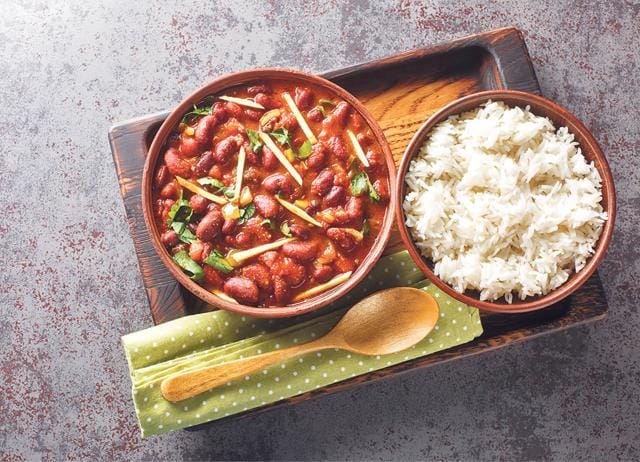
Even as documentation is in full swing, some cooks are realising that it’s impossible for a recipe to stay unchanged across the years. Priya Krishna, 33, New York-based food writer and author of the cookbook Indian-ish, has been trying to recreate her mum’s rajma chawal but still hasn’t cracked it. “It’s probably because we cook it in so many different mediums – a pressure cooker, a slow cooker, or an instant pot,” she says. “So many versions exist in one home that there’s no such thing as the authentic recipe.” Don’t hate on air fryers, electric pressure cookers and other gifts of modern life, she says. “You’re going to get recipes that taste different, but are still our heritage.”
It doesn’t matter how you document a recipe – a Notes app, a voice recording, a video, a Reel – as long as you document it, experts say. A recipe is lost when it is not shared, not when it’s not made. The world knows this too. Last week, in an interview for the BBC, award-winning chef and restaurateur Yotam Ottolenghi said much the same thing: “Books come and go, newspaper articles come and go, but if a recipe stays within the family, that’s forever.”
From HT Brunch, April 05, 2025
Follow us on www.instagram.com/htbrunch


