
 E-Paper



Rude Food by Vir Sanghvi: A guide to modern Japanese dining

 Prefer HTon Google


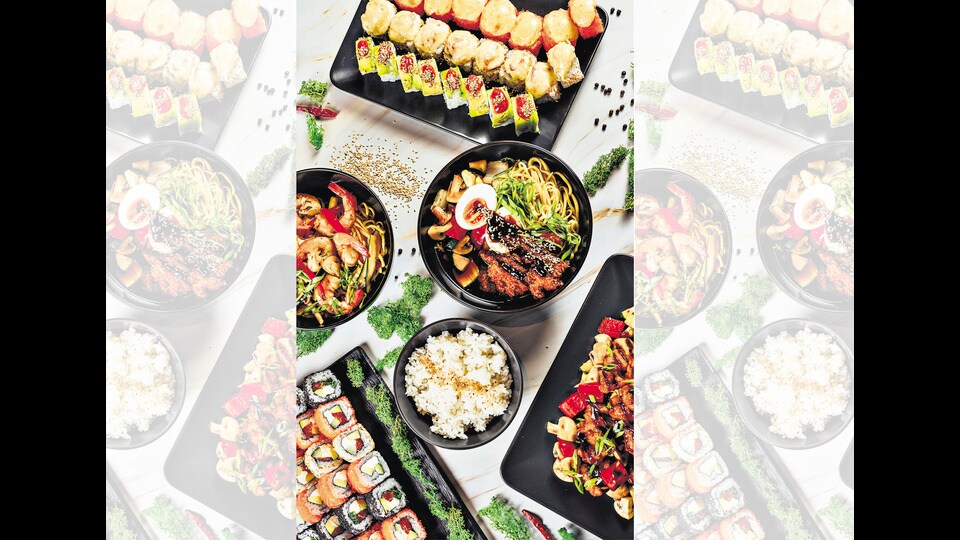
Modern Japanese food consists of dishes that didn’t originate in Japan. Here are its greatest hits, they’re all delicious, anyway
Japanese food is one of the world’s most complex cuisines. The level of skill it takes to cook in a top Japanese restaurant is far greater than the expertise demanded of chefs at three-Michelin-star restaurants in France. In Japan, a chef can work for five years only cooking rice until his boss tells him that he has finally mastered it, and his rice can now be served to customers.
None of this need bother you and me unduly. We won’t go to Japan’s great restaurants. It is very hard to get in even if you have the money. Instead, we will only ever eat Japanese food at two levels. The first is junk sushi: Masala paneer rolls, spicy fried prawn sushi rolls etc. This kind of sushi, now found all over India, is roughly as authentically Japanese as Lalu Yadav.
But there is another level of Japanese dining that we are likely to experience: At the kind of restaurant that serves modern Japanese food. These restaurants can be expensive (Wasabi in Mumbai, Megu in Delhi etc). And though the food can be delicious, it is not authentically Japanese either. But it is what has become accepted as Japanese food all over the world, first through the efforts of chef Nobu Matsuhisa, who invented the cuisine, and then by Zuma, the most popular restaurant chain in the Middle-East, set up originally in London with Sindhi-German ownership.
Though the menus have some variations, they are all basically the same. So don’t be intimidated. Are you nonplussed when you see chicken tikka masala on a menu? That’s how Japanese people feel when they go to modern Japanese restaurants.
Here is a list of the greatest hits of this kind of cuisine.
Black Cod in Miso. This dish became a global favourite when Nobu opened in New York. According to Masaharu Morimoto, who was executive chef of the restaurant, Nobu and he created it together by taking a traditional Japanese dish of fish marinated in sake lees and making it with white miso.
Nobu’s two masterly touches were to up the sweetness content and to crisp up the outside. It now tastes very different from the traditional Japanese inspiration. But outside of Japan, it is only Nobu’s sweet and crisp version that anyone knows.

White Fish Carpaccio. For years, this has been one of the greatest hits at the Mumbai Wasabi. Though it is often credited to Nobu’s years working in Peru, it was actually created in Los Angeles. Nobu found that in the 1990s, some customers were unwilling to eat raw fish. So, he began slicing it very thin (like beef carpaccio) and poured a little warm oil on it, so it cooked on impact. There have been various riffs on the idea (on Nobu menus it appears as ‘new style sashimi’) and one popular version uses yellowtail (a grain-fed, farmed fish) with jalapeno peppers. Chefs have experimented with the dressing (citrus and sweet elements are pretty standard) and with the fish (the original Nobu version was made with fluke). It’s delicious if not particularly Japanese.

Toro/Tuna Tartare. Tuna Tartare has a chequered and controversial history. The French claim it was invented in Paris at a restaurant called Le Duc, where the chef wanted to make a fish version of the traditional Beef Tartare: raw, chopped beef with strong seasoning.
The Americans say it was invented in Los Angeles by a Japanese chef at the Chaya Brasserie (same basic origin story: he wanted to make a fish version of beef tartare). In New York, they gave the credit to Alfred Portale at the Gotham Bar and Grill.
The thing to remember is that because it is a take on a Western dish, steak tartare, it can be served as part of any kind of cuisine. European chefs use the traditional steak tartare seasoning for their tuna tartare; Japanese chefs add sweet and umami dressings.
By the time Nobu came to the dish, it had become such a tired menu cliché (the New York restaurateur Danny Meyer forbade his chefs from serving it), that he knew had to do something new. He made it using toro, the belly part of the tuna, the most expensive part of the fish. To keep costs down, he took the bits that had been trimmed off the toro used for sashimi and nigiri and prettied up the presentation, serving it on a bowl perched on ice. When Morimoto left Nobu and opened his own restaurants, he used even fancier presentation, adding caviar, salmon roe etc.
It is nice. But no, it is not authentically Japanese.

Rock Shrimp Tempura. In Japan, tempura is a religion. It varies from region to region, there are speciality tempura restaurants, great and revered tempura chefs and top-quality tempura, with its thin batter encasing fresh ingredients, bears no resemblance to the crumb-fried prawn that is called tempura outside of Japan.
In the US, the Cajun chef Paul Prudhomme invented Cajun popcorn, which was a dish of crispy battered crayfish tails or shrimp. The dish was picked up by various chefs and sold as popcorn shrimp because it had a crunch. (The mid-market Red Lobster chain took it to the American heartland.)
While Nobu made traditional (well, traditionalish) tempura, he also introduced rock shrimp tempura, a dish of crunchy shrimp served with mayonnaise. It was more like Prudhomme’s take on fried shrimp than anything typically Japanese.
Rock shrimp is a specific kind of shrimp but these days the dish is made with any prawn available. And it is a menu standard.

California Roll. This may be the only authentically named bogus Japanese dish. It was a sushi roll invented in California in the 1970s. (Though chefs from elsewhere also now claim to have invented it).
Almost everything about it is bogus. Most versions use imitation crab, along with lots of avocado that is meant to approximate the fatty taste of the more expensive toro. It is usually larger than most rolls and is an example of an inside-out roll: In Japan, rolls have seaweed on the outside.
The fancy restaurant version may use real crab, though in much of the West they use bogus crab (like the so-called crab sticks made by adding starch to cheap fish). Ironically, it has also made its mark in Japan as a novelty: California Maki.
If you know these dishes, you can go to any modern Japanese restaurant in India, no matter how expensive, without being intimidated. They are all quite tasty and if you have never been to Japan, don’t worry. The chef who will make them for you hasn’t been to Japan either.


