
 E-Paper



Rude Food by Vir Sanghvi: How the tables have turned

 Prefer HTon Google


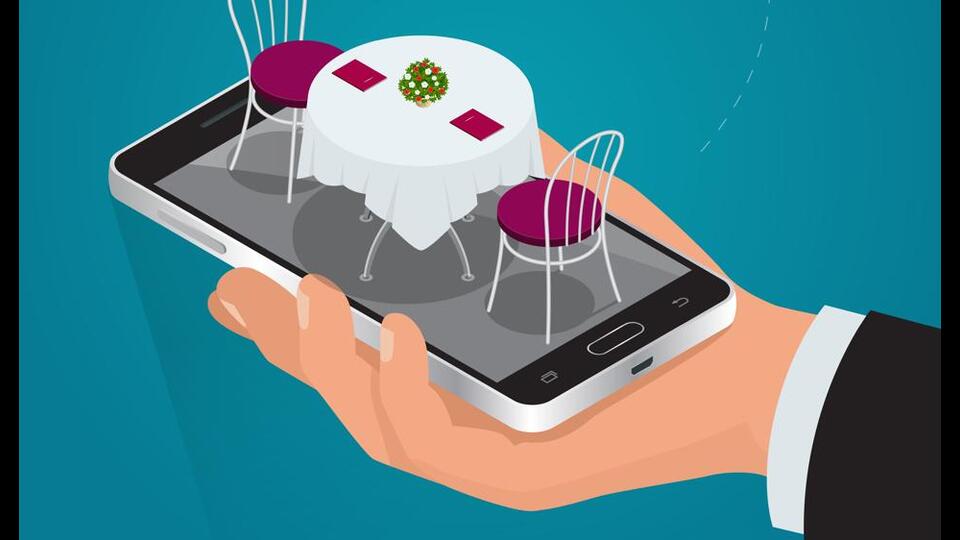
Fewer walk-ins, less waiting. India is finally making restaurant reservations. It is changing how the business is run and of course, how we enjoy an evening out
Have Indians suddenly started booking tables at restaurants? I read two articles in two different financial papers last weekend which declared that they had. The evidence for this claim was, essentially, that there were some restaurants where it was so difficult to find a table that people had to book in advance.
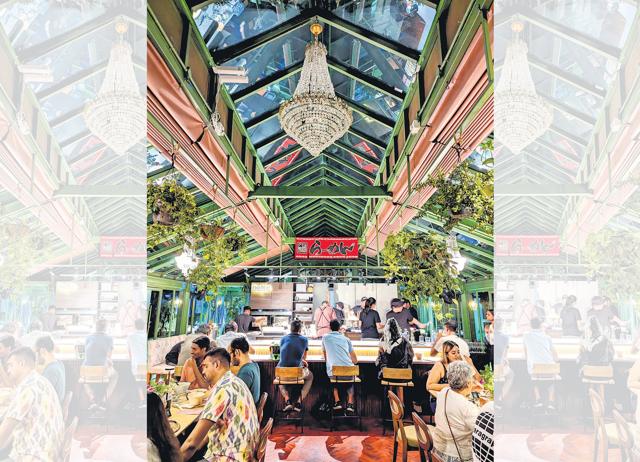
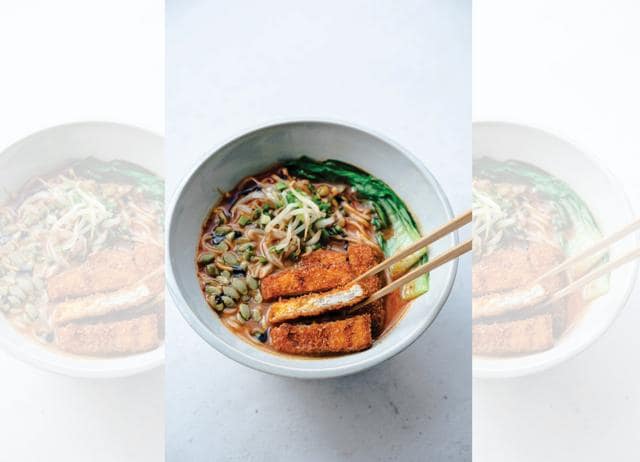
That much, certainly, is true. The restaurants named in the articles are extremely popular. A month ago, I posted pictures from my lunch at Bengaluru’s Naru Noodle Bar and the DMs I received on my Instagram were all the same: “ How the hell did you get a table?”
It is the same with another Bengaluru restaurant, Farmlore. A year ago, I tried to get in, failed and then finally went on the web and booked myself in for dinner many weeks later, when a table was available. Since then, Farmlore has become even more famous. (It got the top ranking of five stars at the Culinary Culture awards last year.) And it is even harder to get in, so I haven’t dared to try and get a table again.
The other example frequently quoted is Mumbai‘s Papa’s, one of the city’s most popular restaurants, which is packed out so much in advance that I rarely manage to get in.
Reading the articles, I was not entirely sure what point they were making. Were they saying that there were now some restaurants where it was impossible to get a table without a booking? Or were they saying that Indians had developed a reserve-in-advance mentality?
At some level, the answer to both questions is: Yes, absolutely! It’s worth mentioning though that most of the impossible-to-get-into restaurants cited are small. Papa’s is a counter with around a dozen seats. Both Farmlore and Naru are tiny by Bengaluru standards.
And, let’s be honest, the notion that some restaurants are so hard to get into that you have to book in advance is not exactly new. I spoke last Sunday to Kapil Chopra, and we talked about the early days of EazyDiner, India’s first significant restaurant-reservation service.
EazyDiner was Kapil’s idea. He believed that a reservation service might do well in India. He drafted me into the enterprise and in 2014, the service was launched in the hope that many more Indians would start making restaurant reservations.
Even in those days, there were at least two Delhi restaurants where it was impossible to get a table at dinner without a booking. The first was Indian Accent, then as now, one of the country’s best and most influential restaurants. The other was Bukhara, which stopped taking bookings after 8-8:30 pm and then operated on a first-come-first-served principle. It sounded democratic, but what it meant, in effect, was that you had to queue up for a table.
Remarkably, people who were going to blow up thousands of rupees on dinner were willing to wait in the corridors of the Maurya for over an hour for the privilege of doing this.(Prices at Bukhara are even higher now and the queues are even longer.)
One of EazyDiner‘s early strengths was that we could get people into Bukhara and Indian Accent and other hard-to-get-into places. It also helped that Indian restaurants always screwed up taking bookings. The phone was either never answered or the people who took the calls were semi-literate. (That hasn’t changed.)
EazyDiner was an instant success because, even a decade ago, foodies wanted to get bookings at popular restaurants. At first, people relied on our Concierge service but then, like every other reservation service in the world, we switched to an app and the number of users shot up.
I now have no management role at EazyDiner (which is why I have no hesitation in writing this piece despite having mostly avoided mentioning EazyDiner here for a decade) and Kapil has turned it into financial powerhouse by tying up with 32 banks and 437 different credit cards (Each bank issues several kinds of credit cards).
In the early days of EazyDiner, restaurant owners and powerful hotel chains believed that they had the power to pressure us. On one occasion, when I tweeted that I was disappointed with the food at the Mumbai Wasabi, senior managers at the Taj group threatened to dissociate the group from EazyDiner, even though I had tweeted in a personal capacity as a disgruntled diner and it had nothing to do with the reservation service. Fortunately the managers who took that position have either been booted out or sidelined, and hotels and restaurants are much more professional in their dealings. Plus EazyDiner is big enough not to care.
Kapil now runs his Postcard hotel chain as well, and I no longer have a role, so EazyDiner is run by a professional CEO, Sachin Pabreja. I spoke to him for this column and was startled to discover that the company now has around 350 employees, 55 offices and covers 170 different cities and towns. Around 98% of users stick to the app and Sachin quoted a valuation for EazyDiner that was so eye- popping that I found it hard to believe that the little service I had helped launch had now reached this level.
So yes, Indians are making reservations at restaurants. And it is not just at Papa’s, Farmlore or other such high end, small-capacity restaurants. It is the behaviour of the mainstream diner, who has probably never heard of Naru or Papa’s that has changed — as EazyDiner’s growth demonstrates.
Was this inevitable? Was EazyDiner simply in the right place at the right time? Kapil thinks that circumstances were on his side. He just had the idea first.
If you want to book a hotel these days, you go on your phone, find an app, make the booking along with some payment or credit card guarantee. If you want to take a flight, you do exactly the same thing. Why should going to a restaurant be any different?
It may not be that our attitudes to restaurants have changed. It may just be that the world itself has changed.
And more people are certainly eating out than ever before. I went to Kwality, a great Delhi institution founded in 1940, for dinner the other night on impulse. Ignoring my own advice, I did not go on an app to book, reckoning that at 8pm it should not be too difficult to find a table at a large restaurant.
I was wrong. Kwality was jam-packed and though they were polite and efficient, it was clear that I would either have to come back later or wait for a table. I chose to wait. And it was more than worth it. I don’t think that in the 85 years of its existence, Kwality has ever served so many people every night as it does now.
Of course, you would be nuts to try and get into Indian Accent in Delhi or Americano in Mumbai or any highly rated restaurant anywhere in India without a reservation. But that’s not the real breakthrough. It is the lines outside Kwality that tell the real story. As demand for restaurant tables grows, reservations become more and more essential.
From HT Brunch, January 18, 2025
Follow us on www.instagram.com/htbrunch


