
 E-Paper



Astronomers discover ‘cosmic baby’, youngest-known magnetar that is 240-yrs-old
Called Swift J1818.0-1607, the neutron star was first discovered in March this year when it released a massive burst of X-rays. Follow-up studies later revealed more details about the star including its age.

 Prefer HTon Google


By most standards, an over 200-year-old object would be called a relic. Right? Apparently not, when it comes to astronomy as it usually studies events that happened million or billions of years ago and objects that have been around just as long.
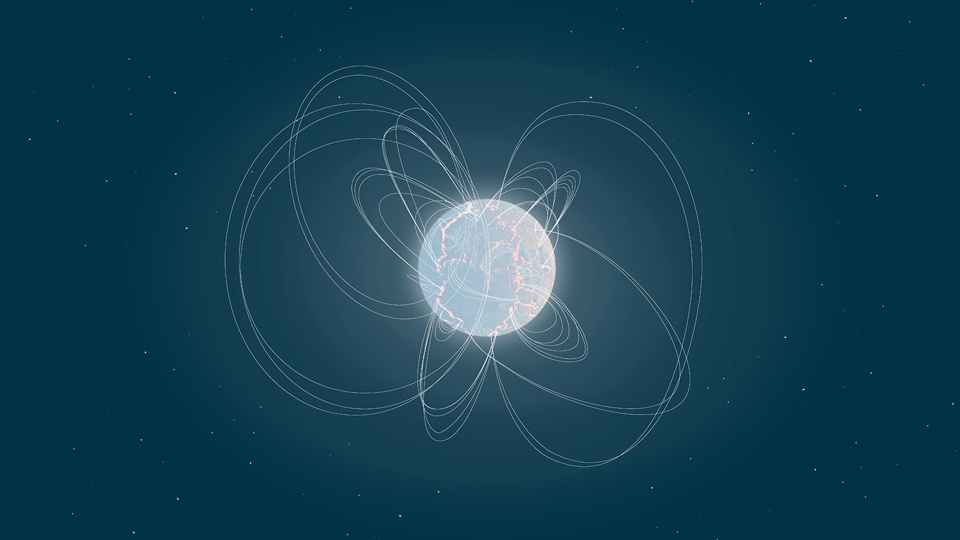
That may be the reason why astronomers at NASA and European Space Agency ESA, who recently discovered a neutron star estimated to be about 240 years old, are calling it a newborn by cosmic standards !
Called Swift J1818.0-1607, the neutron star was first discovered in March this year when it released a massive burst of X-rays. Follow-up studies later revealed more details about the star including its age.
Neutron stars are dense clusters of stellar material that are remnants of a star going supernova and exploding. A teaspoon of neutron star material would weigh 4 billion tons on Earth! According to NASA, Swift J1818.0-1607 packs twice the mass of our Sun into a volume more than one trillion times smaller.
Another feature of Swift J1818.0-1607 is that it belongs to a special class of objects called magnetars which are the most magnetic objects in the universe. It’s magnetic field is up to 1,000 times stronger than a typical neutron star and about 100 million times stronger than the most powerful magnets made by humans.
“This object is showing us an earlier time in a magnetar’s life than we’ve ever seen before, very shortly after its formation,” said Nanda Rea, a researcher at the Institute of Space Sciences in Barcelona and principal investigator on the observation campaigns by XMM Newton and NuSTAR (Nuclear Spectroscopic Telescope Array), according to a NASA release.
There are other features of Swift J1818.0-1607 that make its discovery quite significant.
In addition to X-rays, magnetars can release huge bursts of gamma rays, the highest energy form of light in the universe, and steady beams of radio waves, the lowest energy form of light in the universe. Neutron starts which emit these radio waves are called radio pulsars, and Swift J1818.0-1607 is one of only five known magnetars that are also radio pulsars.
Also, while there are over 3,000 known neutron stars, scientists have identified just 31 confirmed magnetars - including this newest entry.
“What’s amazing about [magnetars] is they’re quite diverse as a population,” said Victoria Kaspi, director of the McGill Space Institute at McGill University in Montreal and a former member of the NuSTAR team, who was not involved with the study. “Each time you find one it’s telling you a different story. They’re very strange and very rare, and I don’t think we’ve seen the full range of possibilities.
Many scientific models suggest that the physical properties and behaviours of magnetars change as they age and that magnetars may be most active when they are younger. So finding a younger sample close by like this will help refine those models.
If the age of this magnetar is confirmed, it would mean that the light from the stellar explosion that formed it would have reached Earth around the time that George Washington became the president of the United States.


