
 E-Paper



Is Afghanistan paying for Zalmay Khalilzad’s oversights?
Who duped whom while Khalilzad convinced his bosses in Washington that he will be able to get the Taliban on the peace track, the ultra-conservative Sunni Pashtun force had other plans as it wants to militarily capture Kabul without giving time for peace.

 Prefer HTon Google


As the Taliban makes advances across Afghanistan capturing villages and key cities and the US prepares to complete its withdrawal from the country before the end of the month, the focus has landed on Zalmay Khalilzad. Khalilzad, the Afghan-born US special representative for Afghanistan reconciliation, said earlier this week that the Afghan government is too weak to win a negotiated settlement without a new military strategy.
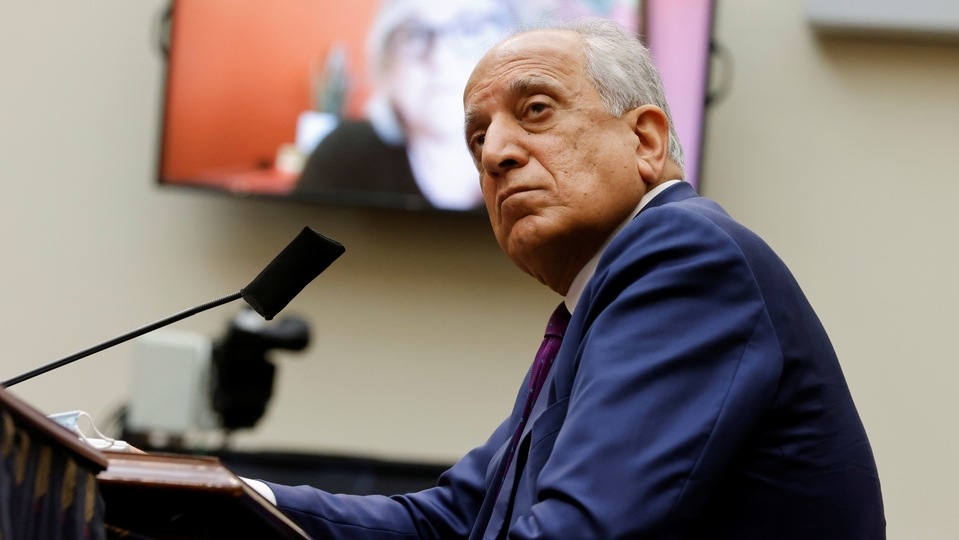
“The situation is very concerning, and our expectation is that both the government and the Talibs would focus on a political settlement,” Khalilzad said at the Aspen Security Forum on Tuesday.
Also watch | 'Taliban kill woman for not wearing veil'; dark times back in Afghanistan?
Khalilzad, known as the architect of the US-Taliban deal for an American troop pullout reached in February 2020, said that it’s now necessary for the government to find its “military bearings” with the Taliban surging.
Also read | US urges citizens to immediately leave Afghanistan as Taliban intensifies attack
The special envoy’s comments came on a day a car bomb blast was reported followed by sporadic gunfire in Kabul near the heavily fortified Green Zone. Several civilians and Taliban members died in that attack. Afghan defence minister General Bismillah Mohammadi survived an assassination attempt involving a car bomb and Taliban hit squad.
A day later, the Taliban said its fighters had carried out the deadly attack targeting the Afghan defence minister and warned of more "retaliatory operations" against top government officials. Three days later a senior government information official was shot dead in the street. And on Saturday, the Taliban seized Sheberghan city in Jawzjan province, the second provincial capital to fall to the insurgents in less than a day.
Also read | Deterioration in security situation in Afghanistan is serious, says Jaishankar
As the Taliban is rapidly advancing throughout Afghanistan, experts have expressed apprehension that the insurgents aim to re-establish their harsh brand of Islamist rule, including the repression of women and the independent media, by force. Local media reported earlier this week the Taliban dragged a 21-year-old woman out of a car while she was on her way to the Balkh district centre and shot her dead for not wearing a veil.
According to several reports, Islamic fundamentalists have issued diktats forcing women to cover themselves from head to toe, ordering them not to leave home without a male relative. The group has even banned shops in captured areas from selling goods to women not accompanied by a male relative.
Khalilzad, who was appointed as the special envoy three years ago, and the then US secretary of state Mike Pompeo said at that time that he would assist “us in the reconciliation effort." A Pashtun like many members of the Taliban, Khalilzad was seen by many as someone who understood the nuances of Afghan culture land and spoke both Pashto and Persian fluently. However, many Afghans have time and again pointed out his advocacy for and business dealings with the Taliban before the September 2001 attacks.
In the past, Khalilzad has insisted that the Taliban had changed and said that they were not the same group who deceived the Clinton administration in pre-9/11 diplomacy.
Also read | Tensions flare as Taliban gun down top Afghan govt official
But now the veteran US diplomat has painted a bleak picture of the peace process and said that “at this point, they are demanding that they take the lion's share of power in the next government given the military situation as they see it.”
Michael Rubin, a senior fellow at the American Enterprise Institute, has said in an opinion piece in the Washington Examiner that it’s time the US recalled Khalilzad home. “His judgment proved wrong, and he has lost control of the process. Rather than interfere where Afghans no longer want him, it is time to investigate the intelligence failures, poor assumptions, and misjudgments that tainted the peace process from day one,” Rubin wrote on Friday.
“Khalilzad should spend his days at Senate hearings answering questions about what went wrong and why,” he added.
Retired General David Petraeus warned of an “increasingly dire security situation” inside Afghanistan. Gen Petraeus, who oversaw US forces in Afghanistan until 2011 and later headed the Central Intelligence Agency (CIA), called the outlook “very, very grim indeed.”
The congressionally mandated Special Inspector General for Afghanistan Reconstruction warned on Tuesday that the US was leaving behind a country which “remains poor, aid-dependent, and conflict-affected, with any potential economic growth in the short term further limited by the lingering effects of the Covid-19 pandemic.”
(With agency inputs)


