
 E-Paper



Nepal set for national and provincial elections tomorrow
Nepal Elections: More than 17.9 million people are eligible to vote in seven provinces across the Himalayan nation.

 Prefer HTon Google


Nepal will hold national and provincial elections on Sunday which the Nepali Congress-led ruling coalition is expected to win but unlikely to provide much-needed political stability in the country sandwiched between India and China.
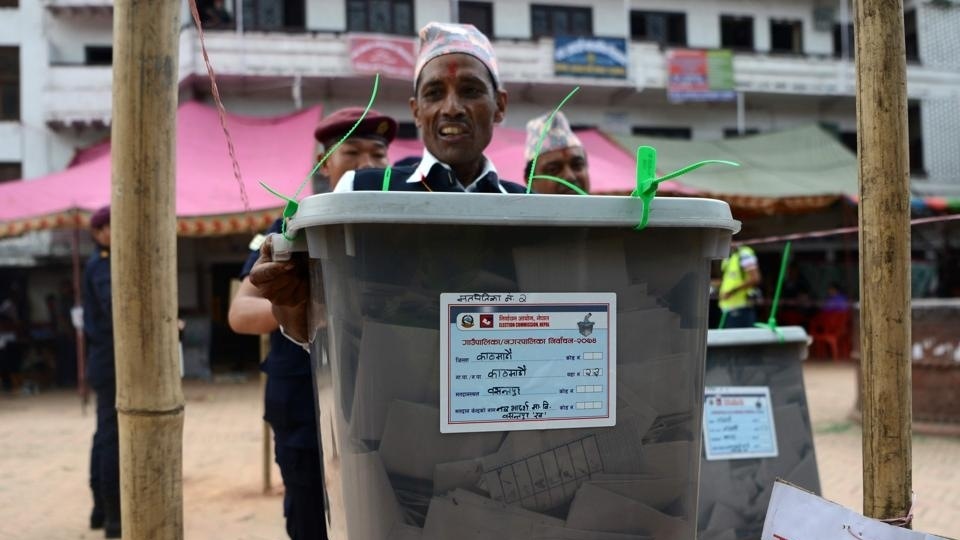
More than 17.9 million people are eligible to vote in seven provinces across the Himalayan nation. The polling will start at 7 am local time and close at 5 pm.
Out of a total of 275 members of the federal Parliament, 165 will be elected through direct voting, while the remaining 110 will be elected through a proportional electoral system.
Read more: Russia's Vladimir Putin drafting occupied Ukrainians, may fuel ‘mutiny’: Report
Similarly, out of a total of 550 members of the Provincial Assembly, 330 will be elected directly and 220 will be elected through the proportional method.
All preparations and security arrangements have been completed.
Political observers closely watching the elections have predicted a hung parliament and a government that is unlikely to provide the required political stability in Nepal.
Political instability has been a recurrent feature of Nepal's Parliament since the end of the decade-long Maoist insurgency, and no prime minister has served a full term after the civil war ended in 2006.
The frequent changes and fighting among parties have been blamed for a slow economy.
There are two major political alliances fighting it out for the November 20 general elections - the Nepali Congress-led democratic and leftist alliance and the CPN-UML-led leftist and pro-Hindu-pro-monarchy alliance.
The Nepali Congress-led ruling alliance includes CPN-Maoist Centre, CPN-Unified Socialist, and Madhes-based Loktantrik Samajwadi Party while the CPN-UML-led alliance includes pro-Hindu Rastriya Prajatantra Party and Madhes-based Janata Samajwadi Party.
Deuba, a five-time prime minister, has formed an electoral alliance with former Maoist guerrilla leader Pushpa Kamal Dahal Prachanda against Oli.
The next government will face challenges of keeping a stable political administration, reviving the tourism industry and balancing ties with neighbours-- China and India.


