
 E-Paper



Quad to take up the Indo-Pacific challenge in Tokyo
As a senior most member of QUAD, Prime Minister Modi is expected to join hands with other members to strengthen the economic and energy cooperation in order to contain the global fall-out from Russian invasion of Ukraine.

 Prefer HTon Google


In the backdrop of the ongoing Russian invasion of Ukraine, QUAD is expected to record a forward momentum to strengthen the grouping at the Tokyo summit on next Tuesday.
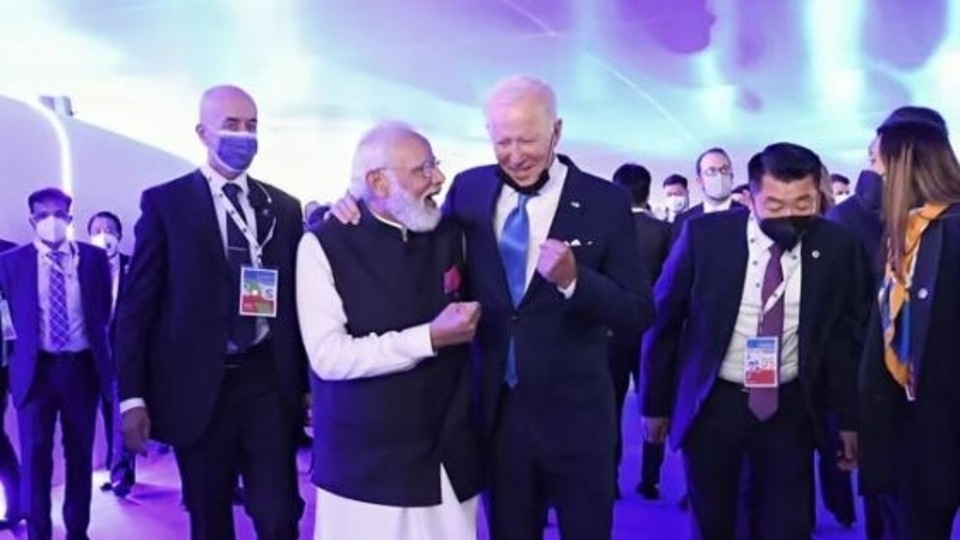
While QUAD diplomats are working to come out with a strong statement both on the brutal war in Ukraine and the Chinese belligerence in the Indo-Pacific, the two theatres and their global fall-out will be the principal topics of discussion at the Summit.
With Australian general election taking place today, there is a strong possibility that the QUAD may welcome a new Prime Minister from down under unless incumbent Scott Morrison pulls off an electoral miracle at the polls. Prime Minister Narendra Modi is the senior-most member of the QUAD with Japanese Prime Minister Fumio Kishida the last new member to join the grouping.
Even as the QUAD groupings will call for an immediate cessation of hostilities in the Ukraine theatre with Russia largely controlling the Luhansk-Donbas-Mariupol region, the US, UK and the EU powers have made up their mind to economically and militarily challenge Russia under Vladimir Putin and serious efforts are on to decouple the oil and gas relations with Moscow with fresh LNG terminals coming up in Greece and Italy. By convincing Finland and Sweden to join NATO, the US and EU has opened another theatre with Russia with long term ramifications.
Apart from the Ukraine war, QUAD’s key focus will be Indo-Pacific and the challenge of Taiwan military emergency in case Chinese Communist Party decides to invade Taipei soon and its immediate fall-out on Japan. Just as the PLA has been relentless in South China Sea, it is flexing military muscle across the Line of Actual Control in Xinjiang and Tibet. The ramping up of military infrastructure in Xinjiang and Tibet are designed to allow rapid deployment of PLA land forces with support elements in the worst-case scenario. The Indian military has also taken up the Chinese challenge but the democratic polity in India does not allow single-minded focus of an authoritarian state like China, where there is no space whatsoever for dissent of any kind.
However, the QUAD democratic grouping is expected to join hands to strengthen the maritime and energy security architecture with focus on trusted global supply chains and with partnership in critical and emerging technologies.
Apart from attending the QUAD summit, PM Modi is going to have bilateral meetings with US President Joe Biden and Japanese PM Kishida to deepen economic and energy cooperation. While Russia and China will be the elephants in the room, the QUAD focus would be to come out as a power of global good and stability in times of Ukraine war, military friction in the Indo-Pacific and coronavirus playing havoc with small and large economies.


