
 E-Paper



‘Like a god’: In Chhattisgarh’s Maoist-hit Bastar, one doctor is the sole medical link
For most of the last 15 years, Bheshaj Ramteke has been the sole medical link for nearly 200 villages in the state’s Kanker district, braving dense forests and left-wing extremists on foot, bicycle and motorcycle.

 Prefer HTon Google


His name means medicine, and for thousands of tribals in the heart of Chhattisgarh’s Maoist-hit Bastar region, 41-year-old Bheshaj Ramteke is the only thing standing between life and death.
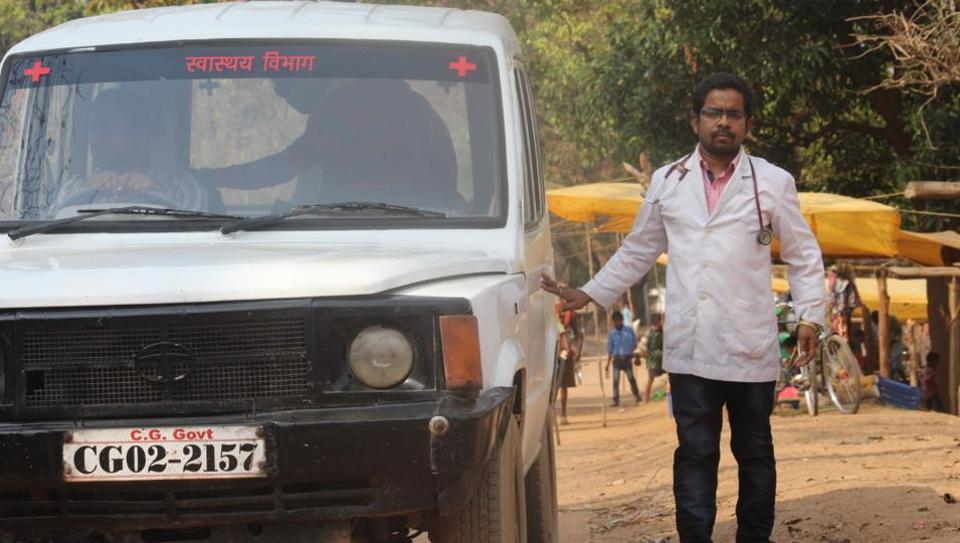
For most of the last 15 years, the government doctor has been the sole medical link for nearly 200 villages in the state’s Kanker district, braving dense forests and left-wing extremists on foot, bicycle and motorcycle.
“Bheshaj in Sanskrit means medicine. I believe I was born to become a doctor and serve the tribals of this region,” says Ramteke as he walks towards a remote village, Bhainsgaon , about 45 kms from Antahgarh.
“The happiness of the tribals is the biggest award for me.”
The diminutive man in his trademark white apron with a box of medical equipment is a familiar, and reassuring, sight for the 80,000-strong tribal population spread across Antahgarh block.
Many of them say Ramteke is the only person they trust enough in a region that is swarming with insurgents and police informants after decades of violence that has driven most medical staff away.
For the tribals, Ramteke is like a family member. “My kid was ill and reached his house at around midnight. He came with me to our village and treated my kid,” says Somaru, a resident of Bhaisaur village.
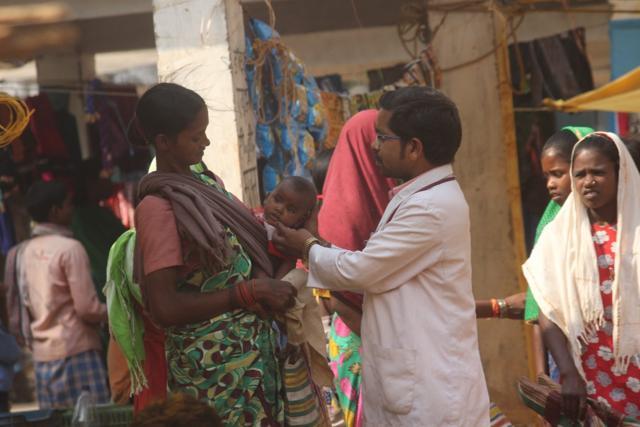
Most other “outsiders” don’t dare venture into these villages deep inside Maoist territory but Ramteke has no intention of moving out. He has been transferred thrice -- 2006, 2010 and 2016 – but community leaders met state ministers to block his transfer.
“Ramteke’s commitment is something which I have not seen till now. He is like god for thousands of tribals of this region,” says Ajay Mandavi, who works with surrendered Maoists in this area.
Born in a Dalit family in Dhamtari district bordering Bastar, Ramteke completed his MBBS from Raipur in 2003 and joined the Chhattisgarh health department the same year. He got his first posting in Antahgarh block that was in the grip of deepening insurgent violence at the time.
“When I came here no one wanted to come here. It was considered as most difficult posting but I decided to join ….My aim was to serve the tribals of Bastar,” Ramteke says. A senior police officer told HT that Ramteke was only person who can reach some of the Maoist-hit villages.
The 41-year-old was the only doctor in the region for many years but recently has been joined by two colleagues at the community health centre, underlining the crushing shortage of doctors and medical staff. Until June 2016, more than 40% of all doctor posts in Bastar were vacant, and almost two-thirds of health worker positions hadn’t been filled.
Last year, he was awarded the Icon of Health award by chief minister Raman Singh but he claims he never worked for awards. “I am a follower of Ambedkar….He taught me to serve the people who are marginalized and poor.”
-kW0H-U20214218012MgB-250x250%40HT-Web.jpg)


